Summary
A pioneering study published in BMC Complementary and Alternative Medicine has provided the first empirical evidence supporting the Traditional Arabic & Islamic Medicine (TAIM) conceptual model. Researchers interviewed 84 individuals in Qatar, revealing that herbal medicines, spiritual healing, and dietary practices remain widely used alongside modern medicine. The findings highlight a significant gap in patient-doctor communication, with many patients hesitant to disclose their traditional medicine use to allopathic providers. This research underscores the need for healthcare professionals to proactively inquire about traditional healing practices to ensure comprehensive patient care.
Groundbreaking Research Validates Ancient Healing Traditions in Modern Qatar
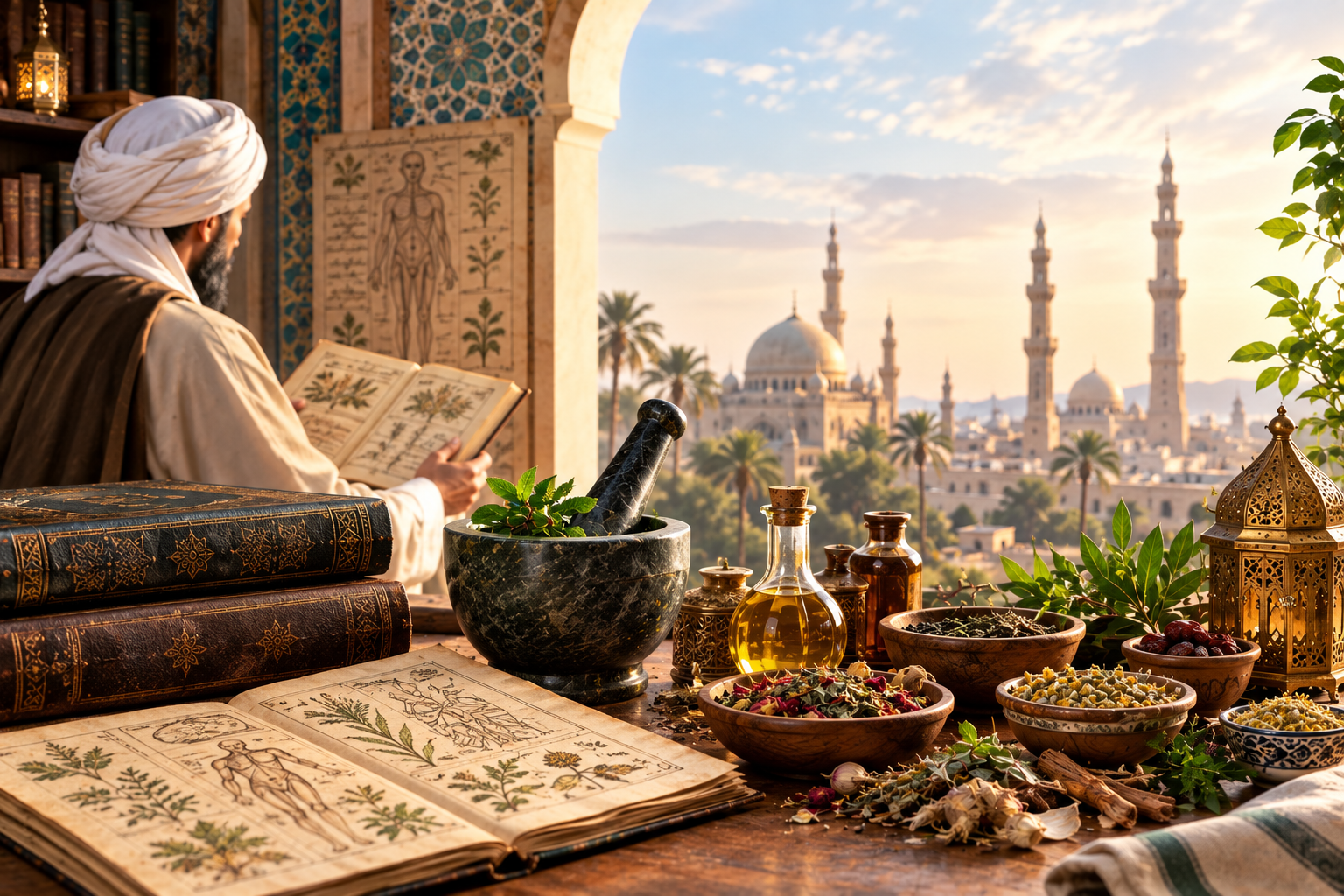
In a world increasingly dominated by high-tech medical treatments and pharmaceutical solutions, a remarkable study from Qatar reveals that ancient healing traditions continue to flourish. Researchers have conducted the first empirical validation of the Traditional Arabic & Islamic Medicine (TAIM) model, demonstrating that practices rooted in centuries-old wisdom remain deeply embedded in contemporary healthcare behaviors.
The study, led by Sara N. AlRawi and colleagues from the University of Michigan and Weill Cornell Medical College in Qatar, interviewed 84 individuals across four language groups—Arabic, English, Hindi, and Urdu. Published in BMC Complementary and Alternative Medicine, the research provides compelling evidence that traditional healing practices are not merely historical artifacts but living traditions actively used by diverse populations in the Arabian Gulf.
The Five Pillars of Traditional Arabic & Islamic Medicine
The TAIM model encompasses five interconnected elements: herbal medicine, spiritual healing, dietary practices, mind-body therapies, and manual techniques. Each component reflects a holistic approach to health that addresses physical, spiritual, and psychological well-being simultaneously.
| TAIM Element | Description | Common Examples |
|---|---|---|
| Herbal Medicine | Use of plant-based remedies for healing | Black seed (Nigella sativa), garlic, honey |
| Spiritual Healing | Religious practices for cure | Quranic recitation, prayers, Zamzam water |
| Dietary Practices | Food-based health maintenance | Fasting, specific eating etiquettes, honey consumption |
| Mind-Body Therapy | Physical-spiritual exercises | Ritual prayer (Salat), meditation, Dhikr |
| Manual Techniques | Physical therapeutic methods | Cupping (Hijamah), massage, bone setting |
Diverse Population, Shared Practices
Qatar’s unique demographic landscape—characterized by a majority expatriate population—provided a rich tapestry of cultural perspectives. Participants from Arab, South Asian, and Western backgrounds shared their experiences with traditional healing, revealing surprising commonalities across cultural boundaries.
Notably, non-Muslim participants also reported using spiritual healing practices, recognizing the curative properties of prayer regardless of religious affiliation. This cross-cultural adoption suggests that traditional medicine transcends religious boundaries, functioning as a shared cultural heritage rather than exclusively religious practice.
Herbal Medicine: From Kitchen to Clinic
The study found that herbal remedies were predominantly used in culinary contexts rather than as isolated medicinal preparations. Participants described adding black seeds to everyday cooking, warming garlic in oil for pain relief, and incorporating healing spices like ginger and chili into regular meals.
| Demographic Factor | Percentage |
|---|---|
| Global population depending on herbal medicines | Over 80% |
| Global herbal medicine market value | Over $60 billion USD |
| Qatar pharmaceutical market (2010) | QR 1.43 billion ($392.6 million USD) |
| CAM prevalence in developed countries | 70-80% |
This integration of healing herbs into daily nutrition reflects a philosophy where food and medicine are inseparable—a concept increasingly validated by modern nutritional science.
Spiritual Healing: The Power of Faith
Among the five TAIM elements, spiritual healing emerged as particularly prominent. Participants described reciting Quranic verses over water, blowing prayers onto affected body parts, and using amulets containing sacred texts. These practices, deeply rooted in Islamic tradition, were performed both for self-care and for treating others.
“The Quran and Prophetic traditions are the textual foundations of the Islamic faith,” the researchers noted. “References to herbs, dietary practices, or other healing practices in these sources formed the basis of specific healing practices.”
Importantly, participants viewed prayer not merely as spiritual practice but as a comprehensive health intervention addressing psychological, physical, and spiritual dimensions simultaneously.
Mind-Body Connection Through Prayer
The Islamic ritual prayer, Salat, emerged as a form of active meditation combining physical postures with spiritual contemplation. Participants recognized that regular prayer provided both spiritual fulfillment and physical exercise, promoting overall well-being.
“Praying five times a day is very important both spiritually and physically,” shared one participant named Saima. “Sometimes if I am feeling stressed, if I pray then everything is relieved for me.”
Modern research increasingly supports such observations, with studies demonstrating that meditation and mindful movement practices reduce stress, lower blood pressure, and improve mental health outcomes.
Communication Gap Between Patients and Doctors
A critical finding of the study concerns the disconnect between patients and their healthcare providers regarding traditional medicine use. Many participants expressed uncertainty about whether to disclose their TAIM practices, with some believing that natural remedies required no discussion with physicians.
| Disclosure Behavior | Finding |
|---|---|
| UAE CAM users who did not consult physicians | 70% |
| US CAM users who did not disclose to providers | Up to 77% |
| Qatari general practitioners reporting poor CAM knowledge | Over 39% |
This communication gap poses potential risks, as interactions between traditional remedies and conventional medications can sometimes produce adverse effects. Additionally, healthcare providers may miss important information about patients’ complete health practices.
Cultural Barriers to Disclosure
Participants offered various reasons for non-disclosure. Some believed their doctors should proactively ask about all health practices. Others considered herbal remedies fundamentally different from pharmaceuticals and therefore outside the scope of medical discussion. Non-Qatari participants often relied on family members to supply traditional remedies from their home countries, creating additional barriers to healthcare provider awareness.
“When a person is in his own country, then he uses all the treatments,” explained one participant named Ali. “There is no system of herbs here.”
Implications for Healthcare Providers
The research carries significant implications for medical practice in multicultural societies. Healthcare providers serving diverse populations must recognize that traditional medicine use is widespread and may not be voluntarily disclosed. Proactive inquiry about traditional healing practices should become standard practice during patient consultations.
Furthermore, medical education should incorporate cultural competency training that addresses traditional medicine systems. Understanding patients’ health beliefs and practices enables providers to offer more comprehensive, culturally sensitive care while identifying potential risks from remedy-drug interactions.
Methodology and Research Approach
The study employed ethnographic methodology, conducting in-depth interviews with participants recruited from outpatient clinics at Hamad Medical Center. Researchers ensured representation across four language groups—Arabic, English, Hindi, and Urdu—reflecting Qatar’s multicultural population.
Interviews lasting 15-60 minutes explored participants’ health experiences, traditional medicine use, and communication patterns with healthcare providers. The research team used ATLAS.ti software for systematic qualitative analysis, identifying patterns and themes across the diverse participant pool.
Limitations and Future Directions
While providing valuable insights, the researchers acknowledge several limitations. Qatar’s unique demographic composition—with its large expatriate population—may limit generalizability to other Middle Eastern contexts. Additionally, ethnographic research excels at revealing patterns and meanings rather than measuring prevalence rates.
Future research should examine the prevalence of TAIM element use across different populations, investigate potential health impacts of traditional practices, and explore how traditional medicine integrates with conventional healthcare systems. Studies in diverse healthcare settings—both public and private—would provide a more complete picture of traditional medicine utilization patterns.
Global Context of Traditional Medicine
The findings resonate with global trends toward integrative medicine. The World Health Organization recognizes traditional medicine as a crucial component of healthcare systems worldwide, particularly in regions where access to conventional medicine remains limited.
Countries across the Middle East, including Egypt, Jordan, and the Arabian Gulf states, have begun incorporating herbal complementary and alternative medicine into their national health services. This integration reflects growing recognition that traditional healing systems offer valuable resources for addressing contemporary health challenges.
The Path Forward
As healthcare systems worldwide grapple with rising costs and increasing chronic disease burdens, traditional medicine offers accessible, culturally appropriate alternatives that may complement conventional treatments. However, realizing this potential requires bridging the communication gap between patients and providers.
Healthcare organizations should implement routine screening for traditional medicine use, develop educational resources about common remedies, and train providers in culturally competent care. Simultaneously, traditional healers and conventional practitioners could benefit from collaborative relationships that prioritize patient safety while respecting cultural traditions.
Conclusion
This groundbreaking research confirms what many communities have known for generations: traditional Arabic and Islamic medicine represents a living, vibrant healthcare tradition that continues to serve diverse populations in Qatar and beyond. By providing empirical validation of the TAIM model, the study opens doors for meaningful dialogue between traditional and conventional medicine systems.
The findings challenge healthcare providers to expand their understanding of healing beyond pharmaceutical interventions, recognizing that patients bring rich cultural traditions and spiritual beliefs to their health experiences. In doing so, medicine can become truly holistic—addressing not merely physical symptoms but the complete human being within their cultural and spiritual context.
As global healthcare evolves toward more integrative approaches, the wisdom embedded in traditional medicine systems offers valuable resources for promoting health and well-being across diverse populations. The challenge lies in building bridges of communication and understanding that allow these ancient traditions to enhance rather than conflict with modern medical care.