A study examines the intersection of cellular agriculture and Islamic dietary law — and finds that halal-compliant cultured meat is scientifically feasible, but unresolved religious interpretations and regulatory gaps stand in the way
The Meat Dilemma
Global demand for meat keeps rising. But conventional livestock production strains the environment, exacerbates water scarcity, and consumes vast tracts of land. These challenges are especially acute in Muslim-majority countries across the Middle East and North Africa, where extreme heat and limited arable land force heavy reliance on imports.
Saudi Arabia imports roughly 80% of its food supply. The Gulf Cooperation Council states and Malaysia depend heavily on imported meat. Geopolitical tensions further destabilise supply chains, amplifying price fluctuations.
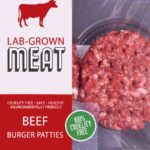
Enter cultured meat — also called cell-cultivated, lab-grown, or in vitro meat. It is produced by combining cell culture techniques with tissue engineering and 3D bioprinting. The first regulatory approval came in 2020 from Singapore, followed by the US in 2023.
A 2026 study by R. M. Alquarshi and colleagues examines a critical question: Can cultured meat align with Islamic dietary principles? The research adopts a stage-based analytical approach, mapping key production steps onto core requirements of Islamic jurisprudence.
The findings reveal that halal-compliant cultured meat is scientifically feasible. But its adoption remains constrained by unresolved religious interpretations, regulatory fragmentation, and limited availability of halal-certified inputs.
What Is Cultured Meat?
The process begins with a tissue sample biopsy. A small amount of muscle tissue is collected from a donor animal — cattle, poultry, or fish — without harming the animal.
From this biopsy, stem cells are isolated. Myosatellite cells are most commonly used, though embryonic stem cells (ESCs), induced pluripotent cells (iPSCs), and primary cells can also be employed. These cells are expanded and induced to differentiate.
For large-scale production, the expanded cells are transferred to bioreactors. The cells are then seeded onto scaffolds or incorporated into bioinks. Using 3D bioprinting, organised tissue architectures resembling conventional meat are created.
The constructs undergo differentiation and maturation. Cells develop into muscle fibres and fat tissue. The process concludes with cultivated meat, harvested as structured products suitable for consumption.
Tables: Key Data at a Glance
Table 1: Cultured Meat Acceptance Among Muslims
| Country | Year | Design | Main Observations |
|---|---|---|---|
| Singapore | 2023 | Survey (n=658) | Intention shaped by media, family, influencers. Halal awareness increased attention |
| Malaysia | 2022 | Survey (n=102) | 44% accepted; 56% had doubts due to religious concerns |
| Malaysia | Not reported | Survey (n=120) | 32% understood halal perspective; 41% accepted |
| Singapore | 2022 | Qualitative (n=24) | Would only consider if halal-certified |
| Arabic countries | 2020-2022 | Survey (n=1025) | 17% considered acceptable; 44% interested; 39% reluctant |
| United Kingdom | 2020-2021 | Survey (n=119) | 44% willing to try; 38% willing to purchase; 15% willing to pay extra |
Table 2: Stage-Specific Halal Risks and Mitigation Strategies
| Stage | Halal Concern | Risk Level | Suggested Solution |
|---|---|---|---|
| Cell source | ESCs, biopsies from live animals | High | Primary cells from halal-slaughtered animals |
| Growth medium | FBS, blood-derived components | High | Plant-based or recombinant halal-certified media |
| Processing | Shared equipment, contamination | Medium | Dedicated halal lines, certified cleaning protocols |
| Ethical dimension | Animal welfare | Low | Alignment with Islamic ethical principles |
| Certification | Lack of unified fatwas | High | Stage-gated halal framework with SHC involvement |
The Halal Challenge: Stage by Stage
The study maps cultured meat production stages onto halal jurisprudential principles. Several critical decision points emerge.
Cell sourcing poses the first challenge. Cultured meat does not involve direct slaughter of an animal. Scholars debate whether initial cell extraction from a biopsy fulfils Islamic requirements.
Some interpretations hold that a biopsy from a living animal yields material considered a carcass (haram), except for aquatic animals. Others argue isolated cells are distinct from flesh and may not be subject to the same ruling.
Embryonic stem cells present further complexity. Certain Islamic scholarly perspectives categorise them not as a body (jism) but as a piece of blood in the uterus, meaning the female animal’s slaughtering status applies. However, this interpretation is not universally agreed upon.
The traditional halal certification process requires slaughtering animals while invoking the name of Allah (Tasmiyah). This requirement is fundamentally absent in a biopsy-based process, creating a key point of contention.
Culture media poses the second challenge. Fetal bovine serum (FBS), retrieved from fetal blood of pregnant cows, constitutes a primary component of media for cell culture. According to Islamic principles, blood is impure and thus prohibited (haram). This poses a significant theological barrier.
Other animal-derived components include growth factors and extracellular matrix proteins. Their source should not originate from haram animals — swine, dogs, rats, or insects. Bovine collagen is permitted; porcine collagen is not.
The cultured meat industry aims to exclude animal-derived components. Recombinant proteins produced by genetically modified microorganisms offer a potential solution. Within Islamic law, genetically modified organisms are generally considered halal if safe and free from haram species genes. However, the permissibility of the final product derived via microbial fermentation requires specific religious guidance.
Scaffolding and processing pose additional concerns. Manufacturing equipment could be shared with non-halal products, creating contamination risks. Dedicated halal production lines or strict cleaning protocols are needed.
The Regulatory Landscape
In many Muslim-majority countries, halal regulation operates at the intersection of religious interpretation and state-led governance. Religious scholars provide theological guidance. Regulatory authorities translate this into enforceable certification standards.
Saudi Arabia offers a clear example. The Saudi Food and Drug Authority (SFDA), through its specialised branch the Saudi Halal Center (SHC), oversees halal certification. The SHC accredits both domestic and international certification bodies.
Cultured meat has not been introduced into the Saudi market. Neither the SFDA nor SHC has issued halal certification or market authorisation. The halal status remains under active review.
The Malaysian Halal Certification Authority (JAKIM) and the Islamic Food and Nutrition Council of America (IFANCA) have acknowledged the need for clear guidelines. Some Islamic scholars have issued preliminary fatwas stating that if cultured meat is derived from halal sources and remains free of haram substances, it could be permissible.
The Organisation of Islamic Cooperation (OIC) is working on a standardised halal certification process for novel food technologies. However, consensus among major Islamic authorities remains lacking. Divergent views across countries may pose significant challenges to international commercialisation.
Consumer Acceptance: Variable and Context-Dependent
Across studies in Muslim-majority countries, acceptance of cultured meat ranges from 17% to 56%. This variability reflects differences in culture, region, and socioeconomic context.
In Malaysia, one study found 44% acceptance, with 56% expressing doubts due to religious concerns. Another found 41% acceptance. In Arabic countries, only 17% considered cultured meat acceptable, though 44% were interested.
In Singapore, a qualitative study found participants would only consider consuming cultured meat if it is halal-certified.
Affordability remains key. Price-conscious consumers may hesitate to pay a premium unless cultured meat offers clear benefits over conventional halal meat. This concern is pronounced in lower- and middle-income settings.
Consumer trust in religious authorities and halal certification bodies is essential. Companies must engage with Islamic scholars and certifiers to ensure compliance and gain credibility.
Demographic differences exist. Younger, more educated, male, urban, less religious, and environmentally concerned consumers are more willing to try cultured meat.
In Muslim-majority regions, religious concerns — particularly halal compliance — emerge as a consistent determinant of hesitancy. Many respondents indicate they would only consider cultured meat if it is halal-certified.
Recommendations: A Stage-Gated Framework
The study proposes a multi-level governance and stage-gated halal decision framework. Recommendations are organised along temporal and institutional dimensions.
Immediate priority: Resolve uncertainties around starting cell source. The study recommends preferential use of primary cells rather than ESCs. Primary cells should be obtained from animals slaughtered according to halal standards rather than through biopsy from living animals.
For avian species, fertilised eggs are commonly a source of primary cells. The developmental stage at extraction and whether the egg was sourced from a halal-slaughtered bird requires further religious and scientific clarification.
Medium-term priority: Develop scalable, halal-compliant production systems. Manufacturers targeting Muslim markets must exclude materials forbidden by Islamic law — porcine products, blood-derived products. Although Islamic opinion on FBS utilisation remains unclear, given the prohibition on consuming blood, its approval remains unlikely.
Precision agriculture allows production of recombinant components that replace FBS and growth factors. However, economic feasibility and scalability must be primary research focuses.
Long-term priority: Establish a unified halal certification framework. Policymakers and industry stakeholders should collaborate with religious authorities to develop clear, stage-gated guidelines balancing theological principles with practical scalability.
The study proposes a “Halal-by-Design” protocol for cultured meat startups, analogous to quality-by-design approaches in biopharmaceutical manufacturing. This would require halal compliance to be embedded from the earliest stages rather than assessed post hoc.
A minimal Halal-by-Design protocol includes certified sourcing of starting materials, upfront selection of all media components, segregated production lines, real-time documentation, and early engagement with certification bodies.
Multi-Level Governance
The study conceptualises how different actors interact across governance levels.
At the transnational level, harmonisation may require coordination among major halal standard-setting bodies within the OIC framework. This would establish shared baseline principles for novel foods while allowing national authorities discretion.
At the national level, state-led bioeconomy strategies could incorporate halal-compliant cellular agriculture as a strategic priority. This is particularly relevant for food-import-dependent countries.
Public-private partnerships involving regulators, certification bodies, academic institutions, and developers may serve as testbeds for pilot production systems. This enables evidence-based fatwas and regulatory learning prior to full commercialisation.
The study recommends establishing pilot halal-compliant cell banks under SHC oversight. It also recommends forming a joint technical-religious working group involving the SFDA, JAKIM, IFANCA, and cultured meat developers to harmonise certification criteria.
Targeted public-private partnerships should scale production of halal-certified, serum-free culture media.
Why This Matters for Ordinary People
Why should this study matter beyond academic circles?
Because it addresses a question millions of Muslims will face: Can I eat this? As cultured meat edges toward commercialisation, consumers need clear answers. The study shows those answers are not yet available.
It also matters for food security. Saudi Arabia imports 80% of its food. Malaysia relies heavily on meat imports. Cultured meat could reduce dependency, stabilise prices, and enhance national resilience. But only if religious concerns are addressed.
The study offers a roadmap. Halal-compliant cultured meat is scientifically feasible. The barriers are regulatory and theological, not technological. With coordinated action, they can be overcome.
For consumers, the message is patience. Clear guidance will come. For policymakers, the message is urgency. Early engagement with religious authorities is essential. For industry, the message is design. Embed halal compliance from the start, not as an afterthought.
The study positions Islamic scholars as active stakeholders in shaping the global food future. It aligns biotechnological innovation with ethical and spiritual values. It offers a rare opportunity to promote inclusivity while advancing sustainability.