A pioneering study from King Saud University in Riyadh, Saudi Arabia, has investigated how the physical postures of Muslim prayer (Salat) affect intra-ocular pressure (IOP) in healthy young adults. This research addresses a significant gap in medical knowledge, given that Salat involves repeated postural changes similar to those found in yoga practices that are known to influence eye pressure.
The study’s findings bring encouraging news for the millions of Muslims who perform Salat daily. Researchers discovered that while there is a statistically significant increase in IOP immediately after performing prayer positions, this increase remains within normal clinical ranges and does not pose a concern for healthy individuals.
Understanding the Study: Who Participated?
The prospective observational study recruited 40 healthy female participants aged between 18 and 30 years. The researchers selected this specific age group intentionally to test their hypothesis while avoiding confounding factors that might complicate the results.
All participants were healthy young women with no history of chronic diseases such as diabetes or hypertension, nor any ocular abnormalities that could affect IOP measurements. The researchers excluded individuals with glaucoma, IOP greater than 21 mmHg, active ocular inflammation, or those who had undergone any ocular surgery.
The research team measured IOP using the Topcon TRK-1P kerato-refractometer, a non-contact tonometer that uses a puff of air to flatten the cornea. This method requires no anesthesia or staining, eliminating the risk of corneal surface compromise and cross-contamination. Measurements were taken at three specific times: at baseline before assuming prayer positions, immediately after prayer, and after two minutes of rest.
Who Were the Participants?
Participant Profile at a Glance
| What We Measured | Average Result | What This Means |
|---|---|---|
| Number of participants | 40 people | All were healthy young women |
| Age | 21 years (average) | Ranged from 18 to 30 years old |
| Body weight | 59.7 kg (average) | About 132 pounds |
| Body Mass Index (BMI) | 23.8 (average) | Considered normal weight |
| Participants with BMI ≥ 25 | 16 out of 100 people | Only 15 participants were overweight |
Simple explanation: This study included 40 healthy young women with normal body weight on average. Only a small number (15 people) were overweight.
The Science Behind Eye Pressure
Intra-ocular pressure represents the fluid pressure inside the eye, maintained by a delicate balance between the secretion and drainage of aqueous humor. Normal IOP ranges between 12 and 20 mmHg, and elevations beyond this range represent a key risk factor for glaucoma development.
Glaucoma, a leading cause of irreversible blindness worldwide, accounts for approximately 3.6 million cases of total blindness in older adults. When IOP exceeds ocular perfusion, mechanical compression of optic nerve fiber bundles occurs, restricting blood supply to the optic nerve.
Understanding how everyday activities affect IOP is crucial, as postural changes can cause rapid shifts in eye pressure. These shifts occur primarily due to changes in hydrostatic blood pressure, which increases pressure within the episcleral veins.
Prayer Positions Under Investigation
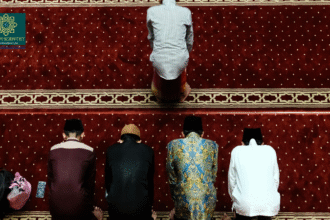
The researchers examined the four main positions of Muslim prayer (Salat), which form a repetitive unit called Rak’ah:
Standing (Qiyam): The participant stands erect with hands placed over the chest, looking down toward the site of prostration.
Bowing (Rukuk): The participant bows with hands resting on knees, maintaining a straight back with the head bent at a 90-degree angle to the body.
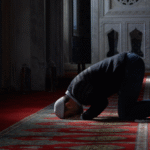
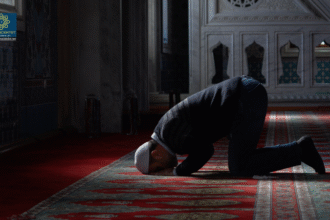
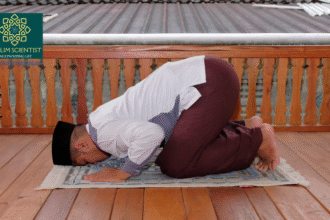
Prostration (Sujud): The participant kneels with seven body parts touching the ground: the forehead, nose, palms of both hands, both knees, and the bottom of the toes of both feet.
Sitting (Qa’dah): The participant sits with the left foot placed under, the right foot vertical to the ground with toes pointing anteriorly, and back erect.
To maintain standard conditions, the researchers determined the duration of each position by observing 50 young individuals performing actual Salat in public areas such as malls and mosques. The average times calculated were: standing for 13 seconds, bowing for 3 seconds, standing again for 3 seconds, prostration for 4 seconds, and sitting for 3 seconds.
Participants performed two Rak’ahs, which took approximately one minute.
Key Findings: What the Data Reveals
The study produced several notable results that are both statistically and clinically significant for understanding how Salat affects eye health.
Eye Pressure Changes During Prayer (Easy to Understand)
| When We Measured | Average Eye Pressure | Is This a Concern? |
|---|---|---|
| Before prayer (baseline) | 19.35 mmHg | This is within normal range |
| Right after prayer finished | 20.00 mmHg | Slight increase, but still normal |
| 2 minutes after prayer | 19.85 mmHg | Almost back to starting level |
What this table tells you: Eye pressure went up by about 0.65 mmHg right after prayer—that’s a very small change. Think of it like your heart rate going up slightly when you stand up quickly. Within just 2 minutes, the pressure was already coming back down. For healthy people, this change is nothing to worry about.
Did Body Weight Make a Difference?
| Group | Eye Pressure Before Prayer | Eye Pressure After Prayer | Was the Change Significant? |
|---|---|---|---|
| Normal weight (BMI under 25) | 19.52 mmHg | 20.40 mmHg | Yes, statistically significant |
| Overweight (BMI 25 or more) | 19.07 mmHg | 19.33 mmHg | No significant change |
What this table tells you: People with normal weight showed a small increase in eye pressure after prayer that was noticeable in the numbers. Interestingly, overweight people showed almost no change at all. However, both groups stayed within the safe range, so neither group needs to worry.
Key Numbers Summary
| Important Finding | The Number | What It Means for You |
|---|---|---|
| Normal eye pressure range | 12 – 20 mmHg | All participants stayed in this range |
| Highest pressure recorded | 20.00 mmHg | Still within normal limits |
| Time to return to baseline | 2 minutes | Pressure normalizes very quickly |
| Statistical significance | p = 0.02 | The change was real, not random |
| Clinical significance | NOT significant | The change is too small to matter for health |
Comparison with Yoga and Other Postural Exercises
The study’s findings align with previous research on head-down postures and IOP changes. For instance, a study investigating four common yoga exercises with head-down positions found significant IOP increases in both healthy and glaucoma groups. The IOP dropped back to baseline values within two minutes of returning to a sitting position.
However, important differences exist between Salat and yoga exercises. Salat consists of a sequence of upright positions alternating with head-down tilting positions, with each position maintained for only 3 to 5 seconds. This alternating pattern may create a balanced effect, potentially explaining why the IOP changes observed were not clinically significant.
A related study published in the European Journal of Ophthalmology examined the effects of the two principal Islamic prayer positions (Rukū and Sujud) in both healthy subjects and patients with primary open-angle glaucoma. The researchers found that performing these positions increased IOP significantly, and approximately 27% of individuals did not normalize within 2 mmHg of baseline. However, all returned to baseline after another five minutes.
What This Means for Different Groups
For Healthy Young Adults
This study provides reassuring evidence that the postural changes during Salat cause only minor, temporary IOP fluctuations that remain within normal ranges. The researchers emphasize that these changes are not clinically significant, meaning you can continue your prayers without any concern about your eye health.
For People with Glaucoma
While the study focused exclusively on healthy participants, the findings have important implications for glaucoma patients. Related research suggests that IOP increases more dramatically during prayer positions, with increases of 20% during Rukū and 37% during Sujud. These findings may have considerable impact on Muslim patients with glaucoma, who should consult their ophthalmologists about their prayer practice.
For People with Different Body Weights
Interestingly, the study found that participants with normal BMI showed a significant IOP increase after Salat, while those with high BMI did not. This finding contradicts earlier studies that demonstrated significantly higher IOP in obese participants. However, the researchers caution that the limited number of participants with high BMI (only 16% of the total) may have affected this result, and the female-only sample may also have played a role.
Study Limitations and Future Research
The study has several important limitations that should be considered when interpreting the results.
Gender Limitation: All participants were female, recruited from the women’s campus of the institution. The enrollment of male participants was affected by COVID-19 campus entry restrictions during the study timeframe.
Age Restriction: The study focused on healthy young individuals aged 18-30 years, which may not represent the entire population. This group was intentionally selected to test the hypothesis and avoid confounding factors.
Prayer Duration: The investigation involved only two Rak’ahs of Salat, approximately one minute in duration. The researchers did not measure IOP during each specific position, only before, immediately after, and after two minutes of rest.
Measurement Limitations: The IOP was measured in only one eye (selected randomly), and the study did not examine the effect of multiple Rak’ahs or longer durations for each pose.
Future research should address these limitations by recruiting both sexes, including older participants and glaucoma patients, measuring IOP during each specific prayer position, and examining the effects of longer prayer sessions.
Practical Recommendations
Based on the study findings, several practical recommendations emerge:
For Healthy Individuals: Continue performing Salat without concern, as the IOP changes observed are minor and clinically insignificant.
For Glaucoma Patients: Consider consulting with ophthalmologists about prayer practices. A related study found that 27% of individuals did not normalize within 2 mmHg of baseline immediately after prayer positions, though all returned to baseline within five minutes.
For Those with High BMI: The study found no significant correlation between BMI and IOP changes, suggesting weight may not be a determining factor in IOP response to Salat postures.
Conclusion
This pioneering study from Saudi Arabia represents a significant step in understanding how the physical positions of Muslim prayer affect eye health. The findings confirm that while Salat does cause a statistically significant increase in IOP immediately after prayer, this increase remains within normal clinical ranges for healthy young adults.
The research highlights the need for further investigation, particularly among glaucoma patients and those with risk factors for elevated IOP. The related research by Dar et al. (2023) demonstrates that IOP can increase substantially during specific prayer positions, with potential implications for Muslim patients with glaucoma.
As the global Muslim population continues to grow, understanding how religious practices intersect with health outcomes becomes increasingly important. This study provides a foundation for future research that may help Muslims around the world maintain their religious practices while optimizing their eye health.