The date is seared into the collective memory of the Muslim world: February 10, 1258. When the armies of Hulagu Khan, grandson of Genghis Khan, breached the walls of Baghdad, the Abbasid Caliphate—the 500-year-old heart of Islamic learning and power—was extinguished in a river of blood and ink. For three years, the Islamic world experienced a vacuum of leadership, a dark age imposed by the most feared warriors on earth.
Yet, history rarely follows a straight line. An academic study, entitled: (Transformation of Spirituality and Islamic Mongol Civilization), reveals a stunning reversal. Within seventy years of the fall of Baghdad, the descendants of Hulagu and Genghis Khan did not just embrace Islam; they became the architects of a second Islamic Golden Age, restoring the very civilization their ancestors had shattered.
This is the story of how the wolf became the shepherd.
Part 1: The Scourge of God
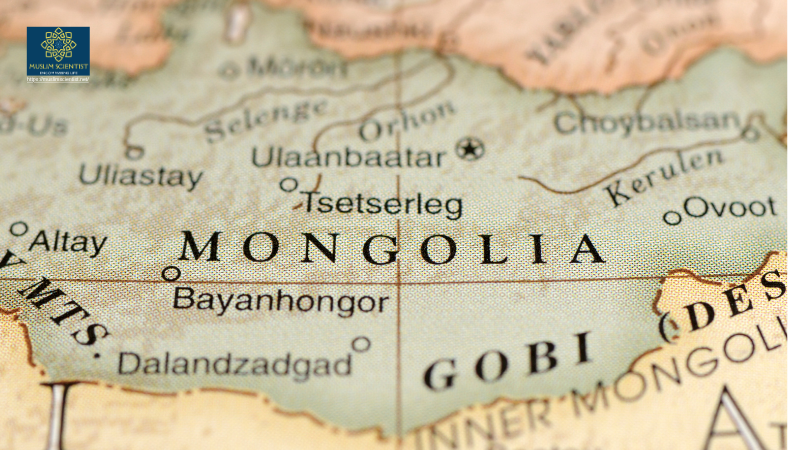
To understand the miracle of their conversion, one must first understand the brutality of their origin. Before Islam, the Mongols were a nomadic people inhabiting the harsh lands between Lake Baikal and the Gobi Desert. They were described in early Islamic texts as athletic, disciplined, and incredibly loyal to their leader. They followed a Shamanistic or “Syamsisme” belief system, worshipping the sun, stars, and ancestral spirits. Their legal code, the Yassa (or Alyasak), was ruthless.
Genghis Khan (formerly Temuchin) unified the Mongol tribes and established an empire through sheer military genius. His successors—Oghtai, Chaghtai, and Hulagu—continued the expansion. For the Muslims of the 13th century, these steppe warriors were a divine punishment. They were seen as “uncivilized” barbarians who wore animal skins, did not distinguish between halal and haram, and left a trail of destruction from China to Eastern Europe.
Part 2: The Gentle Conquest of the Sword
But how does a violent Shamanist become a devout Muslim? The paper identifies a slow, cultural infiltration. The Mongols initially admired the sophisticated administration of the Khawarizm Shah and the Persian empires. While they despised the religion initially (Chaghtai Khan famously hated Islam), they needed the people who practiced it to run their governments.
The first significant fissure in the pagan Mongol wall appeared in the Golden Horde (Russia/Ukraine region). Berke Khan, the successor to Batu, converted to Islam. Unlike his predecessors, Berke openly declared his faith and replaced the Yassa with Sharia law. Traveler Ibn Battuta later described the Golden Horde under Berke’s successors as a “perfect Islamic state.”
However, the most dramatic transformation occurred in Persia, under the Ilkhanate Dynasty.
Part 3: Ghazan Khan – The Reformer
The seventh ruler of the Ilkhanate was Mahmud Ghazan Khan. Before his conversion, Ghazan was a Buddhist prince. His path to Islam was pragmatic as much as spiritual. In his struggle for the throne against his cousin Baydu, General Nawroz promised to support Ghazan if he converted to Islam. Ghazan agreed. He won the battle, and he kept his promise.
Unlike other converts, Ghazan did not just change his name; he changed the state. The paper details a “Post-Baghdad Golden Age” under Ghazan’s rule (1295–1304 CE). His reforms were radical:
- Economic Miracle: When Ghazan took power, the Mongol economy was predatory. Tax farmers bled the peasants dry. Ghazan introduced a state budget—a revolutionary concept in medieval history. He calculated state income and expenditure. He abolished excessive taxes and forgave debts, particularly for farmers whose land had been ruined. Agriculture surged, and for the first time, Mongol territories became exporters of grain rather than importers.
- Ending Corruption: Ghazan Khan was merciless against corruption (KKN). He implemented the death penalty for corrupt officials, even within his own family.
- Banning Usury (Riba): He strictly forbade lending money with interest, a practice that had crushed the poor under previous Mongol regimes.
- Scientific Patronage: The cities of Maragha and Tabriz were turned into scientific hubs. Ghazan sent delegations to India and China to retrieve new seeds for agriculture and medicinal plants. He rebuilt libraries, madrasas (schools), and the famous observatories.
The paper notes, “Islam was established as the official religion… forcing the application of Islamic Sharia law.” The same swords that once beheaded scholars now protected them.
Part 4: Timur Lenk and the Glittering Cage
Further east, the Chaghtai Dynasty produced a figure shrouded in paradox: Timur Lenk (Tamerlane). He was a brutal conqueror who could level a city and build a pyramid of skulls. However, the paper highlights a different side.
After conquering Samarkand, Timur transformed it into the “Crossroads of Culture.” He collected astronomers, jurists, historians, and doctors from every conquered land. He built massive mosques, irrigation canals, and palaces. Under Timur, Samarkand became a global market connecting India, Persia, China, and Europe. He valued craftsmen and intellectuals, bringing them to his capital to create a renaissance of Islamic art and architecture.
Even his successors, like Ulugh Beg, focused on science, building one of the greatest observatories of the medieval world. The brutality remained, but the intellectual engine roared back to life.
Part 5: The Legacy of the Crescent Wolf
The paper concludes that the Mongol conversion to Islam was the most significant geopolitical shift of the late medieval period. The table below summarizes the transformation:
The Three Pillars of Islamic Mongol Dynasties
| Dynasty | Region | Key Ruler | Contribution to Islamic Civilization |
|---|---|---|---|
| Ilkhanate | Persia (Iran, Iraq, Turkey) | Mahmud Ghazan Khan | Introduced state budget, rebuilt economy, revived agriculture, patronized science (Tabriz Observatory). |
| Chaghtai | Central Asia (Uzbekistan, Afghanistan) | Timur Lang (Tamerlane) | Transformed Samarkand into an architectural jewel, patronized arts, astronomy, and literature. |
| Golden Horde | Russia, Ukraine, Kazakhstan | Berke Khan / Uzbeg Khan | Established a “perfect Islamic state” per Ibn Battuta, built thousands of mosques and madrasas, secured trade routes. |
Spiritual Transformation
| Aspect | Pre-Islam (Genghis/Hulagu Era) | Post-Islam (Ghazan/Timur Era) |
|---|---|---|
| Legal System | Yassa (Mongol customary law, often ruthless) | Sharia (Islamic Law) |
| Economic Policy | Predatory taxes, looting of conquered cities | State budget system, tax breaks for farmers |
| Religious Tolerance | Relative (killed all, but favored no religion) | Islam as state religion, protection of “People of the Book” |
| Urban Development | Destruction of cities (Baghdad, Nishapur) | Construction of Mosques, Observatories, Hospitals |
| Target of Patronage | Military commanders | Ulama (Scholars), Scientists, Poets |
Conclusion
The narrative of Islam versus the Mongols is not a simple story of defeat. It is a story of the ummah’s (community’s) resilience. The Mongols won the military battle, but Islam won the spiritual war. The paper drives home a vital point: The “Golden Horde” was not just a name; it was a reality. The descendants of the men who made the Tigris run black with ink turned the river back into a current of knowledge.
For the modern reader, this serves as a powerful reminder. Civilizations are not defined by their catastrophes, but by their ability to absorb, adapt, and transform their conquerors. The Mongol Khan who cried for Baghdad (metaphorically) rebuilt it.
Reference: here
Other Articles: