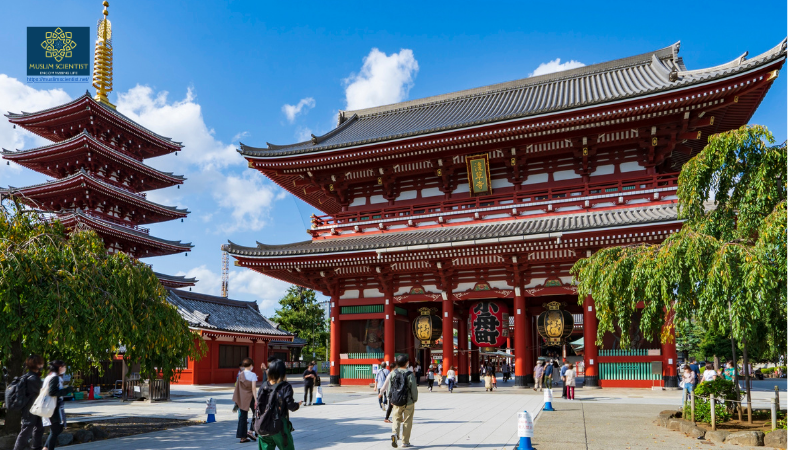
Japan faces an unusual challenge. The country welcomes hundreds of thousands of Muslim visitors annually. Yet it has no official halal regulations. No government standards exist. No formal fatwa council oversees certification.
This regulatory vacuum has created problems for both businesses and consumers. Halal certification remains expensive and complicated. Many small businesses simply give up. Muslim residents struggle to find affordable halal products.
A new initiative aims to change this situation entirely. The Halal International Trust Organization (HITO) launched in September 2024. This community-based certification body serves Indonesian Muslims living in Japan. It offers something unprecedented: affordable, accessible halal certification designed for small businesses.
The Demographic Shift Driving Change
Japan’s aging population has reshaped the country’s demographics dramatically. Declining birth rates and urbanization have created labor shortages. This situation has opened doors for international migration.
Indonesia has become a significant source of this workforce. According to the Immigration Services Agency of Japan, more than 149,000 Indonesian citizens currently reside in the country. Most are Muslim workers and students. Tourism adds another dimension entirely. Japan National Tourism Organization data shows Indonesian tourist arrivals surpassed 430,000 in 2023. This represents the highest figure ever recorded.
These numbers tell a clear story. Demand for halal products continues rising. The Japanese government projects Muslim tourist arrivals will grow by approximately one million each year. This reflects an estimated annual increase of around 8.7%.
Japan’s “Halal Boom” Explained
Researchers call this phenomenon the “halal boom.” Masayuki Numajiri first identified this trend. It reflects growing awareness of halal food beyond Muslim communities.
Japan’s ometonashi culture plays a surprising role here. Ometonashi translates to “hospitality.” This cultural ethic emphasizes wholehearted service to guests of all faiths. Japanese businesses often welcome Muslim customers warmly.
However, this openness has not translated into government support. Japan has established no specific laws for halal certification. No Islamic judicial institutions exist to oversee the process. Without formal regulation, halal certification depends entirely on third-party organizations.
The Certification Gap
The Japan Halal Association (JHA) was founded in 2010 to fill this void. Based in Osaka, it provides halal certification services. Several Muslim-majority countries recognize JHA certifications, including Indonesia.
Nevertheless, significant challenges remain. Research by Yamaguchi (2019) found the certification process complex and costly. Many companies abandon the effort entirely. Idris (2024) documented numerous obstacles: cultural sensitivities, regulatory ambiguities, prohibitive costs, and limited certified materials.
These barriers particularly affect small businesses. Mid-tier and lower-tier producers often cannot afford certification. The requirement to bring assistants from Tokyo or overseas adds substantial expenses. Consequently, many simply forgo halal certification altogether.
A Community Response Emerges
The Indonesian Embassy (KBRI) in Tokyo recognized this gap. As the guardian of Indonesian citizens in Japan, the embassy initiated a solution. They collaborated with KMI Japan (Keluarga Masyarakat Islam Indonesia), the Indonesian Muslims Association.
Together, they established HITO. The organization officially launched on September 29, 2024. Its headquarters are in Meguro-ku, Tokyo. HITO operates under KMI Japan Ipan Shadan Hojin, a legally recognized non-profit entity.
This structure ensures community ownership. All HITO activities align with community values and needs. The organization consistently involves Islamic scholars in the certification process. This guarantees all certified products meet general halal standards while considering local conditions.
How HITO Works: The Five Key Functions
HITO carries out five essential functions. First, it develops halal certification standards adapted to local contexts. These standards maintain international credibility while remaining practical for Japanese conditions.
Second, the organization conducts halal audits. It issues certifications for food, cosmetics, pharmaceuticals, and other consumables. Third, HITO organizes training programs for halal auditors. This builds capacity within the community.
Fourth, the organization trains facilitators to guide businesses through certification. Fifth, HITO fosters socioeconomic integration. It promotes halal business growth, facilitates exports, and supports community inclusion through halal literacy initiatives.
Organizational Structure
HITO Organizational Structure
| Component | Composition | Key Responsibilities |
|---|---|---|
| Supervisory Board | 9 members | Oversight and governance |
| Advisory Board | 4 members | Strategic guidance |
| Daily Management Team | Chair, Vice Chair, Secretary, Treasurer, Assistant Treasurer | Operations management |
| Fatwa Commission | Advisor, Chair, Secretary, 2 members | Religious certification approval |
| Secretariat | Head, Deputy Head, Logistics Coordinator | Administrative support |
The organization follows Decree Number 01/SK/II/2025 issued by KMI Japan. This decree formalized HITO’s structure on February 7, 2025. A supervisory board provides governance oversight. An advisory council offers strategic direction. Daily management handles operations.
The fatwa commission plays a crucial role. Its members include Islamic scholars and shariah experts. They review all certification applications. Their approval is mandatory before any certificate issues.
Train the Trainers: Building Local Capacity
HITO has trained 31 halal certification assistants. These individuals received qualifications through the Indonesian Halal Certification Center. They are strategically based across nine prefectures and cities.
HITO Assistant Distribution Across Japan
| Prefecture/City | Role |
|---|---|
| Hokkaido | Halal Certification Assistant |
| Ibaraki | Halal Certification Assistant |
| Saitama | Halal Certification Assistant |
| Tokyo | Halal Certification Assistant |
| Chiba | Halal Certification Assistant |
| Ishikawa | Halal Certification Assistant |
| Shizuoka | Halal Certification Assistant |
| Aichi | Halal Certification Assistant |
| Kyoto | Halal Certification Assistant |
This network allows HITO to maintain broad operational reach. Businesses throughout Japan can access certification assistance. Local facilitators reduce travel costs substantially. Transportation expenses represent the only significant cost. Previously, businesses needed to bring assistants from Tokyo or overseas.
The Certification Process
The submission flow for HITO halal certification follows clear steps. Businesses begin by creating an account on the official website, https://halalhito.com. Small and Medium Enterprises then submit their certification requests.
HITO facilitators perform verification and validation. They guide businesses through documentation preparation. After document verification, the organization issues a submission confirmation.
The fatwa council then convenes to deliberate on the application. This religious review ensures all products meet halal standards. After approval, HITO issues a digital halal certificate. Businesses can directly download the certificate via a system-provided link.
This digital approach eliminates bureaucratic delays. The entire process prioritizes simplicity and accessibility. SMEs benefit from reduced administrative burdens.
What Makes HITO Different
Five key features distinguish HITO from other certification bodies. First, the organization emphasizes self-declared halal identity. Initial responsibility for compliance rests with producers themselves.
Second, producers must designate a person-in-charge (PIC) for halal processes. This ensures accountability within each business. Third, HITO assigns facilitators to guide companies through certification. Support includes documentation assistance.
Fourth, certification only grants upon fatwa council approval. This maintains religious integrity. Fifth, the entire mechanism is significantly simpler and more cost-effective. Small businesses throughout Japan can now access certification.
Supporting Halal Tourism
HITO’s establishment supports Japan’s halal tourism development. Research by Kodir et al. (2019) found halal tourism in Japan remains inadequate. Several factors contribute to this situation.
Limited certified halal restaurants represent a major obstacle. Prayer facilities like musalla and ablution areas are scarce at tourist destinations. Information about halal services remains insufficient and inaccessible.
HITO addresses these gaps directly. More certified businesses mean more halal options for tourists. Training programs build awareness among service providers. The digital platform makes information easily accessible.
Japan aims to attract 60 million tourists annually by 2030. Muslim travelers represent a growing segment of this market. Improved halal infrastructure will help achieve this goal.
The Six Strategic Roles of KBRI Tokyo
The Indonesian Embassy plays multiple roles in developing Japan’s halal ecosystem. First, the embassy advocates to Japanese authorities for improved halal access. This advocacy becomes especially important during Ramadan.
Second, KBRI collaborates closely with KMI Japan. This partnership led to HITO’s establishment. Third, the embassy promotes a Mutual Recognition Agreement with Japan. Such an agreement would streamline bilateral recognition of halal certifications.
Fourth, the embassy organized competency training for 15 Indonesian community representatives. This initiative laid foundations for reliable halal product assurance management. Fifth, the embassy engages Indonesian Student Association (PPI) Japan in halal promotion. Students explore Japanese food technologies aligned with halal principles.
Sixth, KBRI fosters synergy with Indonesia’s Ministry of Religious Affairs. This supports Indonesian entrepreneurs in Japan. It also enhances Indonesia’s halal culinary market visibility abroad.
Looking Ahead: The Future of Halal in Japan
HITO represents a significant step forward. However, challenges remain. The organization is currently certifying pilot businesses in 2025. These include Bakso Koga in Ibaraki Prefecture. Warung Rupa-Rupa in Aichi Prefecture also participates. Mongo Moro Resto joins the initiative.
These pilot projects will demonstrate HITO’s effectiveness. Success could encourage broader adoption. More businesses might pursue certification. Consumer trust could increase accordingly.
The broader halal ecosystem continues developing. Four essential pillars support this growth: certification organizations, fatwa councils, halal facilitators, and online systems. HITO contributes to all four areas.
Conclusion: A Model for Community-Based Certification
The establishment of HITO addresses Japan’s lack of formal halal regulations. This community-driven framework serves Indonesian Muslims specifically. Its four-pillar ecosystem provides standardized procedures, religious oversight, trained facilitators, and digital infrastructure.
Accessibility remains the priority for SMEs. The organization promotes integration of Islamic practices into Japan’s broader socioeconomic landscape. This model could potentially inspire similar initiatives elsewhere.
HITO’s approach demonstrates that communities can fill regulatory gaps. Local knowledge, cultural sensitivity, and practical solutions matter. With dedicated leadership and collaboration, even complex challenges become manageable.
Rdference: here
Other Articles: