The Global Halal Market Comes to Korea
South Korea, a nation traditionally known for kimchi and barbecue, finds itself at the center of an unexpected culinary revolution. The country’s Muslim population, though small, contributes approximately $1.11 billion annually to the food industry. This economic significance highlights the growing recognition of Muslim consumers’ needs in a country where halal food options remain relatively limited.
The term halal, meaning “permissible” in Arabic, encompasses both the food itself and the processes involved in its preparation according to Islamic law. For observant Muslims, adhering to halal dietary requirements represents far more than a food preference—it embodies religious identity, cultural heritage, and spiritual commitment.
Who Participated in the Study?
| Category | Group | Percentage Choosing Halal Restaurants | Percentage Choosing Both Types | Percentage Choosing Korean Restaurants | What This Tells Us |
|---|---|---|---|---|---|
| Gender | Male | 80.3% | 78.0% | 50.0% | Men strongly prefer halal or both options |
| Female | 19.7% | 22.0% | 50.0% | Women are evenly split between all options | |
| Age Group | 21-30 years | 44.1% | 48.5% | 62.5% | Youngest group most open to Korean food |
| 31-40 years | 44.1% | 33.0% | 12.5% | Middle-aged prefer halal or both | |
| 41-50 years | 8.8% | 15.9% | 25.0% | Older group more open to Korean options | |
| 51-60 years | 2.9% | 2.7% | 0.0% | Oldest group exclusively avoids Korean-only | |
| Home Country | Uzbekistan | 36.1% | 45.5% | 25.0% | Most flexible, enjoy both cuisines |
| Indonesia | 13.9% | 12.9% | 50.0% | Most enthusiastic about Korean food | |
| Bangladesh | 23.9% | 17.0% | 25.0% | Balanced preferences | |
| Pakistan | 17.2% | 20.5% | 0.0% | Avoid Korean-only restaurants completely | |
| India | 8.8% | 4.2% | 0.0% | Avoid Korean-only restaurants completely | |
| How Long in Korea | Less than 3 years | 26.5% | 32.6% | 25.0% | Newcomers slightly favor halal |
| More than 3 years | 73.5% | 67.4% | 75.0% | Long-term residents strongly favor both |
What This Table Shows:
- Men vs. Women: Men show much stronger preference for halal dining, while women are more open to Korean restaurants.
- Age Matters: The youngest Muslims (21-30) are most willing to try Korean food. The oldest group (51-60) avoids Korean-only restaurants completely.
- Cultural Background: Indonesians are most enthusiastic about Korean cuisine. Pakistanis and Indians stick to halal restaurants exclusively.
- Length of Stay: Long-term residents are more likely to visit both halal and Korean restaurants, but the difference is smaller than expected.
The Psychology Behind Halal Food Choices
The Theory of Planned Behavior provides the theoretical foundation for understanding how attitudes shape food choices and satisfaction. This psychological framework explains how attitude, subjective norms, and perceived behavioral control combine to influence behavioral intentions.
Individuals with positive attitudes toward halal food demonstrate higher levels of food satisfaction and, consequently, greater life satisfaction overall. The research found a statistically significant relationship between attitudes and food satisfaction, confirming that more positive attitudes correspond with higher satisfaction levels.
The relationship between food satisfaction and life satisfaction proved equally robust. These findings underscore that food experiences extend beyond mere sustenance—they contribute fundamentally to overall wellbeing and quality of life for Muslim residents in South Korea.
What the Statistics Really Mean (Easy Version)
| What We Tested | Relationship | Strength of Effect | Statistically Significant? | What This Means in Plain English |
|---|---|---|---|---|
| H3: Attitude → Food Satisfaction | Positive attitude leads to better food satisfaction | Moderate (Beta = 0.361) | ✅ YES (p < 0.001) | Muslims who feel good about halal food enjoy their meals more |
| H4: Food Satisfaction → Life Satisfaction | Good food experiences lead to better overall life | Moderate (Beta = 0.320) | ✅ YES (p < 0.001) | Being happy with food makes people happier with life in general |
| H1: Halal vs Korean Restaurant Attitudes | Comparing how Muslims feel about each type | Small difference | ❌ NO (p = 0.316) | Muslims like both types equally – restaurant type doesn’t matter |
| H2: Does Length of Stay Matter? | Whether living in Korea longer changes preferences | Very weak | ❌ NO (p > 0.05) | Staying longer doesn’t change food preferences much |
Understanding the Table:
- Beta Value (0.361 and 0.320): Think of this as a “strength score” from 0 to 1. Higher numbers mean a stronger connection. Both scores show moderate, meaningful relationships.
- p-value: This tells us if the finding is real or just random chance. “p < 0.001” means there’s less than a 0.1% chance the result happened randomly. “p > 0.05” means the result could easily be chance.
- H1 Finding: Muslims rated halal restaurants at 4.31 out of 7 and Korean restaurants at 4.54 out of 7. While Korean restaurants scored slightly higher, the difference is too small to be meaningful.
- H2 Finding: Whether someone lived in Korea for 1 year or 10 years, their restaurant preferences stayed remarkably similar.
Challenging Assumptions About Length of Stay
Many researchers assumed that longer residence in a foreign country leads to greater adaptation and satisfaction with local food. This study challenges that assumption through rigorous empirical testing.
The moderation analysis divided participants into two groups: those who had stayed less than three years and those who had stayed more than three years. The interaction between attitude and restaurant preference proved non-significant for both groups.
These findings indicate that Muslim consumers maintain consistent attitudes and decision-making patterns over time. Religious values and ingredient knowledge guide food choices regardless of duration of residence. Many Muslim customers, especially long-term residents, rely on their understanding of food preparation and ingredients, enabling them to select appropriate meals even from non-halal restaurants.
This stability suggests that food choices among Muslim consumers are driven by religious commitment rather than familiarity or length of exposure to local cuisine. The practical implication becomes clear: restaurants need not wait for customers to “adapt” to Korean food. Instead, they can attract Muslim patrons immediately by providing clear ingredient information and halal-friendly options.
Breaking the Misconception: Muslims Can Eat Korean Food
A widespread misconception suggests that Muslims cannot enjoy Korean cuisine at all. This study definitively challenges that assumption through both quantitative data and qualitative interviews.
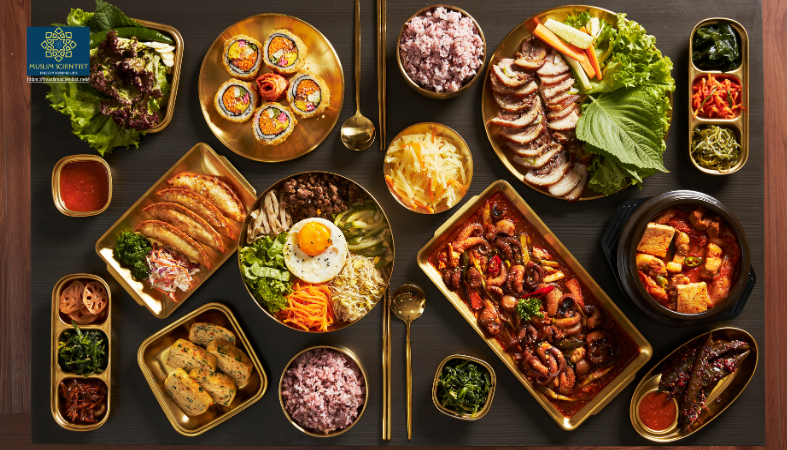
The restriction applies primarily to dishes containing pork or non-halal meat. However, Korean cuisine offers numerous options that naturally align with halal requirements. Seafood dishes featuring fish, shrimp, squid, or cuttlefish provide excellent alternatives. Vegetarian options, increasingly available across South Korea, offer additional choices.
Many Korean restaurants have adapted their menus to accommodate Muslim customers. Establishments like Choryang Milmyeon and Leegane Tteokbokki take extra precautions, preparing dishes separately to prevent cross-contamination. Others, including Matchandeul Wang, Sogeum-gui, and Sureungwon, provide detailed information about allergens and special food needs, empowering Muslim customers to make informed choices.
The research reveals that Muslims assess restaurants based on available halal-friendly options rather than restaurant type. This practical approach, grounded in religious values, means that openness to Korean restaurants depends on ingredient transparency and menu flexibility rather than cuisine classification alone.
Practical Implications for the Food Service Industry
The findings carry significant implications for restaurant owners, policymakers, and the food service industry in South Korea. The positive relationship between halal food attitudes and satisfaction suggests a growing market for halal-compliant dining options.
Restaurants that provide halal certification and transparent ingredient labeling can effectively cater to this demographic. This approach enhances customer satisfaction while fostering a more inclusive dining environment. Clear labeling of products with detailed information about allergens and special food needs empowers Muslim customers to make informed choices.
The economic opportunity proves substantial. With Muslim consumers contributing approximately $1.11 billion annually, restaurants that successfully attract this demographic gain access to a loyal and growing customer base. The research demonstrates that Muslim customers actively seek out establishments that accommodate their dietary needs.
Beyond immediate economic benefits, these efforts contribute to the social integration of Muslim residents. When customers feel welcomed and respected within local food culture, this enhances their overall perception of living in South Korea. This aligns with broader hospitality culture and supports South Korea’s emerging Muslim tourism industry.
Looking Forward: Recommendations for Future Research
While this study provides valuable insights, several limitations suggest directions for future research. The sample, drawn from five nations and focused on Busan and Gimhae, may not fully represent all Muslims in South Korea. Language-related biases could have affected responses, and social desirability bias may influence self-reported data.
Future studies could focus on specific aspects of customer satisfaction beyond food itself, such as ambiance and service quality. Investigating the long-term effects of halal food awareness in non-Muslim societies could offer insights into how attitudes and market demand evolve over time.
Longitudinal studies examining how food attitudes change over extended periods would complement this cross-sectional research. Additionally, comparative studies across different non-Muslim countries would help identify cultural factors that influence halal food attitudes and satisfaction.
The research opens possibilities for examining the role of digital platforms in connecting Muslim consumers with halal-friendly restaurants. Online review analysis, already employed in related research, offers rich opportunities for understanding customer satisfaction patterns.
Conclusion: A Path to Greater Inclusion
This study demonstrates that Muslim consumers in South Korea hold positive attitudes toward both halal and Korean restaurants, with no significant difference in perceptions. The availability of halal options, rather than restaurant type, emerges as the key factor influencing dining choices.
Positive attitudes toward food strongly predict both food satisfaction and life satisfaction. When Muslim consumers feel satisfied with available food choices, particularly those complying with halal standards, this contributes significantly to their quality of life and overall wellbeing.
The research challenges assumptions about acculturation and adaptation. Length of stay does not significantly moderate the relationship between attitudes and satisfaction, suggesting that religious dietary adherence remains paramount regardless of duration of residence. This finding emphasizes the importance of providing halal options and fostering inclusive dining experiences to improve both food-related satisfaction and overall wellbeing.
South Korea’s food service industry stands at an important crossroads. By embracing flexibility, transparency, and attentiveness to customer feedback, restaurants can build trust and loyalty within the Muslim community. This approach not only meets the dietary needs of Muslim residents but also enhances South Korea’s reputation as a welcoming destination for all.
Reference: here
Other Articles: