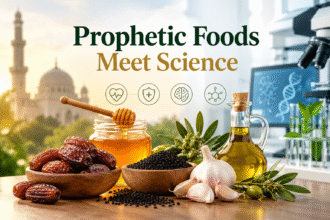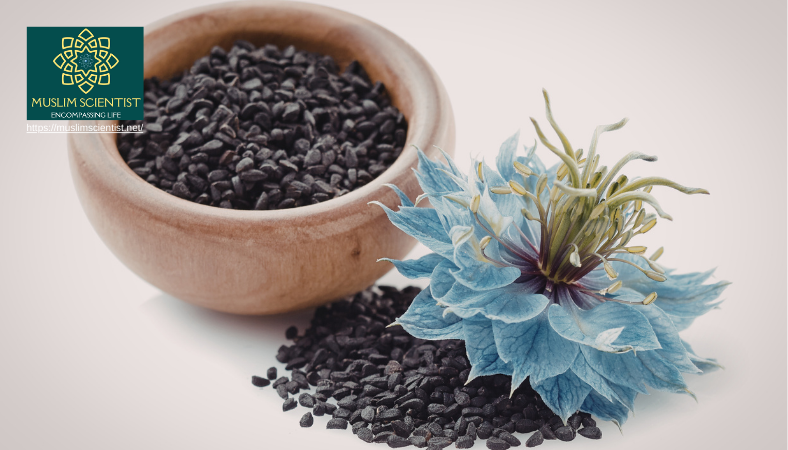
For centuries, traditional healers have prescribed black seed ( Nigella sativa ) for “everything but death” and olive ( Olea europaea ) as a symbol of peace and longevity. A study published in Food Bioscience has now decoded the molecular secret behind these ancient remedies: Hormesis.
Hormesis is the biological principle that a little stress is a good thing. It explains why a low dose of a compound can heal, while a high dose can harm. This new research reveals that the potent phytochemicals in olives and black seeds are “double-edged swords,” and their success depends entirely on hitting the “Goldilocks Zone” —the precise low dose that triggers your body’s internal repair system.
The Yin-Yang of the Plate
The study, which analyzed decades of research on molecular pathways, confirms that compounds like oleuropein (olive) and thymoquinone (black seed) are not direct drugs. Instead, they are mild poisons that, when taken in small amounts, trick your cells into becoming stronger.
“What does not kill us makes us stronger,” the authors quote, referencing Nietzsche’s aphorism. At low doses, these phytochemicals cause a tiny disruption in your cell’s homeostasis. In response, the cell panics—in a good way. It activates survival switches: Nrf2 (the master antioxidant regulator), AMPK (the metabolic master switch), and sirtuins (longevity genes).
The Danger of “More is Better”
Here is the critical warning for supplement users: More is not better.
At high concentrations, the same miraculous thymoquinone that kills cancer cells can become toxic to healthy cells. The “biphasic dose response” means the graph looks like an inverted ‘U’ or a ‘J’. Low dose = benefit. High dose = inhibition or death.
This explains why clinical trials sometimes contradict traditional use. If a supplement has 10x the concentration of olive leaf found in a Mediterranean diet, it may suppress the immune system instead of boosting it.
Key Findings for Human Health
The review maps how these hormetic triggers help in four major disease areas:
1. Metabolic Disorders (Diabetes & Obesity)
- The Data: In a human trial cited, olive leaf polyphenols improved insulin sensitivity by 15% and pancreatic function by 28% without weight loss.
- How it works: Low-dose oleuropein inhibits DPP-4 enzymes (like diabetic drugs) and reduces oxidative stress in fat tissue.
2. Neuroprotection (Alzheimer’s & Parkinson’s)
- The Data: In C. elegans (worm) models, olive extract reduced amyloid-beta aggregation (the plaque of Alzheimer’s).
- How it works: Activation of DAF-16/FOXO pathways (the same pathway activated by fasting) clears toxic proteins.
3. Cancer
- The Data: Thymoquinone and oleuropein induce apoptosis (cell death) in breast, colon, and pancreatic cancer lines.
- How it works: At moderate doses, they increase reactive oxygen species (ROS) inside cancer cells to toxic levels, while protecting normal cells.
4. Inflammation
- The Data: Meta-analyses of 16 RCTs on black seed showed significant reductions in CRP (C-reactive protein), TNF-α, and IL-6.
- How it works: The phytochemicals dampen the NF-κB pathway, the central driver of chronic inflammation.
The Islamic Teaching Connection: Tibb an-Nabawi and Precision
This scientific validation resonates deeply with Islamic teachings ( Tibb an-Nabawi – Prophetic Medicine). The Prophet Muhammad (peace be upon him) said: “Hold on to the use of the black seed, for it has a cure for every disease except death.” (Sahih al-Bukhari).
Similarly, the olive is mentioned in the Qur’an as a sacred fruit: “By the fig and the olive…” (Surah At-Tin 95:1) and “Allah is the Light of the heavens and the earth… lit from a blessed tree, an olive, neither of the east nor the west…” (Surah An-Nur 24:35).
The newly discovered concept of hormesis aligns perfectly with the Islamic principle of Mithqal (measure/balance). Allah states in the Qur’an: “And We have created all things in measure.” (Surah Al-Qamar 54:49).
In Islamic pharmacology, the dose is the difference between a cure and a poison. The Prophet specifically taught moderation. He warned against extremism in consumption. The “biphasic response” is the scientific term for the Qur’anic warning that excess is harmful. Therefore, consuming black seed oil or olive leaf extract is an act of Tayyib (pure/wholesome) living, but only when done with intention and precision.
The Hormetic “Sweet Spot” (Molecular Benefits)
| Health Condition | Bioactive Compound | Low-Dose Hormetic Effect (The “Cure”) | High-Dose Risk (The “Poison”) |
|---|---|---|---|
| Type 2 Diabetes | Oleuropein (Olive) | Activates Nrf2; Lowers blood glucose & DPP-4 | Potential hypoglycemic shock |
| Cancer (Colon) | Thymoquinone (Black Seed) | Upregulates apoptosis (Bax/Caspase); Kills selectively | Hepatotoxicity & oxidative damage |
| Heart Disease | Hydroxytyrosol (Olive) | Improves mitochondrial biogenesis; Reduces LDL | Interference with blood clotting |
| Alzheimer’s | TQ + Oleuropein | Clears tau proteins; Activates FOXO | Neuro-inhibition |
Clinical Evidence Summary (Human Trials)
| Study Outcome | Supplement | Dosage Range | Result (vs Placebo) |
|---|---|---|---|
| Insulin Sensitivity | Olive Leaf Extract | ~51 mg oleuropein | +15% improvement |
| Pancreatic Function | Olive Polyphenols | Daily for 12 weeks | +28% β-cell responsiveness |
| Inflammation (CRP) | Black Seed Oil | 1-2 g/day | Significant reduction (p<0.05) |
| Oxidative Stress | Black Seed (Meta-analysis) | 16 RCTs (n=1033) | Increased SOD & TAC; Lowered MDA |
Conclusion
The science of hormesis bridges the gap between grandmother’s herbal tea and modern precision medicine. For the common person, the rule is simple: Consistency over quantity. A teaspoon of black seed oil daily, or a few olives and high-quality olive oil in your salad, is likely enough to trigger the “stress response” that repairs your body. Buying “super-concentrated” extracts may push you over the hormetic cliff into toxicity. As the Qur’an says, “Eat and drink, but be not excessive.” (20:81).
Reference: here
Other Articles: