Summary
A new study published in Ethnic and Racial Studies offers a rare, ground-level view of what it actually feels like to be Muslim in Britain today. Sociologist Ajmal Hussain from the University of Warwick spent two years conducting ethnographic research in Birmingham, the UK’s second city, between 2021 and 2023. His goal was simple but ambitious: to understand how Muslims see themselves, rather than how the state, media or politicians see them.
The timing matters. During the research period, Census 2021 data revealed that people identifying as Black and Minority Ethnic had become the largest ethno-racial group in Birmingham. In several inner-city wards, that shift had already happened decades earlier. Yet no celebration marked the milestone. Instead, the decade brought scandals like Trojan Horse, Project Champion and the No Outsiders controversy, all of which framed Muslims as unruly, unassimilable outsiders.
Hussain introduces the concept of “seeing like a Muslim.” Rather than accepting the binary of threat versus assimilation, Muslims he worked with looked beyond the immediate emergency framing toward broader horizons. They created comedy shows, launched podcasts, organised night markets during Ramadan, and worked quietly inside policy institutions. Some turned inward, pursuing spiritual growth as a form of activism. Others foregrounded ethnicity over religion when it proved more strategic for fighting discrimination.
The study reveals a “double bind.” Muslims are caught between regimes of representation, which promise inclusion, and regimes of repression, which treat them as suspects. The result is a precarious citizenship experience marked by cynicism, creativity and constant calculation. According to Hussain, these small acts of resistance reveal a different social contract emerging, one where Muslims stop waiting for recognition and start building alternative realities.
A City That Tells a Bigger Story
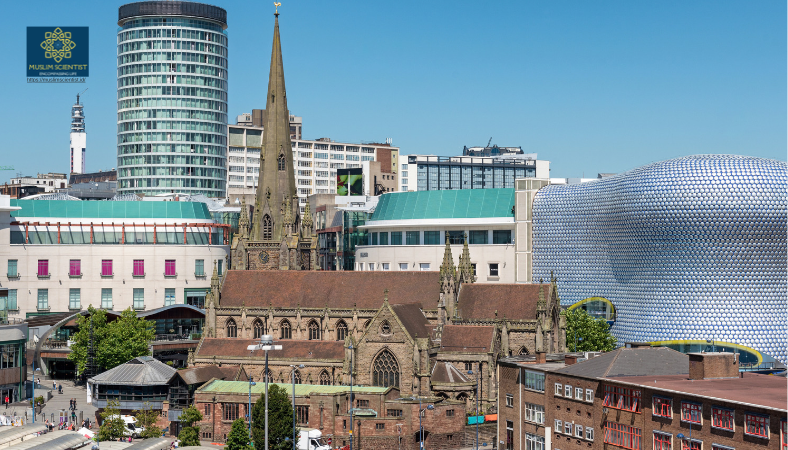
Birmingham is not just any city. With over a million residents, it is the largest local authority in Europe and home to one of the most diverse populations in the United Kingdom. For decades, it has been a laboratory for race relations, multiculturalism and the politics of belonging. When Census 2021 confirmed that Black and Minority Ethnic residents had become the largest ethno-racial group overall, the moment passed almost unnoticed.
Sociologist Ajmal Hussain finds this silence telling. A decade earlier, when Birmingham appeared on the verge of becoming a majority-minority city, anti-racism activists celebrated. They called it “the chocolate city,” a playful nod to Cadbury’s famous local factory. By 2021, that optimism had faded. A decade of scandals, securitisation and political hostility had reshaped the atmosphere entirely.
Hussain’s research, conducted mostly between 2021 and 2023, places the city at the centre of a national story. Birmingham became the stage for Project Champion, a counterterrorism surveillance programme that installed cameras in predominantly Muslim neighbourhoods. It hosted the Trojan Horse affair, which accused Muslim teachers and governors of attempting to Islamise schools. It weathered the No Outsiders controversy over LGBT lessons in primary schools. Each event reinforced a narrative of Muslims as a problem to be managed.
Against this backdrop, Hussain asks a different question. What if we stopped looking at Muslims through the lens of threat and started seeing the world as they see it?
What “Seeing Like a Muslim” Actually Means
The phrase is deliberately provocative. It echoes James C. Scott’s famous work on how states simplify complex realities to govern them. Hussain flips the gaze. Instead of examining how institutions view Muslims, he explores how Muslims navigate, interpret and resist those institutional gazes.
For the people Hussain worked with, seeing differently meant looking past the immediate scene. Beyond the emergency, the scandal and the scare, there existed a field of aspiration, affect and everyday creativity. Comedy became a powerful example. A show called The Muslims Are Coming, staged in May 2022, used satire to confront stereotypes head-on. One comedian joked about the impossibility of enjoying a sunny day without suspicion. The audience laughed, but the point was serious.
These spaces allowed Muslims to say things they could not say elsewhere. The comedy show, the Trojan Horse podcast and the Ramadan night markets all functioned as alternative public spheres. They were not simply protests. They were acts of world-building. According to Hussain, they signal an attunement toward broader horizons that refuse to collapse Muslim life into a single, coherent image.
| Space or Practice | What It Achieved | Why It Matters |
|---|---|---|
| Comedy shows | Satirised stereotypes safely | Created rare space for candid expression |
| Trojan Horse podcast | Revived a buried scandal | Reached new audiences and reframed injustice |
| Ramadan night markets | Built an informal halal economy | Demonstrated self-organisation beyond state control |
| Policy activism | Worked inside institutions | Offered pragmatic leverage for change |
| Spiritual seclusion | Turned activism inward | Reframed self-improvement as social contribution |
The Double Bind of Muslim Citizenship
Hussain borrows a classic concept from W.E.B. Du Bois: double consciousness. Du Bois described the experience of always seeing oneself through the eyes of others, of measuring one’s soul by a world that looks on with contempt or pity. Muslims in Birmingham, Hussain argues, live a version of this split existence.
On one side sits the regime of representation. Universities, councils, cultural institutions and political parties invite Muslims to participate, provided they speak the right language and accept the terms offered. On the other side sits the regime of repression. Counterterrorism policies, surveillance programmes and citizenship-stripping cases like Shamima Begum’s remind Muslims that their belonging is conditional.
Caught between these forces, Muslims develop what Hussain calls a double bind. They cannot fully trust the state, yet they cannot simply withdraw from it either. Some foreground ethnicity when religion becomes too risky. A female professional, for instance, identified as South Asian in daily life but strategically claimed Muslim identity when facing workplace discrimination, knowing Islamophobia was the more recognised grievance.
Others, like a former teacher named Alum, chose a different path. After the Trojan Horse scandal poisoned the atmosphere at his school, he left for spiritual seclusion in Morocco. He returned, in his words, equipped to be a better person, citizen and Muslim. He described his approach as “activism turned inward,” a concept rooted in Islamic tradition where inner transformation precedes outer change.
Comedy, Podcasts and the Art of Getting Around
When formal channels close, people improvise. Hussain documents how Muslims in Birmingham found creative ways to “get around” the obstacles placed before them. Some acts were public and performative. Others were clandestine, done under the radar to avoid scrutiny.
The Trojan Horse podcast, produced by The New York Times and Serial in 2022, exemplified this impulse. It revisited a scandal that had devastated Muslim educators and governors in 2014, long after mainstream media had moved on. Hussain attended a live event at the Mockingbird Cinema in Digbeth. The venue choice itself sparked commentary. One attendee, Asiya, noted wryly that it was not “in the hood,” signalling awareness of class and geography within the Muslim community itself.
The event became a space for catharsis. Attendees criticised the BBC, the Guardian, the local council and elected representatives for failing to demand accountability. One activist linked the scandal to fears of the “great replacement.” Another highlighted the absurdity of media focusing on whether the incriminating letter was a hoax rather than on the harm done to innocent people. The case against the teachers eventually collapsed, with the tribunal calling it an “abuse of process.” By then, the damage was done.
Yet the podcast demonstrated something important. The impulse to challenge the status quo persisted, operating on a different timeline. When normative time was constrained, people created their own.
The Power of the Profane
During Ramadan 2022, Hussain accompanied a policy activist named Haseeb on nightly surveys of the Coventry Road street markets. For years, local authorities had tried and failed to regulate these sprawling, chaotic, joyous gatherings. Halal meat sizzled on grills. Bubble tea and waffles drew crowds. Worshippers spilled out of mosques after night prayers into a spectacle of consumption and faith.
The markets attracted attention across the country and even abroad. More importantly, they demonstrated a form of citizenship that required no permission. Young Muslims created an informal economy of non-alcoholic wine, oud-based perfumes, cured meats and Islamic-inspired streetwear. These ventures would be unviable in the formal economy, yet they thrived here. According to Hussain, the markets filled a gap left by the disappearance of official multiculturalism. They showed that thriving in the city can itself be a form of resistance.
This insight extends beyond Birmingham. Across Europe and North America, Muslim communities are building parallel infrastructures in response to exclusion: halal food networks, Islamic finance, community centres and digital media. Each represents a small refusal to wait for recognition.
| Actor Type | Method of Engagement | Goal |
|---|---|---|
| Cultural producers | Comedy, podcasts, art | Reframe narratives and create safe spaces |
| Policy activists | Insider institutional work | Influence decisions affecting Muslims |
| Spiritual seekers | Inner transformation | Model ethical Muslim citizenship |
| Informal traders | Ramadan night markets | Build autonomous economic and social life |
| Youth organisers | Grassroots mobilisation | Redress representation gaps |
A Precarious Future
Hussain does not offer easy optimism. The citizenship experience he describes remains precarious. Englishness is gaining salience as an identity marker, often in ways that exclude. The right to protest faces new restrictions. Expressions of solidarity with Palestinians trigger accusations of divided loyalties. The case of Shamima Begum, whose British citizenship was stripped, stands as a warning about the conditional nature of belonging.
Yet the study also reveals resilience. Muslims in Birmingham are not waiting for a seat at the table. They are building their own tables. Through comedy, commerce, policy engagement and spiritual practice, they are creating what Hussain calls a different social contract, one where recognition and reciprocity are no longer the primary goals.
Whether this represents withdrawal, adaptation or transformation remains an open question. What seems clear is that seeing like a Muslim reveals a reality far richer and more complex than the narrow frames of threat and integration allow. As Hussain concludes, resistance is an archive of the city. In Birmingham, that archive is being written every day.