Summary
Sacred Homes, Hidden Prayers: How a Pakistani Muslim Family Keeps Faith Alive in Urban China
A 2026 study in Applied Linguistics Review examines how a Pakistani Muslim family in urban South China transforms their domestic space into a sacred landscape. Through wall-mounted Qur’anic verses, prayer rugs, and multilingual textbooks, they sustain Islamic identity in a country where Muslims form a tiny minority.
The family — mother Ayesha, father Fakhir, son Sami (15), and daughter Hareem (6) — speaks Pashto, Urdu, English, Arabic, and Mandarin. Yet these languages carry unequal weight. Arabic holds the highest sacred status as the language of the Qur’an. Urdu and English serve as pedagogical bridges. Pashto appears occasionally as heritage. Mandarin remains largely outside the home’s sacred space.
China’s education system presented difficult choices. Foreign children cannot enroll in public schools, and international schools proved too expensive. Sami takes online classes from a Pakistani academy. Hareem attends a Chinese-medium kindergarten. Ayesha teaches Islamiyat at home using textbooks from Pakistan.
Praying in public is not permitted in China. The family offers daily prayers at home or at a mosque, avoiding attention. When outdoors, they seek secluded spots.
The living room functions as both communal space and micro-mosque. Handwritten Qur’anic verses hang on walls with English and Urdu translations. A simplified Qur’an sits on a shelf for Hareem. During prayer, a decorated rug is spread on the floor, and children kneel facing wall-mounted verses.
A Chinese calligraphy scroll hangs at a ninety-degree rotation in the corner. Ayesha did not know its meaning at first. After translation, she reframed it as decorative — a nod to Chinese aesthetics rather than sacred text. Its placement beneath Qur’anic verses reveals how the family negotiates space. Chinese culture is respected but occupies a secondary position.
The study reveals divergence between the two children. Sami received formal Islamic education in Pakistan and studies independently. Hareem learns Chinese at kindergarten and receives all religious education at home. Younger children socialized primarily in Mandarin may depend more heavily on domestic pedagogy.
Researchers apply two concepts. “Semiotic ideology” refers to beliefs about how signs relate to religious authority. “Heritage literacy” describes informal practices through which families transmit knowledge. Together, they reveal three dimensions of resilience: sacralizing domesticity, practicing spatial defiance, and engaging in translanguaging sacred practices.
The study acknowledges limitations. A single-family case cannot represent all Muslim migrants. Future research should examine diverse communities. Nevertheless, it offers a textured portrait of quiet resilience. Faith survives not through grand institutions but through daily practices — a prayer rug unfurled, a verse recited, a child learning the Arabic alphabet.
The story speaks to universal questions. How do families pass on what they value when the surrounding world does not share those values? How does home become more than a physical space? The family answers with small, consistent acts. They create a sacred landscape at home, invisible to the outside world but profoundly real to those within it.
A new study reveals the quiet, creative ways one migrant family turns a rented apartment into a spiritual sanctuary — and what it says about belonging in modern China
When Faith Finds a New Address
For many families, home is simply where life happens. For one Pakistani Muslim family living in urban South China, however, home has become something far more profound: a mosque, a school, and a sanctuary all at once.
A 2026 study published in Applied Linguistics Review examines how this family — a mother, father, son, and daughter — transforms their domestic space into what researchers call a “homescape.” Through wall-mounted Qur’anic verses, prayer rugs unfurled in living rooms, and carefully stacked textbooks in Arabic, Urdu, and English, they sustain their Islamic identity in a country where Muslims form a tiny minority.
The research, conducted by Ying Wu, Samina Akhtar, and Fan Fang, offers a rare glimpse into the private lives of Muslim migrants in China. It also raises urgent questions about how religious minorities navigate belonging when the surrounding culture speaks a different language — literally and figuratively.
A Family Portrait: Four Lives, Four Languages
The family arrived in China in stages. Ayesha, the mother, first lived there from 2016 to 2019, returned to Pakistan, then came back in 2023. Her husband Fakhir joined her. Their son Sami, now fifteen, moved to China in 2023. Their daughter Hareem, just six, was born during the family’s earlier stay.
Between them, they speak Pashto, Urdu, English, Arabic, and Mandarin. Yet these languages do not carry equal weight at home.
Arabic holds the highest status — it is the language of the Qur’an, recited during daily prayers and displayed prominently on living room walls. Urdu and English serve as bridges, helping the children understand what the Arabic actually means. Pashto, their ancestral tongue, appears occasionally in annotations. Mandarin, the language of their host country, remains largely outside the family’s sacred space.
This hierarchy is not accidental. As the researchers explain, it reflects what they call “semiotic ideology” — a system of beliefs about which signs and languages carry sacred authority.
When School Doors Close, Home Doors Open
China’s education system presented the family with a difficult choice. As foreigners, their children could not enroll in local public schools. International schools charged tuition the family could not afford. So they turned inward.
Sami now takes online classes from a Pakistani academy, studying in English. Hareem attends a Chinese-medium kindergarten affiliated with her father’s university. To fill the religious gap, Ayesha teaches Islamiyat at home using textbooks brought from Pakistan.
“The school language policies have not created any tensions for us,” Fakhir told researchers. “We just make sure not to break any laws in China.”
That careful phrasing hints at something deeper. Praying in public is not permitted in China. The family offers their five daily prayers at home or at a mosque, avoiding attention. When outdoors, they seek secluded spots.
Ayesha frames their homeschooling as both a moral duty and a practical necessity. Since Chinese schools exclude Islamic instruction, she and Fakhir take full responsibility for their children’s religious education.
The Living Room as Sacred Space
Step into the family’s living room, and the signs of faith are everywhere.
Handwritten Qur’anic verses hang on the wall, accompanied by English and Urdu translations. A printed excerpt from Surah Al-Baqarah — the famous “Ayat al-Kursi” — displays Arabic text above Romanized transliteration. A simplified Qur’an for beginners sits on a shelf, used by Ayesha to teach Hareem the Arabic alphabet.
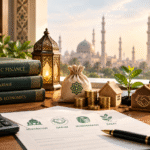
The placement of these objects matters. The Qur’an rests on elevated shelves, never on the floor. Feet must never point toward it. During prayer, a decorated rug is spread on the floor, and the children kneel facing the wall-mounted verses.
“The prayer mat is not only used for offering Salah,” Ayesha explained. “It also serves as a respectful space for my children to begin learning Arabic script. These items are not just family traditions. They serve as reminders of faith, devotion and respect.”
Researchers observed that the living room functions as both a communal gathering space and a micro-mosque. Through these embodied practices — kneeling, reciting, orienting bodies toward scripture — the family synthesizes private devotion with global Islamic belonging.
A Chinese Scroll in an Islamic Home
One object stands out for its ambiguity. In the corner of the living room, a Chinese calligraphy scroll hangs at a ninety-degree rotation. It contains ancestral maxims, a traditional family inheritance signboard once displayed in Chinese central halls.
Ayesha admitted she did not know its exact meaning at first. After a researcher translated it, she reframed it as a decorative artifact — a nod to Chinese aesthetics rather than a sacred text.
Its placement tells a story. The scroll sits beneath the Qur’anic verses, literally lower on the wall. For the researchers, this “disoriented emplacement” reveals how the family negotiates space. Chinese culture is respected, even admired. Yet it occupies a secondary position in the home’s spiritual hierarchy.
Two Children, Two Paths
The study reveals a striking divergence between the two children.
Sami, the fifteen-year-old, received formal schooling and Islamic education in Pakistan before moving to China. He learned Qur’anic recitation from religious tutors and his grandparents. Today, he reads Arabic but prefers English translations to understand meaning. He studies independently and describes his Qur’an reading as a “personal dialogue with divine guidance.”
Hareem, the six-year-old, has a different experience. She attends a Mandarin-speaking kindergarten and learns Chinese words like yi er san si (one, two, three, four) and jin tian ni chi fan le ma (Have you eaten today?). Her religious education comes entirely from her parents at home.
This gap worries researchers. Younger children socialized primarily in Mandarin may depend more heavily on improvised domestic pedagogy to reconcile competing worlds. Older children with pre-migration religious capital can sustain autonomous piety more easily.
A Wall That Speaks Three Languages
The most revealing artifact may be a handwritten text on the living room wall. It contains a Qur’anic verse in Arabic, followed by an English translation. Below it, a hadith appears in Arabic with an Urdu rendering.
This layering is not random. It reflects what the researchers call “translanguaging hermeneutics” — using multiple languages to unlock sacred meaning. Arabic provides the divine word. English and Urdu provide the key.
Sami confirmed this. “I recite in Arabic, but I prefer reading the English translation to understand the meaning of the Qur’an better.”
Yet tensions exist. Ayesha claimed the family uses Pashto annotations. Researchers observed Urdu instead. This discrepancy, though small, hints at the messy reality of multilingual religious practice — where what families say and what they do may not always align.
Language Roles in the Family’s Sacred Space
| Language | Role in Home | Sacred Status | Used By |
|---|---|---|---|
| Arabic | Qur’anic recitation, wall texts, prayer | Highest — divine language | All family members |
| Urdu | Qur’anic translation, textbooks, annotations | Medium — pedagogical bridge | Parents, Sami |
| English | Qur’anic translation, online schooling, interviews | Medium — pragmatic bridge | Parents, Sami |
| Pashto | Ancestral language, occasional annotations | Low — heritage marker | Parents |
| Mandarin | Kindergarten, peer interactions, decorative scroll | Lowest — outside sacred space | Hareem |
Educational and Religious Arrangements
| Family Member | Secular Education | Religious Education | Language of Instruction |
|---|---|---|---|
| Ayesha (Mother) | Pakistan (Urdu/English) | Pakistan (Urdu/English) | English |
| Fakhir (Father) | Pakistan, Qatar (Arabic/English) | Pakistan (Urdu/English) | English |
| Sami (Son) | Online Pakistani academy | Home + Pakistan tutors | English |
| Hareem (Daughter) | Chinese kindergarten | Home only | Mandarin (school), Arabic (religion) |
What the Researchers Found
The study applies two key concepts. “Semiotic ideology” refers to beliefs about how signs, languages, and objects relate to religious authority. “Heritage literacy” describes the informal, everyday practices through which families transmit cultural and religious knowledge.
Together, these lenses reveal three dimensions of what the researchers call “diasporic semiotic resilience.”
First, the family sacralizes mundane domesticity. Ordinary rooms become sites of continuous liturgical engagement. The living room is not just a living room — it is a prayer hall. The bookshelf is not just storage — it is a sacred archive.
Second, they practice spatial defiance. By carving out sovereign semiotic niches within a regulated private sphere, the family asserts autonomous religious territoriality. The Qur’an on an elevated shelf, the prayer rug on the floor, the hijabs worn at home — these are quiet acts of resistance against assimilationist pressures.
Third, they engage in translanguaging sacred practices. Arabic, Urdu, English, and Pashto coexist in a heteroglossic “madrasa” where layered resources co-constitute embodied theological meaning-making.
The Bigger Picture: Muslims in China
Islam has a long history in China, arriving during the Tang Dynasty around 651 CE. Today, ten ethnic minorities with Islamic affiliations are officially recognized, primarily in western regions like Xinjiang, Qinghai, Gansu, and Ningxia.
Yet Muslims in urban South China remain a marginal phenomenon. Unlike northwestern China, where Islamic ethno-religious enclaves exist, southern cities offer little institutional support for Islamic literacy. The family in this study had minimal interaction with local Muslim groups.
China’s education system does not include Islamic instruction. Public schools exclude religious teaching. For migrant Muslim families, this creates systemic barriers. The domestic sphere becomes the primary site of religious transmission — a vernacular, unpublicized, yet resilient pedagogy.
A Single Family, A Larger Story
The researchers acknowledge limitations. A single-family case cannot represent all Muslim migrants in China. Future studies should examine diverse communities to understand how cultural contexts shape religious literacy.
Nevertheless, the study offers a textured portrait of one family’s quiet resilience. It shows how faith survives not through grand institutions but through daily practices — a prayer rug unfurled, a verse recited, a child learning the Arabic alphabet on her mother’s lap.
It also reveals tensions. Between Arabic and Mandarin. Between sacred and secular. Between belonging to a global Muslim community and living as a tiny minority in a secular state.
What This Means for Ordinary People
Why should this story matter beyond academic circles?
Because it speaks to universal questions. How do families pass on what they value when the surrounding world does not share those values? How do parents teach children to navigate multiple identities without losing themselves? How does home become more than a physical space?
The Pakistani family in this study answers these questions not with grand declarations but with small, consistent acts. They hang verses on walls. They kneel on rugs. They open books in languages their children are still learning.
In doing so, they create something remarkable: a sacred landscape at home, invisible to the outside world but profoundly real to those who live within it.