Summar
A scientific paper examines the Zamzam well in Mecca, Saudi Arabia, arguably the most sacred groundwater source on Earth. Author Paul Whincup traces the well’s history back nearly 4,000 years to its revelation to Hagar, the wife of Abraham, and her son Ismail. Located just 21 metres from the Kaaba within the Al-Haram mosque, the well has supplied water to pilgrims for millennia and remains central to Islamic ritual and devotion.
The paper explores the well’s hydrogeology, chemistry and management. Zamzam draws water from the Wadi Ibrahim catchment, where permeable alluvial sands and fractured bedrock combine to create a sustainable supply. The well is 30 metres deep, with a stone-lined upper section and a narrower rock-excavated lower section. Its water is slightly alkaline, with a pH of 7.65, and contains naturally occurring minerals reflecting the surrounding volcanic geology.
Modern management is sophisticated. The Zamzam Studies and Research Centre, established in 2000, monitors water quality several times daily and imposes building controls within the catchment to protect recharge. Sewers near the mosque are sealed to prevent leakage. The municipal water supply comes almost entirely from desalinated seawater, ensuring that Zamzam remains uncontaminated.
Each year, around 20 million pilgrims visit Mecca and return home with five litres of Zamzam water, totalling 100,000 kilolitres. The well’s daily capacity of 1,000 cubic metres comfortably meets demand. According to Whincup, the Zamzam well can rightly be recognised as the world’s most sacred groundwater site.
A Well Older Than History
Few water sources on Earth carry the spiritual weight of Zamzam. Located in Mecca, Saudi Arabia, just 21 metres from the Kaaba, the well has quenched the thirst of pilgrims for thousands of years. Its origins, according to Islamic tradition, stretch back to a moment of desperation when Hagar, cast into the Arabian desert with her infant son Ismail, searched frantically for water. The well’s revelation saved them, and the act of searching, known as Saa’i, is re-enacted annually by millions of pilgrims.
Paul Whincup’s paper offers a comprehensive scientific examination of this remarkable site. He traces its history through the Torah, the Bible and Islamic Hadiths, noting that while the Quran does not explicitly name the well, it is referenced in sayings of the Prophet Muhammad. The paper situates Zamzam within a geological and hydrological context that explains why this particular location has sustained life for so long.
The Kaaba itself, rebuilt by Abraham, is the most sacred site in Islam. Muslims around the world face it during daily prayers. According to tradition, the original Kaaba was constructed by Adam around 4000 BCE, a time when the Arabian Peninsula received far more rainfall than today. If the well existed then, its age could exceed 6,000 years.
Searching for Water in a Drying Land
The Saa’i ritual commemorates Hagar’s desperate search. She ran seven times between the hills of Safa and Marwah, both roughly 360 metres above sea level, looking for water. Today, pilgrims walk the 394-metre distance between the two hills seven times within a covered passageway bordering the mosque.
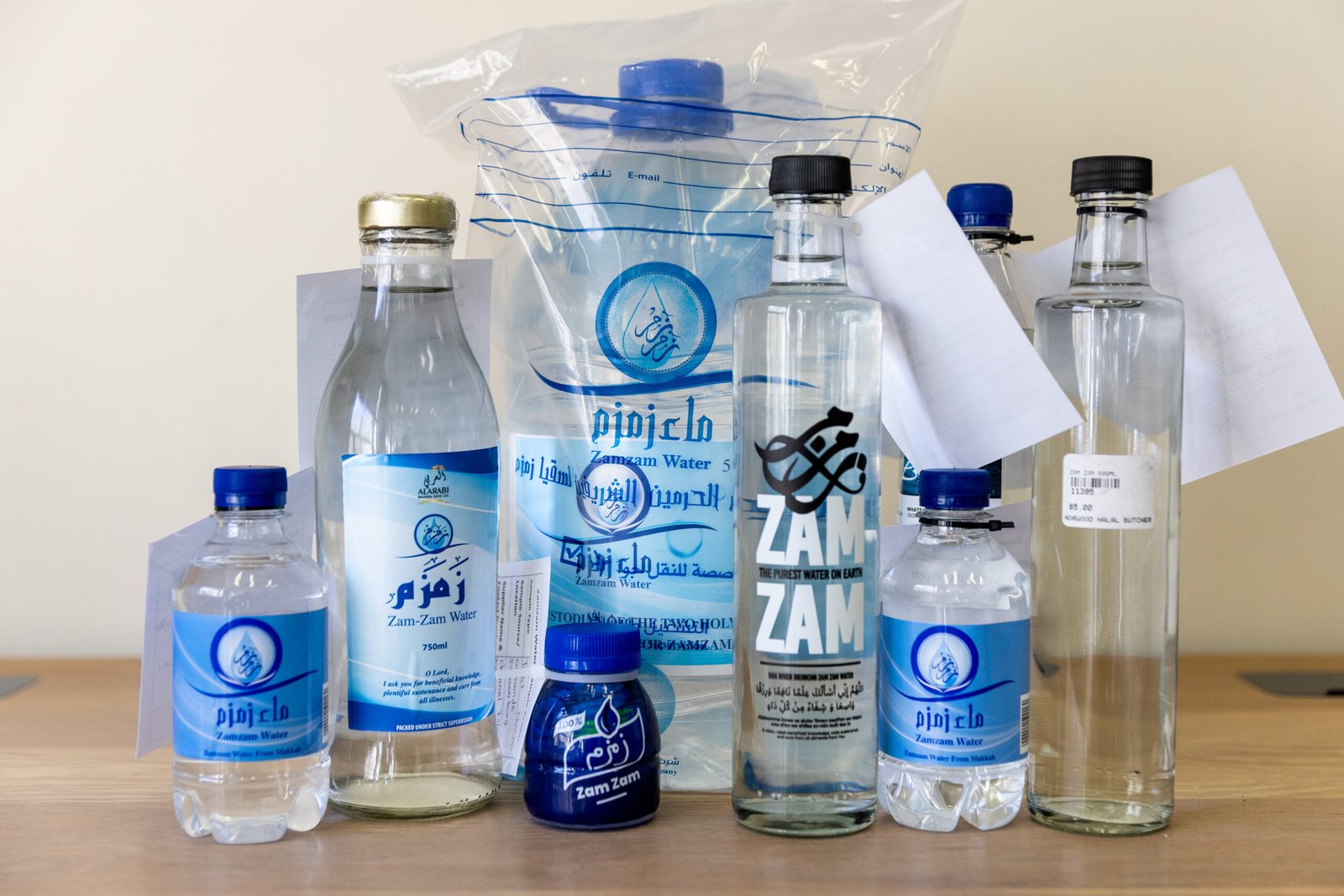
The scale of modern pilgrimage is staggering. Around 20 million pilgrims perform Hajj or Umrah annually. Hajj is restricted to about 1.5 million during a specified period based on lunar predictions. Umrah, open year-round, attracts up to 18.5 million. Each pilgrim returns home with five litres of Zamzam water, believed to have health benefits. Muslims always pray before drinking it.
| Pilgrimage Type | Annual Pilgrims | Timing |
|---|---|---|
| Hajj | ~1.5 million | Specified lunar period |
| Umrah | Up to 18.5 million | Year-round |
| Total | ~20 million | Combined |
This translates to approximately 100,000 kilolitres of Zamzam water distributed annually. The well’s daily capacity of 1,000 cubic metres comfortably meets this demand and remains within the recharge capacity of the Wadi Ibrahim aquifer.
Geology Beneath the Sacred Site
The Zamzam well lies within the Al-Haram mosque along Wadi Ibrahim, a dry watercourse characteristic of Saudi Arabia. Unlike the deep fossil aquifers further inland, wadis feature shallow water tables and permeable alluvial sediments. These sands and gravels provide readily accessible groundwater.
Beneath the alluvium lies the Arabian-Nubian Shield, composed predominantly of Neoproterozoic metamorphosed volcanic rocks. These rocks are fractured, giving them high secondary porosity. The Zamzam well intersects both the alluvium and the bedrock, drawing water from both sources.
According to Whincup, this geological setting explains the well’s sustainability. Rainfall in Mecca averages about 100 millimetres annually, typically falling as short thunderstorms. During the Holocene humid period, the area was characterised by monsoons, rivers and freshwater lakes. The shift to aridity began around 4000 BCE, though wetter periods coincided with the Little Ice Age between roughly 1400 and 1850 CE.
The Well Itself
The Zamzam well sits at an elevation of 310 metres above sea level and is approximately 30 metres deep. The upper 12.8 metres are lined with stone through the wadi alluvium, with a diameter of 2.66 metres. The lower 17.2 metres have been progressively excavated in rock over centuries, with a narrower diameter of 1.08 metres and no lining.
In 1964, the well was relocated 2.7 metres from the mosque floor into an underground chamber. It is now surrounded by glass plates, permitting pilgrims a clear view. Water table levels range between 0.74 and 2.15 metres below the chamber floor. The well can yield 18.5 litres per second.
| Feature | Measurement |
|---|---|
| Total depth | ~30 metres |
| Upper section diameter | 2.66 metres |
| Lower section diameter | 1.08 metres |
| Water table depth | 0.74–2.15 metres |
| Yield | 18.5 litres/second |
| pH | 7.65 |
Water Chemistry and Health Claims
The groundwater is slightly alkaline, with a pH of 7.65. Its chemistry reflects the volcanic rocks within the Wadi Ibrahim catchment. Major ions include sodium (120 mg/L), chloride (159 mg/L), calcium (72 mg/L), sulfate (111 mg/L), potassium (38 mg/L), bicarbonate (177 mg/L) and magnesium (21 mg/L).
Many Muslims believe Zamzam water offers health benefits. The paper notes this belief without making medical claims, observing simply that Muslims always pray before drinking. The water’s mineral content is higher than municipal supplies but within safe limits.
Protecting a Sacred Resource
Mecca’s permanent population has grown rapidly, from 1.294 million in 2000 to 2.017 million in 2020. Monthly peaks during pilgrimage add up to two million more. This growth has intensified development, with high-rise buildings and road networks increasing runoff and stressing aquifer recharge.
The Saudi government has responded with sophisticated management. The Zamzam Studies and Research Centre, established in 2000 by the Saudi Geological Survey, monitors all projects surrounding Wadi Ibrahim and prepares engineering solutions to protect the water. Building controls within the catchment ensure structures meet engineering standards.
Water quality is monitored several times daily to detect any adverse changes from leaks or contamination. Sewers in the central area near the Al-Haram mosque are sealed to prevent leakage. The municipal water supply is 97 percent remineralised desalinated water from Red Sea plants near Jeddah, 95 kilometres away, with only three percent groundwater from local wadis.
| Protection Measure | Purpose |
|---|---|
| Sealed sewers near mosque | Prevent contamination |
| Building controls in catchment | Protect recharge |
| Daily water quality monitoring | Early detection of changes |
| Desalinated municipal supply | Reduce groundwater demand |
| Zamzam Studies Centre | Research and engineering solutions |
The contrast between municipal water and Zamzam is stark. Combined municipal total dissolved solids average 150 mg/L, compared to 830 mg/L for Zamzam groundwater. This confirms there are no leakages into the Zamzam aquifer that could affect water levels or quality.
Flooding and Historical Challenges
Floods have regularly occurred along Wadi Ibrahim, sometimes inundating the Al-Haram mosque and the Kaaba. After severe floods in 1941, when a pilgrim reportedly swam around the Kaaba seven times, authorities raised the mosque floor and installed underground tunnels and stormwater networks.
The 1941 flood remains a striking illustration of the challenges posed by Mecca’s topography. The well’s superstructure, visible to the right of the Kaaba in historical photographs, has been repeatedly modified to protect it from floodwaters.
A Legacy of Faith and Science
Whincup’s paper concludes that the Zamzam well can rightly be recognised as the world’s most sacred groundwater site. Its history spans nearly 4,000 years of documented tradition, and possibly 6,000 years if the original Kaaba’s water source was the same. Its waters have sustained pilgrims through empires, dynasties and the modern era.
The scientific analysis adds another layer to this sacred story. The well’s sustainability depends on a delicate balance between rainfall, recharge and extraction. Modern management has preserved that balance through monitoring, regulation and engineering. For the 20 million pilgrims who visit Mecca each year, Zamzam remains a source of spiritual and physical refreshment. For hydrogeologists, it represents a remarkable example of sustainable groundwater use across millennia.