A Provocative Critique of the Multi-Billion Dollar Faith-Based Travel Industry
A conceptual paper published in Tourism Management Perspectives has ignited fresh debate about the rapidly growing halal tourism industry. Dr. Omar Moufakkir from the Gulf University for Science and Technology in Kuwait argues that while halal tourism markets itself as a religiously compliant alternative to mainstream travel, it often reinforces superficial expressions of Islamic piety rather than genuine ethical engagement.
The study introduces a novel theoretical framework called “the three gazes” to examine how power, piety, and perception shape Muslim travel experiences. By combining John Urry’s tourist gaze, Michel Foucault’s disciplinary gaze, and the Qur’an’s ethical gaze, Moufakkir reveals tensions between spectacle and sincerity, surveillance and spirituality, and consumption and contemplation.
Understanding the Three Gazes
To appreciate this critique, one must first understand the three lenses through which the researcher examines halal tourism.
Urry’s tourist gaze describes how travelers consume destinations through visual codes shaped by culture, media, and expectation. Tourists seek out experiences deemed “worth seeing” while framing others as peripheral. This gaze transforms places and cultures into consumable spectacles.
Foucault’s disciplinary gaze explains how modern power operates through surveillance and self-regulation. Rather than overt coercion, this power works by normalizing certain behaviors. Individuals monitor themselves to conform with perceived expectations. In halal tourism spaces, travelers may adjust their dress and conduct to align with encoded norms.
The Qur’an’s ethical gaze offers a radically different orientation. The command to “lower the gaze” found in Surah al-Nur invites believers toward humility, sincerity, and God-consciousness. This gaze decenters the ego, restrains desire, and fosters inward awareness rather than outward performance.
Table 1: The Three Gazes Compared
| Aspect | Tourist Gaze | Disciplinary Gaze | Qur’anic Ethical Gaze |
|---|---|---|---|
| Origin | Sociology of tourism | Critical theory | Islamic ethics |
| Purpose | To consume and aestheticize | To regulate and normalize | To cultivate humility and sincerity |
| Focus | Visibility enhances value | Being seen regulates behavior | Sincerity lies in the unseen |
| Power | Choice, framing, spectacle | Surveillance, self-regulation | Restraint, divine accountability |
| Effect on Self | Affirms through experiences | Reforms via internalized norms | Humbles and redirects toward ethics |
| Role in Halal Tourism | Curated Islamic aesthetics | Self-monitoring behavior | Lowering the gaze, ethical consumption |
The Halalized Gaze: When Faith Becomes Performance
Building on these three perspectives, Moufakkir introduces the concept of the “halalized gaze.” This describes how halal tourism environments instruct Muslim travelers to look halal rather than to be ethical.
Prayer rugs appear prominently in hotel lobbies. Gender-segregated signage proliferates. Qur’anic verses decorate walls. Alcohol disappears from minibars. These symbolic gestures cue performances of religiosity. Yet they frequently mask the absence of deeper ethical commitments such as fair wages, environmental stewardship, or genuine community benefit.
The halalized gaze operates through both external and internal mechanisms. Hotels, resorts, and destinations engineer environments that signal Islamic compliance. Meanwhile, travelers regulate themselves according to visual codes and expectations of what constitutes appropriate halal behavior.
This creates what the paper calls “ethical hollowing”—a reduction of Islam to visible rules and aesthetic cues. Compliance becomes about removing prohibited items and adding religious symbols rather than embedding core Islamic values like justice, sincerity, and spiritual well-being into the travel experience.
Table 2: Key Critiques of Halal Tourism
| Critique | Explanation | Example |
|---|---|---|
| Ethical Hollowing | Focus on surface compliance over deep values | Prayer rugs displayed but workers underpaid |
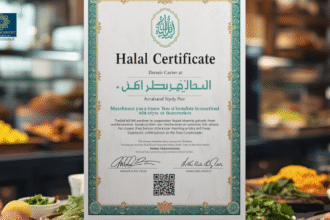
| Commodification | Faith reduced to branding device | Halal certification as marketing logo |
| Essentialism | Single Muslim archetype presumed | Conservative, middle-class, family-oriented only |
| Performative Piety | Looking halal prioritized over being ethical | Modest dress required, ethical sourcing ignored |
| Consumer Complicity | Travelers seek reassurance over transformation | Choosing comfort over spiritual growth |
| Halal Washing | Superficial claims without substance | Symbolic gestures without ethical commitment |
The Problem with Current Research
Moufakkir does not limit criticism to industry practices. He also challenges the academic literature on halal tourism, describing much of it as conceptually thin, empirically repetitive, and methodologically homogeneous.
Numerous studies replicate existing frameworks across different national contexts without questioning underlying assumptions. Research often treats halal tourism as a stable category, ignoring its entanglement with neoliberal branding, state politics, and the commodification of faith.
Fauzi and Battour’s bibliometric review, cited in the paper, reveals that dominant themes center on service quality, satisfaction, loyalty, and branding rather than ethics, spirituality, or theological coherence. The literature appears shaped more by consumer logic than religious substance.
Sandikci’s work questions the essentialism embedded in halal marketing discourse. Many offerings presume a homogeneous Muslim subject—conservative, middle-class, modest, and family-oriented—while ignoring the pluralism and fluidity of Muslim identities. This excludes diverse expressions of religiosity including spiritual, cultural, reformist, and queer perspectives.
Case Studies from Around the World
The paper grounds its theoretical arguments in three illustrative cases from different parts of the world.
In Lombok, Indonesia, top-down policies promote visible Islamic markers such as mosques, prayer facilities, and halal signage. However, local communities resist this homogenization of their religious and cultural identities. Some residents perceive the halalization of Lombok as alienating and externally imposed.
West Sumatra, Indonesia, presents another example. Efforts to attract foreign Muslim tourists to Islamic sites prioritize architectural and performative elements of religiosity. Yet this approach reduces complex local religious practices to simplified, tourist-friendly symbols, obscuring the diversity of Islamic expression and creating mismatches between tourist expectations and local realities.
Zakopane, Poland, offers a European perspective. This resort town has seen a surge in Muslim visitors from Gulf Cooperation Council countries. Local businesses now offer halal food, gender-segregated spa hours, and prayer-friendly accommodations. However, this emerging “halal-friendliness” caters to conservative Gulf aesthetics, raising concerns about cultural essentialism and spatial segregation.
Toward a Theology of Travel
The paper does not merely critique. It also proposes a reorientation of halal tourism toward what it calls a “theology of travel.”
The Qur’anic gaze, Moufakkir argues, does not reject looking but disciplines it. It calls for sight rooted in taqwa (God-consciousness), ikhlas (sincerity), and humility. Travel becomes not leisure for its own sake but a journey of witnessing, remembrance, and recognition.
The Qur’anic imperative to “travel through the land” is repeatedly tied to reflection, learning, and ethical consciousness. The gaze becomes an instrument of contemplation rather than consumption. This orientation demands that halal tourism move beyond symbolic performances and enter the domain of intentional ethics.
Designing travel experiences that foreground spiritual learning, ecological stewardship, and intercultural humility becomes essential. So does embracing the multiplicity of Muslim subjectivities rather than marketing a narrow archetype. Above all, resisting the temptation to perform piety through curated aesthetics and instead practicing it through conscious engagement with the world becomes paramount.
From Halal Washing to Green Halal
The paper introduces a provocative parallel between environmental greenwashing and what it terms “halal washing.”
Just as greenwashing commodifies ecological values for market gain, halal washing commodifies spiritual signifiers for consumer reassurance. Both reduce rich ethical traditions to checklists and certifications, offering appearance without meaningful engagement.
To counter this trajectory, Moufakkir proposes “Green Halal”—a paradigm aligning halal tourism with Qur’anic ethics, environmental consciousness, and social justice. In this vision, halal is not simply about abstaining from what is forbidden but about actively embodying values such as balance, humility, compassion, and stewardship.
Green Halal demands that Muslim travel be not only lawful but just, not only compliant but conscientious. This includes attention to carbon footprints, fair labor practices, host community welfare, and cultivation of God-consciousness throughout the travel experience.
Implications for Industry and Travelers
The critique carries significant implications for both industry stakeholders and individual travelers.
For tourism operators, the paper challenges the assumption that adding prayer rooms and halal menus constitutes meaningful religious accommodation. Authentic halal tourism requires deeper engagement with Islamic ethics, including justice in labor practices, environmental responsibility, and genuine respect for host communities.
For destinations seeking to attract Muslim travelers, the research warns against imposing singular visions of Islamic compliance that may alienate local populations or reinforce cultural essentialism. Sensitivity to diverse Muslim identities and local contexts becomes crucial.
For travelers themselves, the paper invites reflection on motivations and expectations. Are you seeking genuine spiritual growth or simply reassurance and comfort? Do you equate visible piety with moral substance? These questions challenge consumers to examine their own complicity in sustaining superficial approaches to faith-based travel.
The Limits of Symbolism
While critiquing halal washing, Moufakkir acknowledges that commercial imperatives and sociological logics sustain the symbolic architecture of halal tourism.
The widespread use of prayer rugs, halal signage, or gender-segregated spaces reflects pragmatic responses to fragmented theological interpretations, absent universal standards, and the need for instant religious reassurance across diverse Muslim demographics. Certification systems function as instruments of risk mitigation rather than reflections of profound ethical commitment.
Drawing from institutional theory, such practices can be understood as normative and mimetic isomorphism, whereby tourism providers adopt similar outward forms of religiosity to ensure acceptance and competitiveness. Sociologists of religion have long observed that religious practice often gravitates toward visible conformity because ritual, repetition, and aesthetic display are more easily codified and consumed than internal states like sincerity.
An ethically grounded critique must therefore move beyond moral judgment to ask why such visible performances persist and how economic rationality, institutional pressures, and global market logics shape them.
Future Research Directions
The paper outlines several avenues for future scholarship.
Empirical studies could examine how Muslim travelers internalize or contest expectations embedded in halal-certified environments. Research might investigate how service providers navigate commercial pressures while managing diverse interpretations of religious appropriateness. Attention to emotional and affective dimensions—how tourists experience guilt, pride, modesty, or joy—could illuminate ethical encounters or commodified virtue.
Intersectional identities including gender, race, class, sect, and diaspora status shape how Muslim tourists are gazed upon and how they gaze in return. Future work could explore how queer Muslims, spiritual seekers, or culturally hybrid travelers experience normative expectations of halal spaces.
Geopolitical and institutional dimensions also merit scrutiny. Who sets standards for halalness, and whose interests do these standards serve? To what extent are current models complicit in reproducing Gulf-centric, classist, or authoritarian modes of religious authority?
Conclusion: Between Gaze and Guidance
The study ultimately calls for halal tourism to reorient itself toward deeper, more authentic ethics of travel. The gaze, whether physical, institutional, or spiritual, is never neutral. How one looks determines how one relates to places, people, and God.
The future of halal tourism lies not in better packaging of piety but in cultivation of sincerity, humility, and justice. This is not a rejection of travel but a reclamation of its purpose.
As the Qur’an reminds believers, what matters most is not the breadth of what we see but the sincerity with which we lower the gaze. In a world saturated with spectacle, this reorientation demands more than infrastructural change. It calls for an epistemological shift in how halal itself is defined and practiced.