Before Captain Cook, before British colonies – Macassan fishermen and Yolŋu peoples created a peaceful, respectful alliance that changed history.
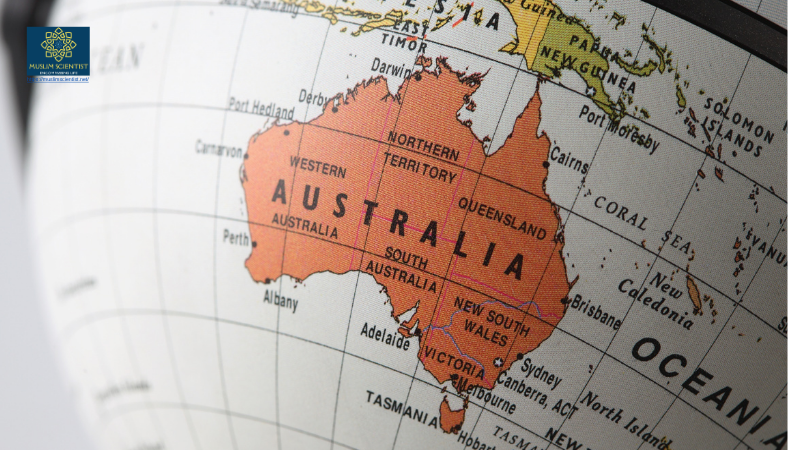
When we think of early Australian history, we imagine the arrival of the British in 1788. But long before that – for over 500 years – Muslim fishermen from the Indonesian island of Sulawesi (Makassar) sailed across treacherous seas to northern Australia. They came not to conquer, but to trade sea cucumbers (trepang) with Aboriginal peoples, particularly the Yolŋu of Arnhem Land.
“Two cultures that sustained a coequal relationship for three centuries without ever having fought a war… they never sought to establish government over the other.” – Aboriginal leader Mick Dodson (cited in the study)
The Big Picture: A 500-Year Bridge Across the Sea
For at least five centuries – from the 15th century until 1906 – Macassan fleets of wooden sailing vessels called praus made the annual voyage from Makassar to the coasts of Arnhem Land and the Kimberley. Carrying up to 1,000 men across 60 ships, they came with the December monsoon and left with the April easterlies.
What makes this story so remarkable? Peaceful coexistence.
While much of the world was experiencing colonial violence, the Macassans and Yolŋu built a relationship based on:
- Fair trade (trepang for metal knives, cloth, rice, tobacco)
- Intermarriage and family ties
- Shared spiritual practices – Islam and Aboriginal Dreaming
- Mutual respect for land, sea, and law
Timeline of Macassan–Aboriginal Encounters (Encouraging Facts)
| Period | Key Event | Significance |
|---|---|---|
| 11th–12th century | Earliest archaeological evidence (Groote Eylandt) | Contact may be nearly 1,000 years old |
| 15th century | Regular trepang trade begins | 500+ years of peaceful interaction |
| 1605–1607 | Makassar formally adopts Islam | Macassans arrive as Muslims, not just traders |
| 1720–1906 | Peak of trepang industry | Annual fleets of up to 60 boats, 1,000 crew |
| 1803 | Matthew Flinders meets Macassan captain Pobassoo | European documentation of established system |
| 1906 | Australian government bans Macassan visits | End of an era, but legacy endures today |
| 2023 | Yolŋu–Macassan “500 Years Celebration” (Melbourne) | Living memory and ongoing cultural revival |
A Spiritual Exchange Like No Other
One of the most fascinating findings of the new study is that the Macassans didn’t just trade goods – they shared Islam. And the Yolŋu, in turn, blended Islamic practices with their own ancient Dreaming spirituality in a process called syncretism.
What did the Yolŋu adopt?
- The name for God: Walitha’walitha (from Arabic Allah ta’ala – “God the Exalted”)
- Prayers facing west (toward Mecca)
- Prostration (similar to Muslim sujood)
- Chants including “Allah hu” and phrases resembling the shahada (declaration of faith) and blessings on the Prophet Muhammad ﷺ
- Fasting month of Ramadan (the word entered local languages meaning “singing”)
- The term djambayang (from sembayang – Muslim prayer)
- Avoidance of pork
But this was not forced conversion. The Yolŋu chose what to adopt, creating their own unique, blended spiritual path. Some individuals fully converted, especially those who intermarried, but most kept their Dreaming traditions while respectfully incorporating Islamic elements.
“The Macassans demonstrated adaptability and proactive engagement with their environment rather than strict adherence to established doctrine.” – Dr. Dzavid Haveric, author
The First Mosques in Australia: Humble Huts of Worship
Here is a discovery that will surprise many: the first mosques in Australia were not grand buildings with domes and minarets. They were simple, makeshift huts – prayer houses made of bamboo, thatch, and woven walls, built along the shores of Arnhem Land.
Colonial paintings from 1839 (Raffles Bay) and 1845 (Port Essington) show these structures. Yolŋu elders still remember oral histories of the madayn waga (“sacred home”). A Macassan “holy man” called Deingaru led prayers, emerging from his hut at sunset to bow toward the west and chant “Allah.”
For centuries, these fragile mosques stood as symbols of a living, breathing Muslim community on Australian soil – long before any European set foot on the continent with a Bible.
Evidence of Islamic Practices Among Yolŋu (Encouraging Cultural Blending)
| Practice / Term | Origin | Meaning / Use |
|---|---|---|
| Walitha’walitha | Arabic Allah ta’ala | “God the Exalted” – used in funeral rituals |
| A-ha-la… A-ha-la | Arabic Allah | Chanted during mortuary ceremonies |
| Rab-bin-a-la la-ha-ma-ha-ma | Arabic Rabb-il-‘alamin | “Lord of the Worlds” |
| Ama | Arabic Amin | “So be it” (amen) |
| Sil-li-la-mo-ha-mo ha-mo-sil-li-li | Arabic salli ‘ala Muhammad | “Invoke blessings on Muhammad” |
| Djambayang | Malay/Indo sembayang | Muslim prayer / ritual dance |
| Ramadan | Arabic | Fasting month – entered local language as “singing” |
| Facing west | Islamic qibla (Mecca direction) | Incorporated into Yolŋu funeral rites |
| Prostration | Islamic sujood | Ritual bowing to the Creator |
Why This Story Matters Today
In a world often divided by religion and culture, the Macassan–Yolŋu relationship offers a powerful, hopeful counter-narrative:
- 500+ years without a single war between the two peoples.
- No colonization, no forced conversion, no destruction of culture.
- Shared prosperity through trade and mutual aid.
- Spiritual respect – Islam and Dreaming were blended, not pitted against each other.
Contemporary Aboriginal scholar Marcia Langton describes this as “forms of civilised culture” – a model of intercultural encounter that Europe never achieved with Indigenous peoples.
Even after the Australian government banned Macassan visits in 1906 (due to tariffs, not conflict), the legacy lived on. Today, Yolŋu songs (manikay), dances (bunggul), and paintings still feature Macassan boats, anchors, swords, and flags. Families still carry Macassan personal names. And tamarind trees – planted by the Macassans – still grow along the Arnhem Land coast as living monuments.
The Modern Revival: 500 Years of Friendship
In 2023, Yolŋu and Macassan communities came together in Melbourne for “Wind Talks: Yolŋu–Macassan Encounters,” celebrating half a millennium of connection. There, Yolŋu leader Uncle Timmy Djawa Murrnmurrnga Burarrwanga drew a picture of a Macassan makeshift mosque, confirming what oral histories had always said: “Our ancestors told us the Macassans built their type of light construction of mosque.”
Visiting Macassan artists and scholars affirmed the account. One Yolŋu man explained that sometimes Macassans visited Aboriginal homes, and Aboriginal people visited the mosque huts – mutual hospitality as a way of life.
This living history is not just a footnote. It is a challenge to us all: to remember that before the violence of colonization, there was a different way. A way of trade without tyranny, faith without force, and friendship across the sea.
The Bottom Line
For 500 years, Macassan Muslims and Yolŋu Aboriginal Australians shared a golden age of peaceful encounter. They traded, intermarried, prayed, and prospered together. Islam was the first monotheistic religion to reach Australian shores – not through conquest, but through quiet, respectful sharing.
Today, as Australia grapples with reconciliation and multicultural identity, this forgotten history offers not just facts, but hope. It proves that two vastly different cultures can meet as equals, learn from each other, and build a relationship that lasts for centuries.
That is a story worth remembering.
Reference: here
Other Articles: