Summary
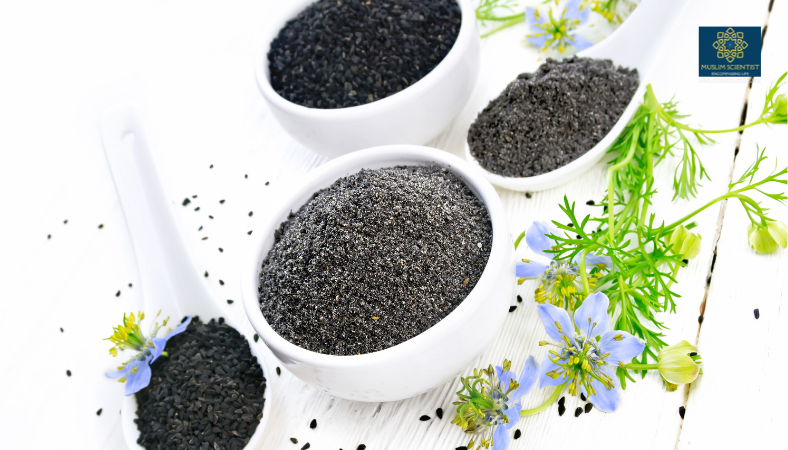
Black cumin (Nigella sativa), known in Arabic as habbatus sauda, holds a unique place in Islamic tradition. A well-known hadith records the Prophet Muhammad saying it is “a healing for every disease except death.” Classical scholars interpreted this as a general statement with specific applications, not a literal guarantee of universal cure. Modern science has identified thymoquinone as the primary bioactive compound, demonstrating antioxidant, anti-inflammatory, and immunomodulatory properties in laboratory and animal studies. Clinical trials in humans remain limited but show promise for conditions including diabetes, lipid disorders, and oral health. Islamic authorities caution against viewing the seed as a magical cure-all, and practices such as wearing it as an amulet are considered impermissible innovations. The relationship between prophetic tradition and modern pharmacology is best understood as complementary: faith offers guidance, while science provides verification and context.
The Hadith That Started It All
The foundation of black cumin’s status in Islamic teaching rests on a widely transmitted hadith. According to Abu Hurayra, the Prophet said: “In the black seed is healing for every disease except al-sām.” When asked what al-sām meant, he replied: “Death” . The narration appears in Sahih al-Bukhari (5688) and Sahih Muslim, two of the most authoritative collections in Sunni Islam.
This statement has captivated Muslim communities for generations. The seed is also called Habbatul Barakah, or “the seed of blessing,” reflecting its esteemed position in prophetic medicine (ṭibb al-nabawī). However, the hadith’s phrasing—”every disease”—has required careful interpretation to avoid misunderstanding.
What Scholars Actually Say
Classical Islamic scholars did not read the hadith as a literal guarantee of universal cure. Ibn Hajar al-Asqalani, in his commentary Fath al-Bari, explains that the black seed’s effectiveness varies by illness type, preparation method, and dosage. It might be consumed, applied topically, or mixed with other substances depending on the condition . The phrasing is understood as a general statement conditioned by context (ʿumūm makhṣūṣ), not an absolute promise .
Ibn al-Qayyim, the renowned scholar and physician, offered detailed guidance on usage in Zad al-Ma’ad. He noted that black cumin is particularly effective for cold-related conditions: crushed and inhaled, it helps with colds; boiled with vinegar as a gargle, it eases toothache; mixed with honey and hot water, it can help dissolve kidney stones. He also recommended it for intestinal worms and headaches caused by cold .
Scholarly Interpretations of the Hadith
A Warning Against Misuse
Islamic authorities draw a clear line between using black cumin as medicine and using it as a talisman. In some cultures, people hang the seeds on children’s clothing or carry them as charms against the evil eye. This practice is considered a bid’ah (impermissible innovation) and can even border on shirk (associating partners with God). The hadith recommends the seed as a treatment to be consumed, not as a magical object.
A related concern involves expectations. If a person tries black cumin for a chronic condition and finds no benefit, Islamic guidance permits seeking other lawful treatments. The prophetic recommendation is not a legal obligation, and the hadith itself acknowledges that al-sām—death—remains beyond any remedy’s reach .
What Modern Science Confirms
Contemporary research has focused heavily on thymoquinone (TQ), the primary active compound in Nigella sativa oil. A 2025 review published in ScienceDirect identified ten completed clinical trials on TQ covering diabetes mellitus, cancer lesions, COVID-19, oral ulcers, and chronic periodontitis, with seven additional trials ongoing . The authors noted that while experimental settings clearly demonstrate beneficial pharmacological effects, TQ’s poor bioavailability and biological instability have delayed clinical translation .
A 2024 review in Europe PMC summarized the broader evidence: Nigella sativa has shown therapeutic potential in gastrointestinal, respiratory, cardiovascular, infectious, and inflammatory conditions. The seed’s phytochemical compounds—including thymoquinone, p-cymene, and alpha-thujene—confer antioxidant effects through significant reduction of reactive oxygen species and potent anti-inflammatory action. The review also noted potential synergistic effects with chemotherapeutic agents and antibiotics, which could reduce required therapeutic doses .
A 2026 review on neuroprotective applications found that controlled human trials, while limited, reported favorable effects on memory, attention, and cognition in healthy elderly volunteers with acceptable safety profiles .
From Prophetic Tradition to Scientific Evidence
The Balance Between Faith and Reason
A 2025 review in Mini Reviews in Medicinal Chemistry directly addresses the intersection of tradition and science. The authors note that Nigella sativa is “recommended for regular use in Tibb-e-Nabwi (Prophetic Medicine)” and is considered “one of the most notable forms of healing medicine in Islamic literature.” They then catalog the pharmacological evidence: TQ’s antioxidant, anti-inflammatory, antiviral, and antineoplastic properties, including molecular docking studies suggesting potential binding to the SARS-CoV-2 protease .
This complementary approach has practical implications. Muslims who use black cumin should do so with reasonable expectations, informed by both religious guidance and medical evidence. The seed is not a substitute for professional medical care. The hadith, properly understood, invites reflection on the natural world as a sign of divine provision—not a rejection of the need for proper treatment.
The scientific literature itself acknowledges this gap between promise and proof. A 2026 review on neuroprotection concluded that “the most significant limitation is the gap between mechanistic and clinical data: Nrf2 activation, cytokine suppression, or restored antioxidant enzyme activity indicate biological engagement but not proven preservation of neural networks or clinical benefit” . For Muslims navigating questions about prophetic medicine, this honesty from the scientific community aligns well with the scholarly caution embedded in the Islamic tradition itself.
References
- Ibn Hajar al-Asqalani. Fath al-Bari bi Sharhi Shahih al-Bukhari. Cairo: Maktabah al-Salafiyah, 1380 H. Vol. 10, p. 144.
- SeekersGuidance. “Am I Sinful for Not Using Black Seed After Finding No Benefit?” May 10, 2026.
- IslamWeb. “Black seed and olive.” July 16, 2003.
- Ali M, Kassab DK, Gouda YA, Badary OA. “Thymoquinone and therapeutic potentials: Updated evidences from clinical trials.” ScienceDirect, 2025.
- “Nigella sativa: A Comprehensive Review of Its Therapeutic Potential, Pharmacological Properties, and Clinical Applications.” Europe PMC, December 13, 2024.
- “Re-evaluating the neuroprotective landscape of Nigella sativa: Molecular mechanisms, nanomedicine, and clinical translation.” ScienceDirect, September 16, 2026.
- Taysi S, et al. “Thymoquinone: A Review on its Pharmacological Importance, and its Association with Oxidative Stress, COVID-19, and Radiotherapy.” Mini Reviews in Medicinal Chemistry 22, no. 14 (2022): 1847-1875.