Summary
In November 2026, Indonesia’s highest Islamic authority issued a ruling that caught many by surprise. The Indonesian Ulema Council (MUI) declared vaping not only forbidden for users, but also for manufacturers and sellers. The fatwa, numbered 131/2026, represents one of the most comprehensive Islamic rulings on e-cigarettes anywhere in the world.
The reasoning rests on three pillars. First, health harm. Vape aerosol contains nicotine, ultrafine particles, heavy metals, and cancer-causing chemicals like formaldehyde . A major 2025 umbrella review of 69 systematic reviews found that e-cigarette use is linked to increased risks of cardiovascular and respiratory disease, mental health issues, and substance abuse, especially among adolescents . Second, environmental damage, which the fatwa cites as a separate justification . Third, the precautionary principle of sadd al-dzariah—blocking the means to harm—because vape devices are increasingly used as vehicles for narcotics and psychotropic substances .
What makes this fatwa notable is its scope. It does not merely say “don’t vape.” It declares that producing and trading vape products is also haram . MUI recommended that the President and Parliament draft legislation banning vape with legal sanctions, that the Food and Drug Agency tighten oversight, and that the Industry Ministry stop issuing vape manufacturing licenses .
The context matters. Indonesia has roughly 70 million active smokers, and youth smoking prevalence has been rising . The Food and Drug Agency (BPOM) has warned that more than 5 million Indonesian children aged 10 to 18 are active smokers, with vape use among adolescents a major driver . The “harm reduction” narrative pushed by the vape industry, BPOM argues, lacks conclusive evidence that vaping is safer than conventional smoking .
For ordinary Muslims, the practical implications are clear. Using vape is religiously prohibited according to MUI. Selling or manufacturing it carries the same ruling. The fatwa is not legally binding in Indonesia—MUI is a clerical body, not a legislature—but its moral authority shapes public opinion and can influence future regulation.
The scientific evidence and the religious ruling point in the same direction. Vape is not a harmless alternative. It delivers addiction, exposes users to toxic chemicals, and opens a door to more dangerous substances. For a country grappling with a youth smoking emergency, the message from both science and scripture is unusually aligned.
What Exactly Did MUI Say?
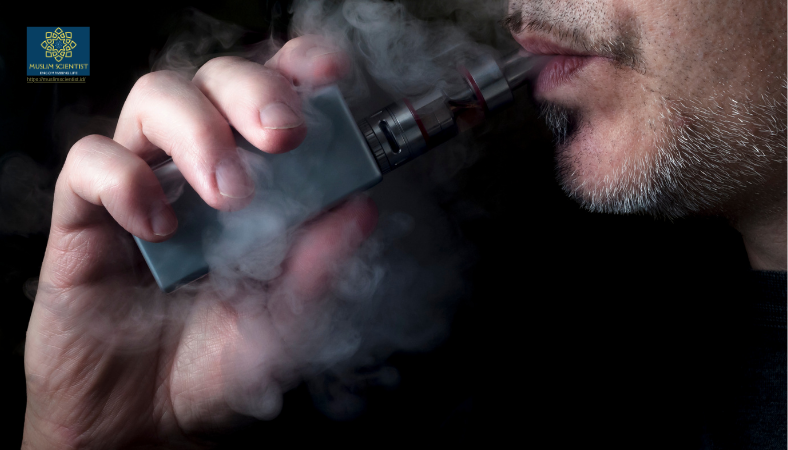
The fatwa is surprisingly detailed. It defines vape as a battery-powered device that heats a substance containing nicotine, glycerin, and flavoring to produce an aerosol that the user inhales . Nicotine, the fatwa notes, is a compound with pharmacological effects on the nervous system, is addictive, and has negative health impacts.
Then come the legal rulings. Point one declares using vape haram because it harms health, damages the environment, and serves as a means to prevent it from becoming a vehicle for narcotics and psychotropic substances . Point two extends the prohibition to misusing vape for consuming illegal drugs. Point three is the broadest: producing and/or trading vape is haram .
The recommendations section reads like a policy blueprint. MUI calls on the President and the House of Representatives to draft a law banning vape with sanctions attached. It asks the Health Ministry to issue a policy prohibiting e-cigarette use based on public health protection. It urges the Food and Drug Agency to tighten supervision and coordinate with the National Narcotics Agency. It recommends the Industry Ministry stop issuing vape manufacturing permits .
| Fatwa Provision | Ruling |
|---|---|
| Using vape | Haram (forbidden) |
| Misusing vape for narcotics | Haram |
| Producing vape | Haram |
| Trading/selling vape | Haram |
The Science Behind the Ruling
MUI’s health argument is not based on speculation. A 2025 umbrella review published in BMJ Open synthesized 69 systematic reviews on electronic nicotine delivery systems. It found increased risks of cardiovascular disease, including elevated heart rate and blood pressure, and respiratory problems such as reduced lung function and higher asthma incidence . Mental health concerns, including depression and suicidality, were prevalent among adolescent users. Nine studies reported negative effects on periodontal health. Carcinogens were detected in the urine of e-cigarette users .
Indonesia’s Health Ministry lists what vape aerosol actually contains: ultrafine particles that reach deep into the lungs, diacetyl (linked to serious lung disease), volatile organic compounds, cancer-causing chemicals, and heavy metals like nickel and lead . Formaldehyde in vape is carcinogenic and can trigger cancer cells with long-term exposure .
Why “Harm Reduction” Didn’t Sway the Scholars
The vape industry has promoted a “harm reduction” narrative: vaping is safer than smoking, so smokers should switch. Indonesia’s Food and Drug Agency has publicly challenged this claim. BPOM Chief Taruna Ikrar stated in May 2026 that “there is no conclusive evidence that electronic cigarettes are safer than conventional cigarettes” . He noted that vape devices are also being misused as vehicles for New Psychoactive Substances .
The vape retailers’ association, Arvindo, has itself instructed members to stop selling to anyone under 21, acknowledging the youth access problem . But from MUI’s perspective, the precautionary principle overrides harm reduction arguments. When the means to serious harm exist, Islamic law permits blocking them before the harm materializes. The fatwa explicitly invokes sadd al-dzariah—blocking the means—as a justification .
Reference: Majelis Ulama Indonesia. (2026, November 8). MUI Tetapkan Fatwa Vape Haram, Prof Asrorun Niam: Untuk Melindungi Masyarakat. MUI Digital.
Kaur, J., Goel, S., Shabil, M., et al. (2025). Health impacts of electronic nicotine delivery systems: an umbrella review of systematic reviews. BMJ Open, 15(10), e100168.
Kementerian Kesehatan Republik Indonesia. Rokok Elektrik (Vape) Menghasilkan Aerosol.
2Firsts. (2026, August 5). Indonesia’s vape retailers adopt 21+ signage and ID verification requirements.
Majelis Ulama Indonesia. (2026, November 8). Komisi Fatwa MUI Tetapkan Vape Haram, Berikut Bunyi Lengkapnya. MUI Digital.
Bundesinstitut für Risikobewertung. (2024, December 18). E-Zigaretten: Chemikalien-Dampf mit ungeklärten Langzeitfolgen.
Bisnis.com. (2026, May 24). 5 Juta Anak Indonesia Jadi Perokok Aktif, BPOM Soroti Efek Kampanye “Harm Reduction” Vape.