Halal Critical Points of Cappuccino: Global Supply Chain Risks
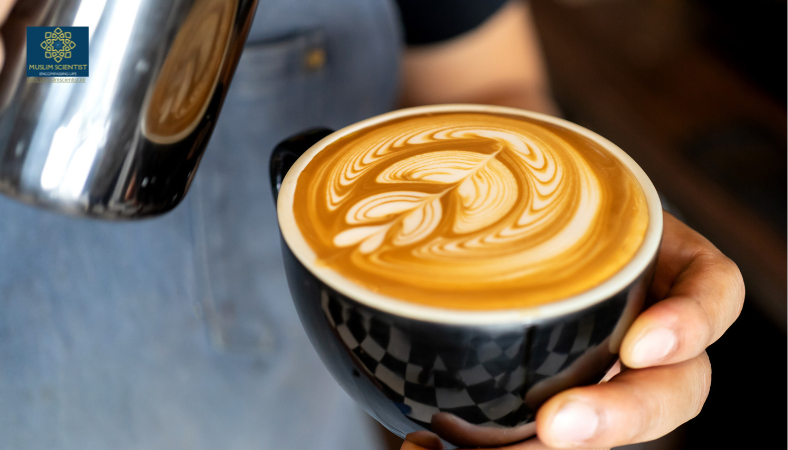
From the coffee shops of London and Paris to the expanding café cultures of Jakarta and Dubai, the seemingly simple cappuccino has become a test case for the global halal economy. As the worldwide halal food market surges toward a valuation of nearly three trillion dollars, industry experts warn that the beverage’s complexity—hidden in milk powders, emulsifiers, and flavor carriers—demands a level of supply chain vigilance that transcends borders and regulatory regimes.
The global coffee industry, long accustomed to debates over bean origin and roast profiles, is now confronting a more intricate challenge: the halal integrity of the humble cappuccino. While the coffee bean itself is universally recognized as plant-based and therefore halal, the beverage’s ancillary components have emerged as critical points of vulnerability in a rapidly formalizing global market. With the halal food sector projected to grow from approximately $2.99 trillion in 2025 to $4.54 trillion by 2030, the stakes for getting a cappuccino “right” have never been higher .
The issue is not confined to Muslim-majority nations. In Europe, where the Muslim population is growing and non-Muslim consumers increasingly seek ethical and traceable food options, the cappuccino’s halal status has become a matter of supply chain transparency . In the Gulf Cooperation Council (GCC) states, strict certification regimes dictate that even the flavorings and dairy components must bear recognized halal marks. And in Southeast Asia, Indonesia’s mandatory certification framework has set a precedent that ripples through global export markets .
The Anatomy of a Global Halal Critical Point
In halal assurance terminology, a “critical point” refers to any stage where contamination with non-halal substances is possible. For a cappuccino, the primary ingredient—coffee—presents minimal risk. The vulnerabilities lie elsewhere. According to the American Halal Foundation, food and beverage certification reviews category-specific inputs: “Cheese turns on rennet, confectionery on gelatin, bakery on enzymes and release agents, coffee on flavor carriers” . This distinction is crucial. The flavor carriers—the syrups, extracts, and powdered creamers that define a modern cappuccino—are where halal integrity is most frequently compromised.
Globally, the critical points fall into three broad categories: dairy and non-dairy creamers, flavorings and syrups, and processing equipment. Each presents distinct challenges depending on regional regulatory frameworks and supply chain maturity.
Global Halal Critical Points in Cappuccino by Component and Region
The Fragmented Landscape of Global Certification
The most significant obstacle to a universally “halal cappuccino” is not ingredient science but regulatory fragmentation. The halal certification world lacks a single, enforceable global standard. Instead, a patchwork of national and regional regimes governs market access, creating compliance burdens for exporters and multinational café chains.
In the Gulf, the six GCC states (Saudi Arabia, UAE, Qatar, Kuwait, Oman, and Bahrain) have adopted the GSO 2055 series as a unified technical基准, with the Gulf Accreditation Center (GAC) accrediting certification bodies globally . However, unified standards do not equal automatic mutual recognition. Saudi Arabia, for instance, maintains its own Saudi Halal Center, and exporters must ensure their certificates are issued by bodies specifically recognized by Riyadh. For food products containing animal-derived ingredients—including the dairy components in a cappuccino—certification is mandatory .
In Europe, the landscape is more diffuse. France, which has the largest Muslim population in Europe (estimated at 6-7 million), has a halal market that has evolved from neighborhood butchers to supermarket shelves, yet certification remains largely decentralized, with few independent certifiers and concerns over fraudulent practices persisting . The United Kingdom presents a contrasting picture: a rapidly expanding and diversifying halal market with active certification bodies, though consumer trust is often placed more in local butchers than in mainstream retail chains . Germany, with approximately six million Muslims, has seen large retailers like Edeka, Rewe, and Kaufland expand halal ranges, but certification awareness is still maturing compared to the UK and France .
In Southeast Asia, Indonesia has taken the most aggressive regulatory stance. Law No. 33 of 2014 mandates halal certification for food and beverage products, with enforcement deadlines for medium and large businesses having passed in October 2024 . The Indonesian Ulema Council (MUI) and the Halal Product Assurance Agency (BPJPH) oversee a system that requires traceability of all ingredients, including the dairy and syrups used in a cappuccino. Malaysia, through JAKIM, operates one of the world’s most recognized certification regimes, while Thailand’s CICOT has emerged as a significant player in the regional halal food export market .
Comparative Global Regulatory Approaches to Cappuccino Ingredients
The Alcohol Question: A Global Fault Line
No single issue illustrates the global divergence in halal standards more starkly than alcohol. For a cappuccino, the concern is rarely the beverage itself but the flavorings—vanilla extract, rum-style syrups, or coffee liqueurs used in specialty drinks. The Indonesian MUI’s fatwa stipulates that beverages containing alcohol/ethanol at 0.5% or more are categorized as khamr and are haram, while flavorings for halal products must not exceed 0.05% ethanol . In the GCC, the approach is generally stricter, with Saudi Arabia and Kuwait imposing the most severe restrictions on non-halal products, while other Gulf states operate licensing systems that permit limited alcohol and pork distribution under controlled conditions .
This divergence creates a practical dilemma for global café chains. A syrup deemed acceptable in a London or Paris outlet may fail Indonesian or Saudi standards. The solution—region-specific formulations and supply chains—adds cost and complexity but is increasingly unavoidable for brands seeking to operate across multiple halal markets.
The Rise of Non-Muslim Halal Consumers
A significant and often overlooked driver of the global halal cappuccino market is the non-Muslim consumer. Market research indicates that non-Muslim consumers are increasingly driving demand for halal-certified products, motivated by preferences for ethical, sustainable, and high-quality food options . In Europe and North America, halal certification is being reinterpreted not solely as a religious marker but as a signal of hygiene, traceability, and responsible production.
For coffee shops, this presents an opportunity. A halal-certified cappuccino—with verified dairy, alcohol-free flavorings, and audited equipment—appeals to Muslim consumers seeking assurance and to non-Muslim consumers seeking ethical transparency. The American Halal Foundation notes that “food and beverage is the largest halal category worldwide,” yet less than 10% of beverage products are halal certified . This gap represents both a risk and an opportunity for the global coffee industry.
Practical Implications for Global Coffee Businesses
For multinational café chains and independent coffee shops alike, the path to halal compliance requires a fundamental shift in supply chain management. Certification bodies now demand more than a certificate for the coffee beans; they require documented evidence of the halal status of every input, from the milk powder to the vanilla syrup to the cleaning agents used on the steam wand .
The challenges are compounded by fragmented certification acceptance. A certificate recognized in Malaysia may not be accepted in Saudi Arabia without additional accreditation. In Europe, the absence of a centralized regulatory authority means that businesses must navigate a maze of private certifiers with varying standards and levels of consumer trust .
Industry observers note that the cost of compliance—including certification fees, audit expenses, and potential equipment modifications—can be significant, particularly for small and medium enterprises . Yet the cost of non-compliance is arguably higher: exclusion from some of the world’s fastest-growing consumer markets.
Conclusion: A Cup That Demands Global Vigilance
The cappuccino, a beverage born in the coffee houses of Vienna and perfected in the cafés of Italy, has become an unlikely emblem of the global halal economy’s promise and its problems. Its simplicity is deceptive. Behind the foam lies a complex web of dairy supply chains, flavor manufacturing, and regulatory regimes that span continents and interpret Islamic law in subtly different ways.
For businesses, the message is clear: halal is not a label to be affixed at the end of the process but a characteristic that must be preserved from farm to cup. For consumers, the cappuccino serves as a reminder that in an increasingly interconnected food system, the ethical and religious integrity of even the most mundane products depends on vigilance that extends far beyond the visible.
As the global halal market continues its rapid expansion—driven by demographic growth, rising purchasing power, and a universal desire for trustworthy food—the coffee industry will be judged not only on the quality of its beans but on the integrity of its entire supply chain. The cappuccino, in this sense, is not merely a drink. It is a global test of whether the halal promise can be kept at scale.
References
- IMARC Group. (2026). Halal Food Market Report.
- WeChat Public Platform. (2026). 关于“国食”出海 | 出口食品清真认证(中东篇).
- Lever, J., et al. (2026). From the slaughterhouse to the consumer: transparency and information in the distribution of Halal and Kosher meat. Manchester Metropolitan University Repository.
- American Halal Foundation. (2026). Halal Food & Beverage Certification.
- Anafric. (2026). The 4th International Halal Congress opens the door to new markets.
- Research and Markets. (2025). Halal Food Market – Forecasts from 2025 to 2030.
- Ministry of Agriculture, Forestry and Fisheries of Japan. (2026). 令和7年度輸出環境整備推進委託事業(ハラール及びコーシャ認証制度等調査・普及).
- The Scottish Farmer. (2026). Rising halal demand creates new opportunities across Europe.
- Ken Research. (2026). Global Halal Food Market Share, Companies & Trends Report 2025-2031.
- IndexBox. (2026). Europe Halal Food Market Analysis.