Introduction: A Scoop of Uncertainty?
Ice cream is, by its very nature, a simple pleasure. Cream, sugar, flavor, cold. Yet for millions of Muslim consumers worldwide, this seemingly innocent dessert carries layers of complexity that extend far beyond the taste buds.
The global halal dairy products market—which includes ice cream as a core category—was valued at $544.85 billion in 2025** and is projected to reach **$1.04 trillion by 2034, growing at a compound annual growth rate of 7.5% . Within this booming sector, ice cream occupies a unique position: a universally loved product where ingredient scrutiny is high, but consumer awareness of halal status often lags behind other food categories.
The challenge is straightforward. Ice cream contains a surprisingly long list of ingredients beyond milk and sugar—emulsifiers, stabilizers, flavorings, and colorings—many of which have origins that are either animal-derived or chemically ambiguous . For Muslim consumers navigating supermarket freezers, the question “Is this halal?” is far more complicated than it appears.
This article examines the current state of halal ice cream in 2026, from the critical ingredients that determine permissibility to the certification frameworks governing global trade, and the brands leading the transformation.
Why Ice Cream Requires Halal Scrutiny
At first glance, ice cream seems benign. Milk is a “positive list” ingredient—inherently halal as long as it is not mixed with impure substances . But the journey from pure milk to a scoop of creamy vanilla involves a complex supply chain.
According to Indonesia’s LPPOM MUI, the halal inspection agency under the Indonesian Ulema Council, ice cream is classified as a dairy product because the majority of its composition derives from milk. However, the production process introduces numerous ingredients with “critical points” for halal compliance .
These critical points include:
- Milk fat and cream: While inherently halal, these may be substituted with non-dairy fats of uncertain origin.
- Milk solids non-fat: Lactose, whey protein concentrate (WPC), casein, and whey are by-products of cheese manufacturing. If the enzymes used in cheese production are not halal (e.g., from pork or non-slaughtered animals), these derivatives become contaminated .
- Sweeteners: Sugar refining may use activated carbon for decolorization. If that carbon is derived from animal bones—particularly from non-halal animals—the sugar becomes problematic .
- Stabilizers: Gelatin, a common stabilizer, is one of the highest-risk ingredients. Approximately 40% of global gelatin production comes from pig skin, with the remainder from cattle, buffalo, and fish. Even bovine gelatin must come from halal-slaughtered animals .
- Emulsifiers: Mono- and diglycerides (E471) and polysorbate 80 are fat-derived. They may originate from vegetable oils or animal fats. If animal-derived, the source animal and slaughter method must be verified .
- Flavorings: Natural fruit flavors may be safe, but synthetic or compounded flavors from flavor houses can contain alcohol carriers or animal-derived components. Rum and raisin flavor is explicitly problematic due to the alcohol content .
The LPPOM MUI emphasizes that “the halal status of ice cream must be certified because it contains many critical ingredients” . Indonesia’s Halal Product Assurance Law (UU No. 33 of 2014) mandates halal certification for food and beverage products, including ice cream, with full enforcement phased in by 2024 .
The Critical Ingredients: What Makes Ice Cream Halal or Haram
Gelatin: The Highest-Risk Ingredient
Gelatin is the single most scrutinized ingredient in halal ice cream assessment. This protein, derived from collagen in animal skin and bones, is used as a stabilizer to prevent ice crystal formation and improve texture.
The halal status of gelatin depends entirely on its source:
- Pork gelatin: Categorically haram (forbidden) according to all schools of Islamic jurisprudence.
- Bovine gelatin from halal-slaughtered cattle: Permissible.
- Bovine gelatin from non-halal slaughtered cattle: Impermissible.
- Fish gelatin: Generally considered halal by most scholars.
According to Minhaj Halal Certification, “Halal Gelatin is now available but it needs to be checked for Halal standards in dairy and bakery products. Ice cream and frozen desserts have these ingredients therefore the production of ice cream and deserts shall be Halal certified for the satisfaction of Muslim consumers” .
The Saudi regulatory framework is particularly strict. Under GSO 2055-1, pork gelatin is haram by law across the entire food chain. Since November 2023 (clarified February 2025), the rule explicitly covers “ice cream with animal gelatine, fats or collagen” .
Emulsifiers: E471 and Polysorbate 80
Mono- and diglycerides of fatty acids, known as E471, are among the most common emulsifiers in ice cream. These substances can be manufactured from either vegetable oils (soybean, palm) or animal fats.
Amul, the Indian dairy cooperative, uses only plant-derived E471 in its ice cream and has obtained halal certification for both the ingredient and its manufacturing plants. The company explicitly states: “The emulsifier E-471 is used in ice-cream for stabilization and emulsification of fat with other milk components. E-471 can be manufactured both from plant oils as well as from fat derived from animal sources. Amul uses the emulsifier E-471 manufactured strictly from plant oils only” .
The challenge for consumers is that E471’s origin is rarely specified on packaging. When animal-derived, it may come from non-halal sources. LPPOM MUI identifies mono-/di-glycerides and polysorbate 80 as “fat-derived” ingredients that must be verified as either vegetable-based or from halal-slaughtered animals .
Alcohol and Sugar Alcohols: A Critical Distinction
The word “alcohol” on an ingredient label triggers immediate concern for many Muslim consumers. However, a crucial distinction exists between ethanol (intoxicating alcohol, khamr) and sugar alcohols (polyols).
Sugar alcohols—including sorbitol, xylitol, erythritol, mannitol, and maltitol—are carbohydrates, not intoxicants. They occur naturally in fruits and are industrially produced from corn starch or other plant sources. Islamic scholars have ruled these permissible because the cause of prohibition (intoxication) is absent. As one fatwa explains: “These substances are non-intoxicating sweeteners that fall under the vast umbrella of Allah’s lawful provisions” .
The Red Flag is ethyl alcohol (ethanol) when used as an ingredient. Rum and raisin ice cream, or any flavor containing “rum essence” or liqueur, is haram by consensus . Saudi Arabia’s import regime excludes such SKUs from its market .
Cheese By-Products: The Hidden Risk
Lactose, whey protein concentrate, whey powder, and casein are all by-products of cheese manufacturing. The critical question is the enzyme (rennet) used to coagulate the cheese.
If the rennet is derived from pork or from non-halal slaughtered animals, these derivatives become contaminated. LPPOM MUI explains: “If the enzyme used is not from a halal source (for example, pork or cattle not slaughtered according to Islamic law), then cheese derivatives (lactose, WPC, whey powder, casein) automatically become contaminated with haram and impure materials” .
Certification Landscape: How Halal Ice Cream Is Verified
The Saudi Model: Regulation at the Border
Saudi Arabia operates one of the world’s most stringent halal import regimes. The Saudi Food and Drug Authority (SFDA) through its Saudi Halal Center requires imported food containing animal-derived ingredients to arrive with certification from a recognized halal body.
The regulatory framework includes:
- GSO 2055-1: The underlying standard declaring pork gelatin and alcohol-containing food haram.
- GSO 2055-2: Requirements for certifying bodies themselves.
- Ghad platform: The registration system for imported products .
The practical effect is that any ice cream with animal gelatin, fats, or collagen legally sold in Saudi Arabia carries a recognized halal certificate—it could not have been imported otherwise. Plain milk is exempt from this requirement .
Indonesia’s Mandatory Regime
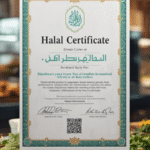
Indonesia, home to the world’s largest Muslim population, has implemented mandatory halal certification under Law No. 33 of 2014. Ice cream falls within the categories requiring certification. The LPPOM MUI, as a registered Halal Inspection Agency (LPH), conducts comprehensive audits covering raw materials, production processes, and packaging .
Certification Bodies and Their Scope
Multiple halal certification bodies operate globally, with varying recognition. The Halal Accreditation Authority in Australia, for example, certifies Everest Ice Cream’s extensive product range, including sorbets, gelatos, and frozen yogurts . In Italy, Halal Italia certifies IRCA’s “Joycream” line of ice cream ingredients and variegates .
The challenge for manufacturers is that certification from one body may not be recognized in all markets. Brands targeting multiple regions must navigate a fragmented landscape of standards and mutual recognition agreements.
Brand Landscape: Who Is Leading in Halal Ice Cream
Certified Halal Ice Cream Brands
SADAFCO (Saudia) — The Saudi dairy giant publishes an official Halal Policy confirming all four of its factories (including its Poland site) are formally halal certified. Its ice cream products, including Saudia Sandwich Ice Cream, are marketed as “processed as per halal norms” .
Almarai, Nadec, KDD — These major Saudi/GCC dairy producers operate under the SFDA regime, making their ice cream halal by regulatory requirement, though published dairy-specific certificates are not always publicly available .
Amul — India’s largest dairy cooperative maintains 100% vegetarian products and holds halal certification for both its ice cream and manufacturing plants. Its E471 is strictly plant-derived .
Everest Ice Cream (Australia) — Holds halal certification from the Halal Accreditation Authority for an extensive range including vanilla, chocolate, sorbets, and gelatos .
Arun Ice Cream (India) — Certified by JUHF Certification, with products including Kulfi, Chocobar, and various flavored ice creams .
Ben & Jerry’s (Singapore) — Specific flavors like Sweet Cream & Cookies are marked “HALAL CERTIFIED” .
The SKU Lesson: When Brand Trust Fails
A critical cautionary tale emerges from Saudi Arabia’s regulatory regime. Häagen-Dazs sold in Saudi Arabia is halal because it is imported under the halal-certificate regime, and the KSA official site lists no rum or liqueur flavors—those are excluded from the Saudi range .
However, the same Häagen-Dazs brand sells Rum Raisin and Baileys flavors abroad, which contain alcohol as an ingredient and are haram. The teaching point is stark: brand-level trust is insufficient when crossing borders. A halal-certified brand in one market may sell haram SKUs in another .
Market Dynamics: The Halal Ice Cream Opportunity
Global Growth Trajectory
The halal dairy market, which includes ice cream, is experiencing robust growth. Asia Pacific dominates with 21.59% market share in 2025, valued at $354.8 billion, driven by the region’s large Muslim population and strong government regulations promoting halal products .
The Middle East & Africa contributed approximately $116.61 billion in 2025, with Saudi Arabia alone accounting for 20.64% of regional ice cream revenue in 2024, fueled by Vision 2030 investments in cold-chain infrastructure and domestic dairy production .
Europe’s halal dairy market reached $46.91 billion** in 2025, with non-Muslim consumers increasingly drawn to halal-certified products for ethical sourcing and clean-label positioning . North America’s market stood at **$20.26 billion, driven by health-conscious snacking trends .
The Premium and Health-Conscious Segment
A notable trend is the growth of premium halal ice cream. According to Frutta Gelato, “The premium product segment is growing faster than the mass market. Halal premium category products are projected to grow at a CAGR of 10.05%, much faster than mass-market products” .
This creates opportunities for artisanal gelato, low-sugar options, and dairy-free alternatives that appeal to health-conscious Muslim consumers. The KSA dairy-free ice cream market, for instance, is projected to reach $9.5 million, driven by “lactose-free needs, vegan diets, wellness awareness, halal-friendly preferences, and premium snacking” .
E-Commerce and Quick Commerce
Online retail is the fastest-growing distribution channel for halal dairy products, with the convenience of ordering and delivery driving adoption. In the Middle East, quick commerce channels are gaining traction for ice cream, offering fast delivery at competitive prices .
The Consumer’s Practical Guide: How to Choose Halal Ice Cream
Step 1: Look for Certification
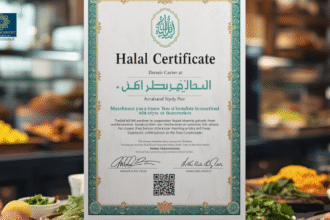
The most reliable indicator is a halal certification logo from a recognized body. In Saudi Arabia, this is effectively guaranteed for imported products with animal-derived ingredients . In other markets, brands like Amul and Everest display certification explicitly .
Step 2: Check the Label for Red Flags
If certification is absent, scrutinize the ingredient list:
- Gelatin: Unless specified as halal or fish gelatin, assume it may be pork-derived.
- E471 (Mono- and diglycerides): If not marked as vegetable-derived, verify with the manufacturer.
- Alcohol: Avoid any product listing “rum,” “liqueur,” “ethanol,” or “alcohol” as an ingredient.
- “Animal fat” or “animal shortening”: Without specification of the source and slaughter method, these are problematic.
Step 3: Understand Sugar Alcohols
Do not be alarmed by “sorbitol,” “xylitol,” or “erythritol.” These are permissible sugar alcohols, not intoxicating ethanol .
Step 4: Consult Reliable Resources
When in doubt, consumers can consult halal certification databases, contact manufacturers directly, or seek guidance from local scholars. The principle of Istihalah (complete transformation) may apply in some cases, but its application to specific ingredients like gelatin remains debated among scholars.
Conclusion: A Sweet Future for Halal Ice Cream
The halal ice cream market stands at a pivotal moment. With the global halal dairy sector projected to exceed $1 trillion by 2034, and with regulatory regimes in Saudi Arabia, Indonesia, and Malaysia setting clear standards, the path forward is increasingly well-defined .
For manufacturers, the message is clear: halal certification is no longer a niche concern but a commercial imperative for accessing the world’s fastest-growing consumer markets. The fragmented certification landscape creates complexity, but also opportunity for brands willing to invest in compliance.
For consumers, the landscape is improving. From SADAFCO’s certified Saudia brand to Ben & Jerry’s halal-certified flavors, from Amul’s plant-based E471 to the growing availability of dairy-free options, the freezer aisle is becoming a place of confidence rather than confusion.
The simple pleasure of ice cream need not be complicated by doubt. With the right knowledge—and the right certification—Muslim consumers can enjoy their scoop with peace of mind.
References
- Fortune Business Insights. “Halal Dairy Products Market Size, Share & Industry Analysis, 2026-2034.” August 2026.
- JUHF Certification Pvt Ltd. “Halal Certificate – Hatsun Agro Product Ltd (Arun Ice Cream).” Certificate No. JUHF-1990-1781.
- LPPOM MUI. “Es Krim, dari Kesehatan sampai Titik Kritis Kehalalan.” March 2021.
- Minhaj Halal Certification. “Dairy and Bakers.” April 2026.
- Halal Italia. “Certification of Halal Product – IRCA Joycream.” Certificate No. 1171, May 2025.
- LPPOM MUI. “Waspadai Titik Kritis Haram Pada Es Krim.” February 2019.
- Amul. “Amul Ice Cream is 100% Vegetarian.”
- Halal Code Check. “Halal Ice Cream and Dairy in Saudi Arabia: SADAFCO, Almarai and the SFDA Regime (2026).”
- Halal Accreditation Authority Pty Ltd. “Halal Certification – Everest Ice Cream Australia Pty Ltd.” Cert. No. 02112VEVE/1/1, valid until 31 December 2026.
- LPPOM MUI. “Bahas Yang Lagi Viral, Kenapa Es Krim Harus Sertifikasi Halal?” July 2022.
- IslamOnline Fiqh. “Is Sugar Alcohol Halal?”
- IslamQA.org. “Sugar Alcohol – Hanafi Fiqh.”
- Mordor Intelligence. “Middle East & Africa Ice Cream Market Report 2030.” November 2025.
- Frutta Gelato. “Frublend Kini Tersedia untuk Buyer di Asia Pasifik: Peluang Bisnis Gelato Halal dari Bali.” August 2026.
- Nexdigm. “KSA Dairy Free Ice Cream Market Heads Toward USD 9.5 Million.” July 2026.
- Lulu Hypermarket. “Saudia Sandwich Ice Cream Product Page.”
- Ben & Jerry’s Singapore. “Sweet Cream & Cookies – Halal Certified.”