Summary
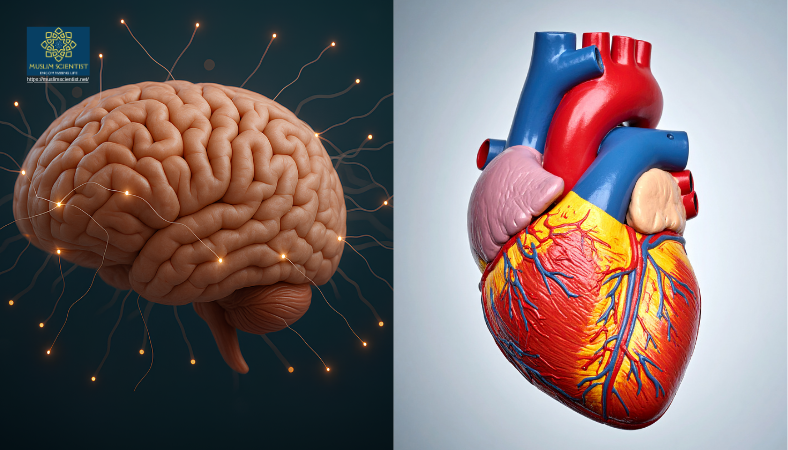
Research in neurocardiology is transforming our understanding of the human heart, and remarkably, these discoveries align with Islamic teachings revealed over 1,400 years ago. Scientists have identified approximately 40,000 specialized neurons within the heart, forming an intricate “intrinsic cardiac nervous system” that operates semi-independently from the brain . This neural network enables the heart to process information, store memories, and even influence cognitive functions through its powerful electromagnetic field—the most potent rhythmic field produced by the human body .
The Quran consistently describes the heart (qalb) as the centre of reasoning, intention, and spiritual awareness, a concept that modern medicine is only beginning to appreciate . Mentioned 132 times in the holy text, the heart appears not merely as a physical pump but as the locus of understanding, consciousness, and decision-making . This perspective challenges the conventional view that the brain exclusively governs cognition and emotion.
Recent research demonstrates that the heart communicates with the brain through four primary pathways: neurologically via the nervous system, biophysically through pulse waves, biochemically via hormones, and electromagnetically through energetic waves . This complex communication network suggests emotional distress manifests physically in the heart, while spiritual practices like prayer and remembrance can potentially influence cardiac function .
For clinicians and therapists, these findings open new avenues for holistic treatment approaches. The concept of “heart talk” extends from Dr. Armour’s “heart brain” theory, suggesting that patient’s intuitive feelings deserve serious clinical consideration . Integrating cognitive behavioural therapy with spiritual practices rooted in Islamic tradition offers promising pathways for addressing modern mental health epidemics. This convergence of ancient wisdom and contemporary science provides compelling evidence that true healing requires attending to both the physical and spiritual dimensions of the heart.
The Astonishing Discovery: A Brain Within the Heart
When Dr. J. Andrew Armour introduced the concept of the “heart brain” in 1991, the scientific community took notice . His research revealed that the heart possesses its own intricate nervous system, comprising approximately 40,000 specialised neurons configured within a complex neural network . These sensory neurites enable the heart to think, feel, and remember independently of the cranial brain.
This intrinsic cardiac nervous system allows the heart to process emotional information approximately five to seven seconds before the brain perceives it . Every experience registers simultaneously in both the mind and the heart, which explains why trauma often requires heart-centred healing rather than purely cognitive approaches .
The implications of this discovery extend far beyond cardiology. The heart’s neural network processes information, learns from experiences, and transmits signals between cells, functioning much like a miniature brain . This finding has prompted researchers to reconsider the heart’s role in emotional processing and decision-making.
The Quranic Perspective: More Than a Physical Pump
Islamic teachings have long emphasised the heart’s central role in human consciousness and spiritual awareness. The Quran refers to the heart (qalb) 132 times, consistently positioning it as the seat of wisdom, intention, and understanding . Verses such as “For indeed, it is not eyes that are blinded but blinded are the hearts which are within the breasts” (Quran 22:46) explicitly link the heart with reasoning capacity .
Classical Islamic scholarship articulated this heart-brain interconnection in considerable detail . Scholars distinguished between rational processes associated with the brain and non-rational understanding springing from the heart, including intuition, wisdom, and spiritual illumination . This holistic framework integrates sensory perception and reason with contemplative and meditative activities rooted in worship.
The Prophet Muhammad (peace be upon him) taught that intention resides in the heart, emphasising its role as the moral and spiritual compass . Islamic philosophers like Al-Ghazali extensively explored the heart’s vulnerability to spiritual disease and its capacity for healing through remembrance of God and righteous actions .
Bridging Science and Scripture: The Intelligence Connection
Comparative Perspectives on Heart Function
| Aspect | Neurocardiology Research | Islamic Teaching (Quran & Hadith) |
|---|---|---|
| Neural Network | ~40,000 neurons form “heart brain” | Heart as centre of reasoning (Quran 22:46) |
| Processing Speed | Detects emotions 5-7 seconds before brain | Heart perceives before intellect |
| Memory Storage | Independent memory function | Heart remembers and forgets (Quran 6:25) |
| Decision-Making | Influences cognitive choices | Seat of intention and decisions |
| Electromagnetic Field | Most powerful rhythmic field in body | Extends influence beyond physical organ |
The heart possesses its own form of intelligence, capable of processing information about the body and surroundings through an “info-energetic code” distributed across a network of blood vessels and cells . This “heart code” influences brain function through multiple channels, affecting thinking capacity, knowledge acceptance, and emotional regulation.
Modern researchers have identified cardiac coherence—the synchronisation between heart and brain activity—as a measurable indicator of emotional wellbeing . This concept resonates deeply with Islamic emphasis on maintaining a “sound heart” (qalbun salim) free from spiritual disease and attuned to divine guidance.
Emotional Processing: Where Heart and Brain Converge
The heart-brain connection profoundly influences emotional experience and mental health. Recent studies demonstrate that heart-focused interventions, such as heart rate variability training, significantly reduce symptoms of depression and anxiety . These findings support the hypothesis that emotional distress represents a “heart in distress” rather than purely neurological dysfunction.
Emotions in Islamic psychology relate directly to the heart’s condition. The Quran carefully describes fear, anger, love, jealousy, shame, regret, and hatred, all linking back to the heart’s state . When emotional outbursts exceed reasonable bounds, physical changes follow, including increased heart rate and digestive disturbance—a pattern modern medicine now recognises as stress-related illness.
Traditional Islamic approaches to emotional regulation include controlling anger, managing desires, and cultivating patience and gratitude . These spiritual practices directly affect heart function, promoting cardiac coherence and emotional stability.
Therapeutic Applications: Healing the Heart of Distress
Contemporary mental health approaches increasingly recognise that mind and body share an interdependent relationship . Patients frequently describe cognitions coming “from the heart”—intuitive knowing or heartfelt conviction that defies purely rational explanation. These experiences, previously dismissed, now possess scientific credibility.
Therapists integrating cognitive behavioural therapy with spiritual practices rooted in Islamic tradition offer holistic healing pathways . Quranic therapy and prophetic medicine address both psychological symptoms and spiritual root causes, acknowledging the heart’s central role in mental health.
This integration proves particularly relevant given rising global mental illness rates. Depression, anxiety, neurosis, and stress-related conditions affect approximately one-third of the world’s population . Traditional Western approaches focusing exclusively on cognitive restructuring may prove incomplete without addressing heart-centred emotional and spiritual dimensions.
The Call for Holistic Understanding
Communication Pathways Between Heart and Brain
| Communication Type | Mechanism | Functional Impact |
|---|---|---|
| Neurological | Nervous system connections | Direct signal transmission |
| Biophysical | Pulse wave propagation | Rhythm synchronisation |
| Biochemical | Hormone release | Mood regulation |
| Electromagnetic | Energy field interaction | Information exchange |
The heart’s electromagnetic field represents the most powerful rhythmic field produced by the human body, influencing every living cell and extending outward as an information carrier . This field enables the heart to interact with the brain through previously unrecognised pathways, affecting cognitive function and emotional experience.
Classical Islamic scholarship recognised the danger of overemphasising rational thinking while neglecting non-rational understanding . Contemporary societies, influenced by Western scientific paradigms, have created a “rational” imbalance contributing to rising psychopathologies including stress, anxiety, depression, and suicide . Restoring balance requires reconnecting with contemplative practices rooted in spiritual tradition.
Implications for Modern Life and Future Research
The convergence of neurocardiology and Islamic wisdom presents profound implications for healthcare, education, and personal wellbeing. Medical professionals increasingly acknowledge that treating the heart as merely a mechanical pump misses its deeper significance in human health.
Future research examining the heart-brain relationship promises further discoveries about consciousness, emotion, and spiritual experience. Researchers from neuroscience and Islamic studies could collaboratively explore how cognitive activities relate to both organs . Such interdisciplinary investigation offers potential breakthroughs in mental health treatment.
For individuals, understanding the heart’s intelligence encourages attending to emotional and spiritual needs alongside physical health. Practices such as prayer, remembrance of God, gratitude, and compassion directly affect heart function, promoting both cardiac health and emotional wellbeing.
Conclusion: Ancient Wisdom Confirmed
Modern science continues to validate Islamic teachings revealed over fourteen centuries ago. The discovery of the heart’s neural network, its electromagnetic influence, and its role in cognitive function confirms the Quran’s description of the heart as the seat of reason and consciousness .
This alignment between faith and science demonstrates divine origin of Islamic scripture. As researchers continue uncovering the heart’s complexity, the gap between scientific understanding and religious wisdom narrows. For Muslims, these discoveries strengthen faith; for scientists, they suggest research directions previously considered improbable.
Ultimately, the heart emerges as far more than a pump delivering blood—it serves as a centre of intelligence, emotion, and spiritual awareness. Attending to heart health means more than preventing cardiovascular disease; it involves cultivating spiritual and emotional wellbeing through practices central to Islamic tradition.
Other Articles: