Summary
A new collection of academic papers offers fresh perspectives on some of the world’s most pressing economic challenges. Organised by the University of Novi Pazar, the University of Dundee and the International Waqf Fund, the proceedings bring together researchers from across Europe and beyond to explore how Islamic ethical principles can address rising living costs, support entrepreneurs and promote sustainability.
The papers cover a strikingly wide range of topics. Sarah A. Tobin examines how Muslim immigrant entrepreneurs in Norway hit an “invisible ceiling” because Islamic finance tools are unavailable, leaving them reliant on informal funding that limits growth. Haris Zogić explores how venture capital, angel investing and crowdfunding can be structured as Shariah-compliant alternatives to interest-based startup loans. Aldin Dugonjić investigates halal marketing in Croatia, revealing that 61 percent of certified producers do not understand halal marketing at all.
Other contributions address circular economy projects in Sarajevo, where food waste reaches 59 tons daily, and the ethical dimensions of artificial intelligence and digital forensics, framed through the objectives of Sharia. Suad Bećirović argues that inflation is largely man-made, driven by money supply expansion and monopolisation, and that Islamic prohibitions on interest and hoarding function as macroeconomic stabilisation tools.
Together, these papers demonstrate that Islamic moral economy is not a niche concern. It offers practical, ethically grounded solutions to problems affecting everyone, regardless of faith.
A Conference Built on an Ancient Idea
The concept of mizan, or divine balance, runs through the Quran like a golden thread. “And the heaven He raised and imposed the balance, that you not transgress within the balance,” reads one verse. For the organisers of the Islamic Moral Economy & Finance 2025 conference, this principle is not merely theological. It is a practical guide for fixing modern economies that have grown dangerously unbalanced.
Held in Novi Pazar, a historic city in southern Serbia with a significant Muslim population, the conference brought together scholars, practitioners and students from Serbia, the United Kingdom, Norway, Saudi Arabia, Bosnia and beyond. The papers collected in the proceedings tackle a remarkably diverse set of problems. Rising food prices. Startup financing. Food waste. Cybercrime. Halal branding. Each topic receives treatment through the lens of Islamic ethics.
What unites these contributions is a shared conviction: the global economy’s dominant model of endless growth, linear consumption and debt-driven finance is unsustainable. As editor Suad Bećirović writes in his foreword, an average growth rate of five percent doubles economic activity every fourteen years. A modest two percent doubles it every thirty-five. “From where will the resources for this relentless growth be sourced?” he asks.
Breaking the Invisible Ceiling
One of the most compelling papers comes from Sarah A. Tobin of the Chr. Michelsen Institute in Bergen, Norway. Her research, funded by the Norwegian Research Council, draws on over 65 interviews with Muslim immigrant entrepreneurs. She tells the story of Mohammed, a Syrian refugee who arrived in Oslo in 2013 and opened a grocery store with informal financing from his local mosque. The business thrives, but Mohammed cannot expand. He refuses to take a conventional bank loan because interest, or riba, is forbidden in Islam. No Islamic bank operates in Norway. So he remains stuck behind what Tobin calls the “invisible ceiling” of financial exclusion.
This is not a minor inconvenience. Tobin cites surveys showing that more than 60 percent of Muslim immigrant entrepreneurs strongly agree that interest is forbidden, and 78 percent say they would become customers of an Islamic bank if given the option. Their exclusion limits business growth, reduces job creation and impedes integration into Norwegian society.
Tobin’s proposed solution is elegant. Impact investment funds, structured as profit-and-loss sharing arrangements known as mudaraba and musharaka, could fill the gap. These funds would connect socially motivated investors with entrepreneurs who need capital. Returns would depend on real business performance rather than fixed interest. Tobin argues this approach could help achieve seven UN Sustainable Development Goals simultaneously, from poverty alleviation to reduced inequality.
| Challenge | Current Situation | Proposed Solution |
|---|---|---|
| No Islamic banks in Norway | Entrepreneurs rely on mosque loans | Establish impact investment funds |
| Interest forbidden in Islam | 78% would use Islamic bank if available | Profit-and-loss sharing structures |
| Limited business growth | “Invisible ceiling” blocks expansion | Mudaraba and musharaka financing |
| Integration barriers | Fewer jobs for Muslim immigrants | Entrepreneurship as integration pathway |
Rethinking How Startups Get Funded
Haris Zogić from the University of Novi Pazar takes up a related theme. His paper examines how business startups mobilise founding capital, and he identifies a fundamental mismatch. Traditional bank loans require collateral, financial history and stable revenue, none of which early-stage ventures possess. Information asymmetry between founders and lenders makes banks even more cautious. Consequently, most startups rely on personal savings, family support and reinvested earnings, a strategy known as bootstrapping.
Zogić argues that alternative financing models naturally align with Islamic finance principles. Venture capital resembles musharakah, where partners contribute capital and share both profits and losses. Angel investing resembles mudarabah, where the investor provides capital while the entrepreneur provides management and effort. Equity crowdfunding allows broad groups of investors to fund projects and receive returns based on actual performance.
The key insight is that Shariah compliance depends not on labels but on contract structure. As long as returns link to real economic activity, profits and losses are shared according to clear agreements, and investments avoid prohibited sectors, these modern tools can function as legitimate Islamic finance instruments. For regions like Novi Pazar, where religious reservations about interest-based banking are widespread, this offers a practical path forward.
Halal Marketing in Unexpected Places
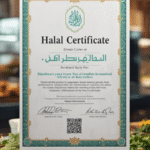
Aldin Dugonjić brings a different perspective. His paper examines halal marketing and branding in Croatia, a European Union member state where Muslims comprise just over one percent of the population. Croatia recognised Islam officially in 1916, making it one of only four EU countries with such a long history. Halal certification began in 1991 and now covers more than 4,000 products.
Yet Dugonjić’s survey of Croatian halal certificate holders reveals striking gaps. While 78 percent label their products with the halal logo and 71 percent do so consistently, only 28 percent have developed specific branding for halal products. Just 17 percent have conducted dedicated halal marketing campaigns. And 61 percent are unfamiliar with the concept of halal marketing altogether.
Dugonjić identifies several structural challenges facing halal marketing in non-OIC countries. Islam is not officially recognised in most European countries. Islamic communities are fragmented along national lines, making it unclear who holds legitimate authority to certify halal standards. Private certification bodies have emerged without proper oversight, sometimes issuing certificates over the phone. Self-declaration allows businesses to label products halal without any certification at all.
Despite these obstacles, Dugonjić sees opportunity. The Croatia Halal Friendly brand, developed by the Centre for Halal Quality Certification, promotes the country as a welcoming destination for Muslim consumers and travellers. Halal principles of cleanliness, safety and ethical sourcing appeal to non-Muslim consumers too. Going halal-friendly, he argues, is about building trust and opening doors to new markets.
| Survey Question | Yes | No |
|---|---|---|
| Products marked with halal logo? | 78% | 22% |
| Constantly labelled? | 71% | 29% |
| Developed tailored halal products? | 50% | 50% |
| Specific halal branding? | 28% | 72% |
| Dedicated marketing campaign? | 17% | 83% |
| Participated in halal fairs? | 33% | 67% |
| Familiar with halal marketing concept? | 39% | 61% |
Sarajevo’s Fight Against Food Waste
Sustainability takes centre stage in a paper by Šemsudin Plojović, Aida Akagić-Hodžić and Nermina Suljević. They examine how the City of Sarajevo is tackling food waste through circular economy principles. The numbers are sobering. Approximately 500 tons of food waste end up in Bosnian landfills daily. In Sarajevo Canton, food waste accounts for more than 12 percent of daily municipal waste. Meanwhile, more than 20 percent of Bosnia’s population lives at or below the absolute poverty line.
The City of Sarajevo has adopted a plan to prevent and reduce food waste through 2026. Initiatives include the Sarajevo Food Lab, where solutions for preventing waste and rescuing surplus food are developed, and a planned Food Bank connected through mobile applications. One successful project, Tanjir Više (One More Plate), connects citizens with surplus food from weddings and celebrations to families in need. Volunteers coordinate through Viber and deliver donations within 30 minutes. Over 100 families currently benefit.
The city also uses a digital platform called Decidim to involve citizens in decision-making. Residents can vote on initiatives, propose ideas and monitor projects. According to the authors, this strengthens participatory democracy while advancing circular economy goals. The target for 2030 is to halve daily food waste from 59 tons to 29.5 tons.
When Technology Meets Ethics
A particularly innovative paper comes from Ergin Hakić, Enver Mededović and Ferid Bulić. They examine digital forensics and artificial intelligence through the lens of Maqasid al-Shari’ah, the objectives of Islamic law. Their argument is that protecting intellect from disinformation and protecting property from cyber fraud are not just civic duties. They are religious obligations.
The authors draw parallels between forensic principles and Islamic ethical concepts. Evidence integrity corresponds to hifz al-mal, the protection of property. Chain of custody corresponds to amanah, or trust. Reproducibility corresponds to hifz al-aql, the protection of intellect. Legality of collection corresponds to adl, or justice.
This framework has practical implications. Citizens should understand that their digital footprint is permanent and that biometric data cannot be changed if compromised. They should critically verify information before sharing it. They should respect privacy laws and avoid unauthorised access to others’ data. Mass surveillance, algorithmic bias and predictive policing raise serious ethical concerns that a responsible security culture must address.
| Forensic Principle | Islamic Ethical Principle | Individual Obligation |
|---|---|---|
| Evidence integrity | Hifz al-Mal (Protection of Property) | Secure financial transactions from fraud |
| Chain of custody | Amanah/Sidq (Trust/Honesty) | Be responsible for shared information |
| Reproducibility | Hifz al-Aql (Protection of Intellect) | Verify sources, combat disinformation |
| Legality of collection | Adl (Justice) & Hifz al-Nafs (Privacy) | Respect privacy laws, avoid hacking |
Inflation as a Man-Made Problem
Suad Bećirović, editor of the proceedings, contributes a provocative analysis of inflation. Drawing on the medieval scholar Al-Maqrizi, he distinguishes between natural inflation, caused by disasters and supply shocks, and man-made inflation, driven by corruption, poor governance and monetary manipulation.
Bećirović argues that persistent inflation cannot occur without state involvement. Governments expand money supply to finance deficits. New money enters the economy unevenly, benefiting those who receive it first while harming later recipients. This distributional asymmetry, known as the Cantillon effect, explains why inflation transfers wealth from the majority to a small minority.
The implications for Islamic finance are significant. Bećirović shows through a hypothetical example that when interest rates adjust to inflation, interest costs can double while other costs rise only modestly. This crushes profitability and can trigger further price increases. Islamic prohibitions on riba, hoarding and information asymmetry therefore function as macroeconomic stabilisation tools. Stability, he concludes, comes not from reactive crisis management but from proactive prevention grounded in ethical behaviour.
Why This Matters Beyond Muslim Communities
The papers collected here address problems that affect everyone. Rising living costs. Barriers to entrepreneurship. Food waste. Cybercrime. Inflation. The solutions proposed draw on Islamic tradition, but their relevance extends far beyond Muslim populations. Values like justice, moderation, honesty and social responsibility are universal.
As Bećirović writes, the Islamic framework is not anti-market but pro-justice. It allows markets to operate freely while empowering the state to intervene when that freedom harms society. This balance between freedom and responsibility, between individual initiative and collective welfare, offers a compelling alternative to both unrestrained capitalism and heavy-handed state control.
For the Balkans, a region still recovering from conflict and navigating EU accession, these ideas carry particular weight. Bosnia and Herzegovina must adopt circular economy regulations to align with European standards. Serbia faces similar pressures. Islamic finance offers tools that are both ethically grounded and practically viable. The Novi Pazar conference demonstrates that these tools are being taken seriously by a new generation of scholars and practitioners.