An Everyday Sensation With Deep Meaning
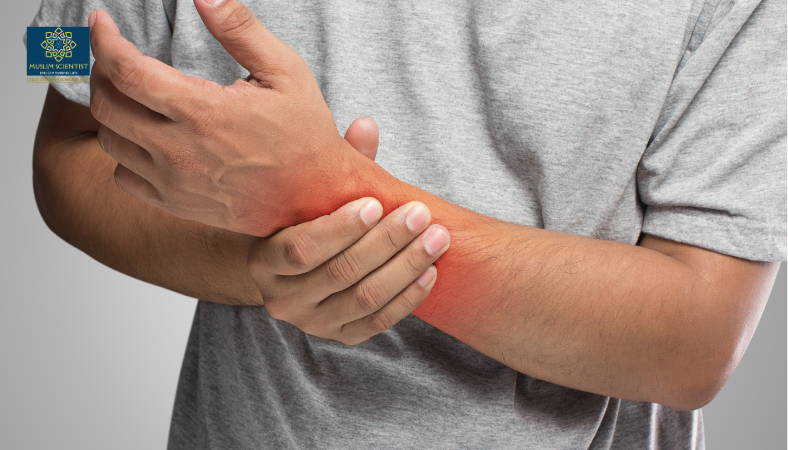
Pain touches every human life, from a minor scrape to chronic illness. Yet few people stop to consider how precisely the body detects it, or why Islamic scripture describes this process with striking detail. In Surah An-Nisa (4:56), the Quran describes a scene from the afterlife in which skin is repeatedly renewed so that punishment continues to be felt. Interestingly, this verse specifically links the sensation of pain to the skin, a connection that modern neuroscience now explains through structures called nociceptors, or pain receptors.
This article examines that Quranic description alongside current scientific understanding of how pain receptors work. Furthermore, it explores how classical and contemporary scholars have interpreted this verse, while also covering broader Islamic teachings on pain, patience, and treatment. Throughout, data tables translate complex neuroscience into information that general readers can easily follow. As a result, readers gain both a theological and scientific perspective on a sensation everyone experiences but few fully understand.
The Quran’s Description of Skin, Pain, and Punishment
Surah An-Nisa verse 56 describes how, for those who reject faith, their skin will be replaced with new skin whenever the previous layer is consumed, so that punishment continues to be experienced. Classical exegetes such as Ibn Kathir and Al-Qurtubi explained this renewal as emphasizing continuity of consequence rather than a one-time event. Consequently, the verse has long attracted attention from scholars interested in the relationship between physical sensation and spiritual accountability.
Notably, many commentators historically focused on the moral and spiritual message of the verse rather than its physiological implications. Nevertheless, since the twentieth century, some Muslim writers have highlighted a striking parallel: modern medicine confirms that pain sensation depends heavily on intact skin and its nerve endings, rather than deeper tissue alone. Therefore, this verse’s emphasis on renewed skin, rather than simply prolonged suffering in general, has drawn particular interest in discussions connecting scripture and science.
However, scholars caution against treating such correlations as definitive scientific proof of divine authorship, a debate that continues within Islamic intellectual circles. Instead, most contemporary scholars suggest treating these parallels as points of reflection that may deepen appreciation for the text, rather than as standalone arguments. In this context, the verse invites both spiritual contemplation and genuine curiosity about how the body actually processes pain.
What Science Says About Pain Receptors
Neuroscience identifies pain receptors, technically called nociceptors, as specialized sensory nerve endings that detect potentially damaging stimuli. According to current research, these receptors are distributed across the skin, muscles, joints, and internal organs, each responding to specific types of harmful input. The table below summarizes the main categories of nociceptors identified through decades of physiological research.
| Nociceptor Type | Primary Trigger | Nerve Fiber Involved |
|---|---|---|
| Mechanical nociceptors | Pressure, pinching, cutting | Thinly myelinated A-delta fibers |
| Thermal nociceptors | Extreme heat or cold | A-delta and C fibers |
| Chemical nociceptors | Irritants, inflammatory substances | Unmyelinated C fibers |
| Polymodal nociceptors | Combination of mechanical, thermal, chemical | C fibers |
| Silent (sleeping) nociceptors | Activated mainly during inflammation | Various, mostly visceral |
Clearly, this system evolved as a protective warning mechanism, alerting the body before serious injury occurs. Meanwhile, researchers note that nociceptors rely on specialized molecular sensors, including transient receptor potential (TRP) channels, to detect specific dangers such as extreme temperature. As a result, pain functions less like a single alarm and more like a finely tuned detection network spread throughout the body.
Why the Skin Is Pain’s Primary Gateway
Among all tissues, skin contains an especially dense concentration of nociceptors, making it the body’s most sensitive pain-detecting organ. Free nerve endings sit close to the skin’s surface, within the epidermis and upper dermis, ready to respond immediately to harmful contact. Consequently, even minor skin damage often produces sharp, immediate pain compared to similar damage in deeper tissue.
This concentration explains a clinical phenomenon that initially seems counterintuitive: severe, full-thickness burns can sometimes hurt less than moderate ones. In third-degree burns, the damage destroys nerve endings within the skin itself, reducing the ability to feel pain in that specific area. By contrast, second-degree burns often cause intense pain precisely because nerve endings remain damaged but still functional. The table below illustrates this relationship.
| Burn Severity | Skin Layers Affected | Typical Pain Level |
|---|---|---|
| First-degree | Epidermis only | Moderate, nerve endings intact |
| Second-degree | Epidermis and upper dermis | Severe, nerve endings damaged but active |
| Third-degree | Full skin thickness, nerve endings destroyed | Reduced pain in affected area |
| Fourth-degree | Skin, fat, muscle, sometimes bone | Minimal localized pain, systemic shock risk |
Therefore, functioning skin and intact nerve endings appear essential for sustained pain sensation, a detail that resonates with the Quranic description of renewed skin. Meanwhile, this same principle explains why burn specialists closely monitor pain levels as a diagnostic clue about injury depth.
Between Scientific Correlation and Scholarly Caution
Given this connection, some contemporary writers present the pain-and-skin relationship as an example of scientific insight embedded within the Quran. Meanwhile, other scholars urge measured caution, noting that seventh-century audiences would have understood the verse primarily through its moral message about accountability, not physiology. Both perspectives, however, agree that the verse’s emphasis on skin specifically, rather than flesh or the body in general, remains a notable textual detail.
In addition, Islamic scholarship has generally welcomed scientific inquiry as complementary to faith rather than threatening to it. Numerous verses encourage reflection upon creation, including the human body, as a path toward recognizing divine wisdom. Consequently, many scholars view neuroscience’s findings on pain not as proof demanded by scripture, but as an invitation to deeper contemplation. This balanced approach avoids overstating certainty while still valuing genuine points of resonance between text and evidence.
Pain, Patience, and Reward in Islamic Teaching
Beyond this specific verse, Islamic teaching addresses pain broadly as a test requiring patience, known as sabr. Several hadith describe illness and physical suffering as means through which sins may be forgiven, provided the person responds with patience rather than despair. For instance, narrations in Sahih Bukhari describe how even a minor ailment, such as a thorn’s prick, can carry spiritual reward when endured patiently.
Similarly, Islamic teaching does not frame pain as something to be passively accepted without response. Rather, numerous hadith explicitly encourage seeking treatment, with one widely cited narration stating that Allah has not sent down an illness without also sending down its cure. Therefore, Islamic tradition holds two ideas together: patience during suffering, alongside active pursuit of relief and healing through legitimate medical means, including practices like cupping (hijama) mentioned in several hadith collections.
Comparing Pain Sensitivity Across the Body
Pain sensitivity varies considerably depending on nerve density and tissue type, a fact well documented in modern physiology. The table below compares relative pain sensitivity across different body regions, based on nociceptor density and clinical observation.
| Body Region | Relative Pain Sensitivity | Reason |
|---|---|---|
| Fingertips and skin | Very high | Dense nociceptor concentration |
| Cornea (eye surface) | Very high | Highly innervated, minimal protective tissue |
| Muscles and joints | Moderate | Fewer, deeper nociceptors |
| Internal organs (viscera) | Low, often diffuse | Sparse, “silent” nociceptors |
| Brain tissue itself | None | No nociceptors present in brain matter |
Interestingly, the brain itself contains no pain receptors, which is why neurosurgeons can operate on brain tissue while a patient remains conscious. Meanwhile, this variation across the body illustrates why skin injuries often feel disproportionately painful compared to their actual severity. In this context, the Quranic focus on skin specifically aligns with skin’s documented role as the body’s primary pain interface.
Seeking Treatment: Islamic Permission to Manage Pain
Islamic tradition places clear emphasis on addressing pain rather than enduring it unnecessarily. Beyond the hadith on cures existing for every illness, early Muslim physicians actively studied anatomy, pharmacology, and surgical techniques, building on this encouragement toward medical inquiry. Ibn Sina’s medical writings, for example, later influenced medical education across both the Muslim world and Europe for centuries.
Moreover, contemporary Muslim scholars generally affirm that pain management, including modern anesthesia and analgesic medication, aligns fully with Islamic principles. Nevertheless, teachings on patience remain relevant for suffering that cannot be immediately resolved, offering spiritual framing rather than discouraging treatment. As a result, Islamic guidance on pain balances two complementary values: proactive treatment whenever possible, and patient endurance when relief remains beyond reach.
Conclusion: Pain as a Window Into Wisdom
Pain, though universally uncomfortable, opens a window into both scientific understanding and spiritual reflection within Islamic tradition. The Quran’s description of renewed skin resonates with what neuroscience now confirms about nociceptors and their concentration in skin tissue. Additionally, broader Islamic teaching frames pain not merely as suffering to endure, but as an experience carrying both spiritual meaning and a clear mandate to seek treatment.
Ultimately, exploring pain through this dual lens, scriptural and scientific, encourages deeper appreciation for the body’s design. Whether approached through faith, medicine, or both together, pain remains a reminder of the intricate systems that protect and inform human life.