A journalistic exploration of faith, celestial bodies, and current scientific evidence
Two Different Words for Two Different Kinds of Light
Anyone glancing at the night sky might assume the sun and moon simply shine in the same way, just at different times. However, the Quran uses two distinct Arabic terms when describing these two bodies, a distinction that modern astronomy later confirmed as scientifically accurate. In Surah Yunus (10:5), the sun is described as “diya,” commonly understood as a radiant, self-generated light, while the moon is described as “nur,” a term more closely associated with illumination or glow rather than an independent light source.
This article examines that linguistic distinction alongside the well-established astrophysics behind both bodies. Additionally, it explores how classical scholars interpreted these terms centuries before telescopes or spectroscopy existed, and how modern data on solar fusion and lunar albedo align with the Quran’s specific word choice. Throughout, three data tables translate this evidence into information general readers can follow easily. Consequently, readers gain a rounded understanding of how ancient scripture and contemporary astrophysics describe the same two celestial bodies in remarkably compatible terms.
The Quranic Verses and Their Linguistic Precision
Surah Yunus verse 5 states that Allah made the sun “diya” and the moon “nur,” while also determining the moon’s phases for calculating time. Classical exegetes such as Ibn Kathir and Al-Qurtubi noted that Arabic distinguishes between these two words in subtle but meaningful ways. Specifically, “diya” generally implies an intense, self-produced radiance, while “nur” refers more broadly to light or brightness, without necessarily specifying its origin.
Furthermore, Surah Nuh (71:16) reinforces this distinction using different but related terms, describing the moon as “nur” and the sun as “siraj,” a word meaning lamp or torch, an object that burns and produces its own flame. Similarly, Surah Al-Furqan (25:61) again uses “siraj” for the sun, while describing the moon as “munira,” meaning something that gives off light through illumination rather than internal combustion. Consequently, across multiple chapters, the Quran consistently applies self-generating terminology to the sun while reserving reflective or illuminating terminology for the moon.
Notably, this consistent pattern appears deliberate rather than incidental, since Arabic offered other, less specific words the text could have used interchangeably for both bodies. Therefore, many commentators, both classical and contemporary, view this linguistic precision as a meaningful detail worth examining alongside what astronomy has since confirmed about each body’s actual source of light.
What Astronomy Confirms About the Sun’s Light
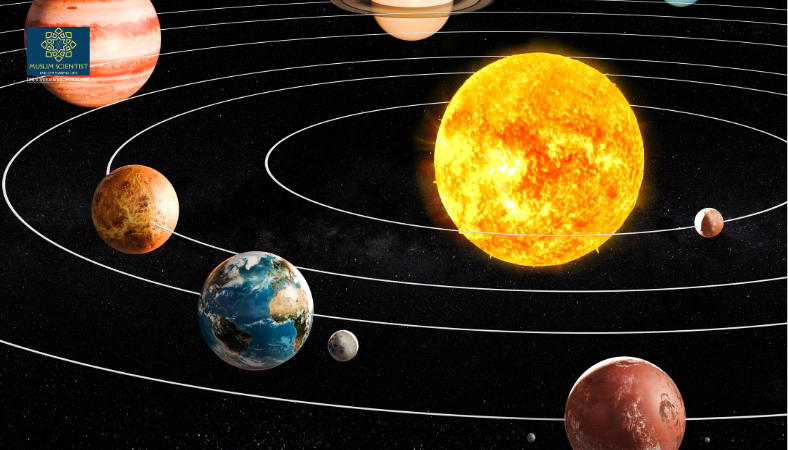
Modern astrophysics has thoroughly documented how the sun generates its own light through nuclear fusion occurring deep within its core. This process converts hydrogen into helium under extreme pressure and temperature, releasing enormous amounts of energy that eventually radiates outward as visible light. The table below summarizes key facts about this process, based on decades of solar physics research.
| Solar Property | Measurement | Significance |
|---|---|---|
| Core temperature | ~15 million °C | Enables continuous nuclear fusion |
| Primary fusion process | Hydrogen fused into helium | Source of the sun’s self-generated energy |
| Surface temperature | ~5,500 °C | Determines the sun’s visible brightness |
| Energy travel time to surface | Tens of thousands of years | Energy gradually moves outward from the core |
| Light travel time to Earth | ~8 minutes | Speed at which sunlight reaches our planet |
Clearly, the sun’s light originates entirely from processes happening within itself, rather than depending on any external source. Moreover, this self-sustaining fusion reaction has continued for approximately 4.6 billion years and will keep doing so for billions more. As a result, the sun functions precisely as the Quran’s terminology suggests: a genuinely self-luminous body, comparable to a lamp or torch that produces its own flame.
What Astronomy Confirms About the Moon’s Reflected Light
By contrast, the moon possesses no internal light-generating process whatsoever. Instead, its visible glow comes entirely from sunlight reflecting off its cratered, dust-covered surface. The table below outlines key facts about the moon’s reflective properties, based on measurements from lunar missions and satellite observation.
| Lunar Property | Measurement | Significance |
|---|---|---|
| Average albedo (reflectivity) | ~11-12% | Only a small fraction of sunlight is reflected |
| Surface composition | Dark volcanic rock and dust | Explains relatively low reflectivity |
| Internal light source | None | Confirms moon has no self-generated light |
| Brightness during full moon | About 1/400,000 as bright as the sun | Demonstrates dramatic difference in light intensity |
| Light source | 100% reflected sunlight | Matches “nur” as illumination rather than combustion |
Interestingly, despite appearing quite bright in a dark night sky, the moon actually reflects only around eleven to twelve percent of the sunlight reaching it, making it a relatively poor reflector compared to other bodies in the solar system, such as Venus. Meanwhile, this low reflectivity means the moon’s apparent brightness depends entirely on its phase and angle relative to the sun and Earth. Therefore, without the sun’s light striking its surface, the moon would appear completely dark, a fact fully consistent with the Quran’s use of “nur” rather than a term implying independent combustion.
Comparing Terminology With Scientific Fact
To summarize how the Quran’s specific word choices align with confirmed astronomical fact, the table below places each term side by side with its corresponding scientific characteristic.
| Quranic Term | Applied To | Literal Sense | Matching Scientific Fact |
|---|---|---|---|
| Diya | Sun | Intense, self-produced radiance | Sun generates light via nuclear fusion |
| Siraj | Sun | Lamp or burning torch | Sun continuously “burns” through fusion |
| Nur | Moon | Illumination, reflected glow | Moon reflects ~12% of sunlight, no internal source |
| Munira | Moon | Something that gives off light externally | Moon’s glow depends entirely on the sun |
Clearly, when read together, these terms form a consistent and scientifically coherent picture rather than interchangeable poetic description. Meanwhile, this consistency across three separate chapters of the Quran, using related but distinct vocabulary each time, strengthens the impression of deliberate word choice rather than coincidence.
Scholarly Caution and Historical Context
Given this alignment, some contemporary writers present these verses as clear evidence of scientific insight embedded within scripture. However, other scholars caution that classical commentators primarily focused on the moral and functional purpose of these verses, namely their use in marking time and calendars, rather than making explicit claims about internal versus reflected light. Nevertheless, several early Muslim astronomers, including Al-Biruni, later engaged directly with questions about the moon’s true nature, correctly describing its light as borrowed from the sun centuries before European astronomers reached similar conclusions through telescopic observation.
Therefore, most careful analysis today treats the linguistic distinction between “diya/siraj” and “nur” as a genuinely interesting point of resonance between scripture and later scientific confirmation, without overstating it as definitive proof requiring no further discussion. This balanced approach reflects a broader, consistent pattern across Islamic scholarship: encouraging reflection on creation while maintaining appropriate humility about certainty regarding a text’s original scientific intent.
Conclusion: Two Lights, One Consistent Message
The distinction between the sun’s self-generated light and the moon’s reflected glow, so precisely captured in Arabic terminology fourteen centuries ago, aligns remarkably well with what modern astrophysics has confirmed through nuclear physics and lunar albedo measurements. Additionally, this consistency appears across multiple chapters of the Quran, using varied but complementary vocabulary each time the subject arises.
Ultimately, whether approached through classical exegesis, modern astronomy, or both together, the sun and moon continue to illustrate a broader theme found throughout Islamic scholarship: careful language paired with genuine curiosity about the natural world, inviting readers toward deeper reflection rather than demanding uncritical certainty.