A journalistic exploration of faith, deception, and current neuroscience
A Sin Located in the Brain?
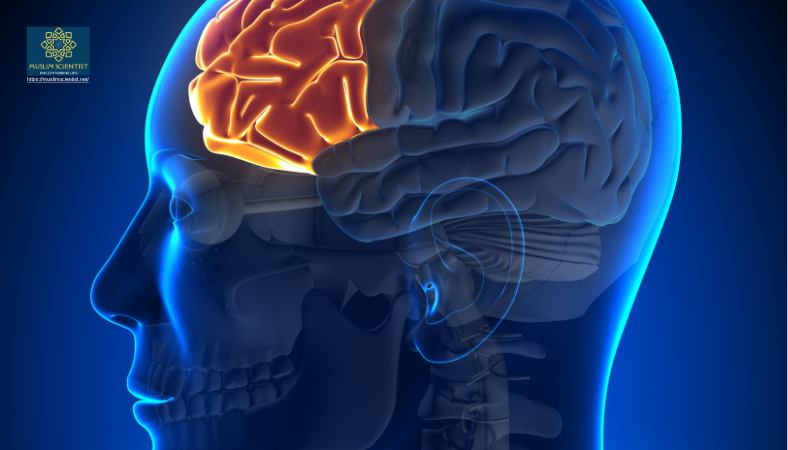
Lying appears in nearly every human interaction, yet the Quran singles out a peculiar detail about where deception originates. In Surah Al-Alaq (96:15-16), Allah warns a disbeliever, describing him as being seized by his “forelock,” specifically called a lying, sinful forelock. Centuries later, neuroscience identified the exact brain region located behind that same forelock area, the prefrontal cortex, as central to both planning and deception. This overlap has fascinated scholars and scientists alike, prompting deeper examination of what the Quran meant and what modern brain imaging now confirms.
This article explores that Quranic description alongside current research on lying and the frontal lobe. Additionally, it covers classical scholarly interpretation, contemporary caution around scripture-science claims, and broader Islamic teaching on honesty. Throughout, three data tables translate complex neuroscience into information general readers can follow easily. Consequently, readers gain a rounded view of how faith and brain science each approach the act of lying, from strikingly different starting points.
The Quranic Verse and Its Classical Interpretation
Surah Al-Alaq’s fifteenth and sixteenth verses describe a specific individual, widely identified by commentators as Abu Jahl, being threatened with seizure by his forelock, a lying and sinful forelock. Classical exegetes such as Ibn Kathir explained this description as referring not merely to the physical hair, but to the intention and character rooted in that part of the head. Moreover, several commentators noted that the forelock in Arabic poetic tradition often symbolized leadership, pride, and decision-making capacity.
Notably, the verse does not describe the entire head as lying or sinful; it specifically isolates the front portion. Therefore, some modern writers have proposed that this specific wording anticipates neuroscience’s later discovery that the prefrontal cortex, located directly beneath the forelock, governs planning, judgment, and deceptive behavior. Nevertheless, classical scholars themselves focused primarily on the verse’s moral and rhetorical function: condemning Abu Jahl’s arrogance and dishonesty rather than making an anatomical claim.
In this context, the verse’s precision in referencing the forelock rather than the whole body remains a notable detail worth examining alongside contemporary brain research. Meanwhile, this specific textual choice continues to generate discussion among scholars interested in the relationship between revelation and scientific discovery.
What Neuroscience Says About Lying and the Frontal Lobe
Contemporary brain imaging research consistently identifies the prefrontal cortex as the region most active during deception. Multiple meta-analyses of functional MRI studies confirm that lying reliably increases activity in this frontal brain region compared to truth-telling. The table below summarizes key brain regions researchers associate with deception, based on decades of neuroimaging studies.
| Brain Region | Role in Deception | Supporting Evidence |
|---|---|---|
| Prefrontal cortex (general) | Executive control, planning false statements | Most consistent finding across fMRI studies |
| Dorsolateral prefrontal cortex | Suppressing truthful responses | Activated during instructed lying tasks |
| Anterior prefrontal cortex | Coordinating complex deceptive strategy | tDCS studies show causal role |
| Anterior cingulate cortex | Monitoring conflict between truth and lie | Frequently co-activated with prefrontal regions |
| Inferior frontal gyrus | Withholding truthful information | Confirmed through brain stimulation studies |
Clearly, this research points overwhelmingly toward the frontal region of the brain as deception’s neural home. Furthermore, researchers explain that executive control, the mental ability to plan and override automatic responses, sits primarily within these same frontal structures. As a result, the biological process of constructing a lie appears deeply tied to the very brain region located beneath the forelock the Quran specifically references.
Why Lying Takes More Brainpower Than Telling the Truth
Beyond location, researchers have also examined how lying differs from truth-telling in terms of mental effort. Multiple studies show that deception requires greater cognitive load, longer response times, and more errors than simply stating what one knows to be true. The table below compares these measurable differences.
| Measure | Truth-Telling | Lying |
|---|---|---|
| Reaction time | Faster | Slower, more variable |
| Prefrontal cortex activity | Lower | Consistently higher |
| Error rate | Lower | Higher |
| Subjective cognitive effort | Minimal | Reported as noticeably higher |
| Physiological stress markers | Baseline | Often elevated (skin conductance) |
Interestingly, one study even found that reducing prefrontal cortex activity through brain stimulation made lying easier and faster, along with lowering the guilt participants reported feeling. This finding suggests the frontal lobe does not simply detect lies; it actively works to suppress truthful responses and manage the psychological discomfort deception often produces. Therefore, honesty appears to represent the brain’s default, lower-effort state, while lying demands deliberate frontal-lobe engagement to override that default.
Between Scientific Correlation and Scholarly Caution
Given this overlap, some contemporary Muslim writers present the forelock verse as an example of scientific insight embedded within scripture. However, other scholars caution against overstating this connection, noting that the verse’s primary audience understood it through poetic and moral meaning rather than anatomy. Both camps generally agree that the specific reference to the forelock, rather than a more generic description, remains a genuinely interesting textual feature.
Additionally, Islamic scholarship has traditionally welcomed reflection on creation as a path toward recognizing divine wisdom, without requiring scientific findings to validate scripture. Consequently, many contemporary scholars view this parallel as a point of contemplation rather than definitive proof, similar to how they approach other scripture-science discussions. This measured approach avoids both dismissive skepticism and uncritical enthusiasm, favoring instead intellectual honesty about what can and cannot be firmly established.
Islamic Teaching on Honesty and the Danger of Lying
Beyond this single verse, Islamic tradition addresses lying extensively as a serious moral failing. Prophet Muhammad reportedly stated that truthfulness leads to righteousness, and righteousness leads to Paradise, while lying leads to wickedness, and wickedness leads to the Fire. Furthermore, other hadith list habitual lying as one of the clearest signs of hypocrisy, alongside breaking promises and betraying trust.
Similarly, the Quran repeatedly links lying to spiritual corruption, describing habitual liars as people whose hearts have grown resistant to truth. Meanwhile, Islamic ethics distinguishes between different categories of falsehood, treating deliberate, harmful lies far more seriously than exaggeration born from error or misunderstanding. As a result, honesty, known as sidq, receives consistent emphasis throughout Islamic teaching as a foundational trait of righteous character, closely tied to trustworthiness and social stability.
A Quick Comparison: Honesty Versus Lying in Islamic Teaching
To summarize how Islamic sources frame the contrast between honesty and deception, the table below draws together key themes from Quranic verses and hadith.
| Aspect | Honesty (Sidq) | Lying (Kadhib) |
|---|---|---|
| Spiritual outcome | Leads toward righteousness | Leads toward wickedness |
| Described consequence | Path toward Paradise | Path toward the Fire |
| Social effect | Builds trust and stability | Erodes trust, damages relationships |
| Hypocrisy connection | Absence of this trait | Named as a core sign of hypocrisy |
| Character emphasis | Encouraged consistently throughout scripture | Warned against in multiple contexts |
Clearly, Islamic teaching treats honesty not as an optional virtue but as a defining marker of faith itself. Meanwhile, this consistent emphasis mirrors what brain science increasingly confirms: lying requires effort, strain, and active suppression of a more natural truthful response.
Conclusion: Two Paths, One Region of the Brain
Lying, though common, carries weight in both scripture and science that many people rarely consider. The Quran’s specific reference to a lying forelock resonates with what neuroscience now confirms about the prefrontal cortex’s central role in deception. Additionally, broader Islamic teaching frames honesty as a core marker of righteousness, while treating habitual lying as a serious spiritual danger.
Ultimately, exploring lying through this dual lens, scriptural and scientific, offers a richer understanding of why truthfulness matters so deeply. Whether examined through faith, neuroscience, or both together, the brain’s frontal lobe and the Quran’s ancient warning seem to be pointing toward the very same place.