A anthropological study reveals how 14 Mexican Muslims grapple with mestizaje, whiteness, and the painful legacy of colonization — and why “reindigenization” feels like a foreign word.
The Heart of the Matter: Who Gets to Be Indigenous?
In Mexico City, a Muslim woman named Rkia pauses when asked about indigeneity. However, she says that appropriating the word Indigenous amounts to colonization. Additionally, her words cut through centuries of complicated history. They also reveal a profound tension that sits at the heart of a new study by anthropologist Cynthia Hernández-González.
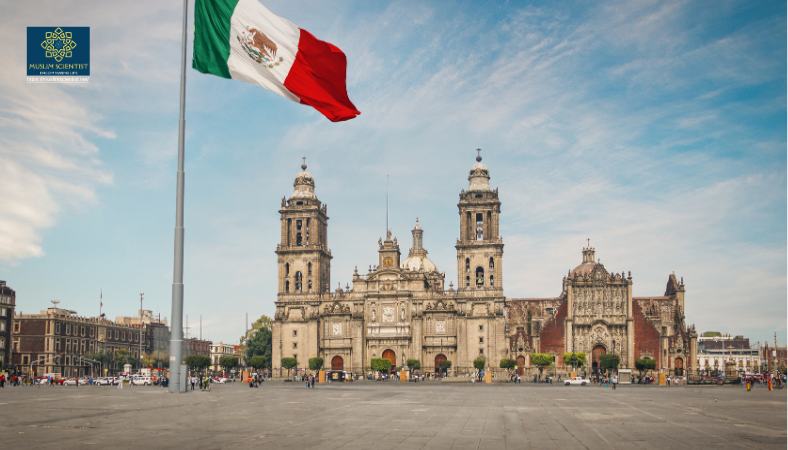
In addition, the research, conducted Dec 2022–Mar 2024, looks at how 14 Muslims in Mexico City understand indigeneity and Muslimness. The timing matters. It comes 504 years after the fall of Tenochtitlán, the Aztec capital that became Mexico City. It also arrives amid ongoing debates about racism, identity, and decolonization.
Hernández-González did not set out to produce a simple survey. Instead, she created a collaborative space where participants could theorize together. They read works by Mohamed Abdou, an anarcha-Muslim thinker, and Houria Bouteldja, a French-Algerian activist. Then they discussed, argued, and reflected.
What emerged was unexpected. Most participants rejected the label “Indigenous” entirely. They saw it as a colonial category imposed by the Mexican state. Furthermore, they viewed claims to indigeneity as potential acts of appropriation. Consequently, the study offers a powerful critique of how mestizaje — Mexico’s ideology of racial mixing — continues to shape lives and identities.
Understanding Mexico’s Racial Order
To grasp why the term “Indigenous” carries such weight, one must understand Mexican history. After the Spanish conquest in 1521, a hierarchical system emerged. It classified people by race, with whiteness at the top. Over centuries, this system evolved into mestizaje — the idea that Mexico is a unified nation of mixed-race people.
However, this unity came at a cost. Consequently, the Mexican state promoted mestizaje as a national project. It encouraged Indigenous peoples to abandon their languages, customs, and identities. Consequently, the percentage of Mexicans speaking Indigenous languages dropped from 70% in 1820 to just 6% today. As Mixe scholar Yásnaya Aguilar argues, this represents a massive act of cultural appropriation. The state stole Indigenous cultural elements to build a “Mexicanness” that erased actual Indigenous people.
Hernández-González’s participants understand this history intimately. Many carry fragmented family memories. Rami recalls that his great-grandmother spoke Maya. Yet the language disappeared from his family within a few generations. Rkia notes that women on her maternal side sought relationships with European men. They hoped to secure better lives for their descendants. These personal histories illustrate how de-indigenization operated at the intimate level of family and desire.
What the Participants Said
The study’s final focus group, held on August 5, 2023, became a turning point. Ten participants gathered to discuss Abdou’s concept of reindigenization. The atmosphere was tense. Silences stretched between comments. This was not the comfortable exchange of previous sessions.
Bashir spoke first. “For me, it doesn’t resonate at all,” he said of the term Indigenous. “These indigenist issues are not something I really reflect on.” He then explained how the word has been weaponized. “The context and use that has been given to it is what has really fucked us up.”
Rkia elaborated further. She described indigeneity as “the true forced inclusion.” The state, she argued, forced wildly diverse peoples into a single category. Then it erased their distinct identities to create “we, the Mexicans.” She cited a 1950s documentary called We Are All Mexicans. It portrayed Indigenous people as poor brothers needing electricity and pavement. This paternalism, she suggested, continues today.
Suleiman used a striking word: usurpation. Claiming Indigenous identity, he felt, would mean taking something that does not belong to him. Hashim agreed. He noted that in English, the word “Indigenous” carries far less weight. In Mexican Spanish, it arrives loaded with 500 years of pain.
These testimonies reveal something important. The participants are not denying Indigenous heritage. Instead, they are refusing a colonial category that has been used to control, classify, and erase. As Abdullah put it, “You can’t make me Indigenous again because I have never been [Indigenous].” He was born in Mexico City. He is a chilango — a city native. That identity, for him, is not less authentic. It is simply different.
The Weight of Whiteness and Fragmented Identity
The study also explores how participants navigate whiteness. Four identified as white. Four identified as mestizo. Four refused any racial label. Only one, Hussein, claimed Indigenous and Afro-descendant roots.
This distribution reveals what Moreno Figueroa calls “fragmented whiteness.” Being perceived as white depends on context. It is relational rather than fixed. Many participants acknowledged privileges that come with lighter skin. However, they also recognized that they do not fully benefit from white supremacy. Their Muslim identity and their mixed heritage place them outside the inner circle of Mexican privilege.
Latifa shared a painful family memory. A relative once spoke of “Indios de razón and unreasonable indios” — rational Indians and irrational ones. This distinction, rooted in colonial thinking, persists in everyday language. It shows how racism operates not just through institutions but through intimate family dynamics.
Rami expressed guilt about losing his Indigenous heritage. “I was left wondering at which point did I lose my Indigenous part,” he said. Rkia similarly acknowledged that her maternal ancestors may have intentionally pursued relationships with European men. They sought better lives for their daughters. These choices, made under constrained circumstances, carried long-term consequences.
Hernández-González does not blame the participants for this fragmentation. Instead, she situates it within a system that has preceded them and will likely outlive them. As Bouteldja writes, “We are not guilty, but we are responsible.” The study asks: What does responsibility look like when the wound is centuries old?
Reindigenization: A Concept That Does Not Travel
Abdou’s concept of reindigenization draws on Native American thinkers. He argues that anyone can become Indigenous to a place. This does not mean pretending to be Indian. Rather, it involves fulfilling acts of compassion, goodness, and intelligence. It means adhering to non-statist, innate communal bonds. These commitments align with fitrah — Islam’s notion of original human nature inclined toward good.
For Abdou, reindigenization is a global transnational project parallel to decolonization. It transcends the nation-state and its rigid identity categories. The participants understood this intellectually. Nevertheless, they struggled to apply it to their own lives.
The problem lies in context. In Turtle Island — present-day USA and Canada — Indigenous identity carries different meanings. Colonial policies there aimed at physical removal and reservation systems. In Mexico, the state pursued assimilation through mestizaje. These are not the same histories. Therefore, the same words do not carry the same weight.
Samira captured this tension. “I consider myself a woman of the city,” she said. She dreams of sowing and harvesting. However, she does not identify as Indigenous. For her, indigeneity means Zapotec or Mixtec — specific peoples with specific struggles. It does not mean a generic connection to place.
Abdullah agreed. “I’m more of a chilango,” he said. His family migrated to Mexico City from different origins. He is native to the city, not to a preconquest nation. Hashim added that he is Indigenous in the etymological sense. He was born in a neighborhood. That makes him native to that place. However, it does not make him Indigenous in the political sense the term now carries.
Key Concepts and Participant Responses
| Concept | Definition | Participant Response |
|---|---|---|
| Mestizaje | Ideology of racial mixing as national identity | Viewed as erasure of Indigenous identity |
| Indigeneity | State category for native peoples | Rejected as colonial label |
| Reindigenization | Abdou’s global project of reconnecting with place | Seen as inapplicable to Mexican context |
| Fitrah | Islamic notion of original human nature | Recognized as spiritual ideal |
| Fragmented whiteness | Partial, context-dependent white privilege | Acknowledged but insufficient for full belonging |
| Anarchic ijtihad | Radically free interpretation of Islam | Practiced by participants |
Three Steps Toward a New Understanding
Despite their reservations, the participants did not dismiss reindigenization entirely. Instead, they proposed three steps for enacting it in Mexico.
First, recognize how “the Indigenous” was created in Mexico. This means dismantling the burdens attached to the term. It requires understanding that the category was designed to control and classify, not to empower.
Second, assume responsibility for how one has acted toward people classified as Indigenous. This includes acknowledging feelings of guilt, contempt, or pity. It means confronting the ways one may have benefited from their marginalization.
Third, establish new linkages with Indigenous people. These linkages should be based on recognition of loss rather than claims to identity. One cannot reclaim what was never fully possessed. However, one can build solidarity with those who continue to struggle.
Hussein, the only participant who identified as Indigenous and Afro-descendant, expressed cautious hope. Reindigenization “can indeed work,” he said. It returns you to an original space. It opens you to what you had closed off. Yet he also felt conflict. The process might erase cultural elements that are identitarian. It might lead to a tabula rasa that ignores lived history.
Halim framed reindigenization as an invitation to activism. “Who am I?” he asked. “Where do I come from? What do I represent for other people?” These questions, he suggested, require bravery. They demand talking about racism through a spiritual lens.
Islam as a Resource for Decolonization
The study does not treat Islam as a static tradition. Instead, it explores how Islamic concepts can support decolonial work. Central to this is tawhid — the oneness of existence. According to scholar Aysha Hidayatullah, tawhid affirms the fundamental equality of all human beings. The only distinction between people is piety, not race, sex, or class.
This principle directly challenges the hierarchies imposed by colonialism. It also challenges the mestizaje system that ranks bodies by whiteness. Consequently, the participants see their Muslimness as a resource for confronting racism. They practice what Abdou calls “anarchic ijtihad” — the right of every Muslim to interpret Islam freely.
Bouteldja distinguishes between social Muslims and political Muslims. The former inherit Islamic culture. The latter are aware of their responsibilities in a structurally unjust world. The study’s participants lean toward the political category. They question normative Muslimness. They reject authoritarian interpretations. They engage with decolonization and anti-racism.
This does not mean they reject their faith. On the contrary, they deepen it. They see Islam as a spiritual path and practice. Some describe it as a cosmology or a state of consciousness. Their Muslimness transcends community affiliation. Half attend a Muslim community. Half used to attend but no longer do. For many, feeling Muslim does not require regular attendance at a mosque.
What This Means Beyond Mexico
The study offers lessons that extend far beyond Mexico City. It shows how colonial categories continue to shape identities centuries after conquest. It reveals how state ideologies like mestizaje can erase Indigenous presence while claiming to celebrate it. It demonstrates how religious communities can become sites of critical reflection and political engagement.
For Muslims in other contexts, the study raises important questions. How does Islam interact with local racial hierarchies? How can Muslim communities confront anti-Blackness, anti-Indigeneity, and xenophobia? What does solidarity look like across different struggles?
For scholars, the study models a collaborative approach. Hernández-González did not simply extract data from subjects. She co-theorized with them. She read texts alongside them. She took their critiques seriously. This methodology reflects a commitment to research as a shared project of liberation.
For anyone concerned with justice, the study offers a sobering reminder. Decolonization is not a metaphor. It involves confronting painful histories. It requires acknowledging complicity and privilege. It demands new forms of relationship built on respect rather than appropriation.
Conclusion: Responsibility Without Guilt
The participants in this study are not guilty of the conquest. They did not create mestizaje. They did not impose the category “Indigenous” on diverse peoples. However, they are responsible. They are responsible for how they live with these legacies. They are responsible for how they treat those still marginalized. They are responsible for building a future that does not repeat the erasures of the past.
Rkia’s words echo throughout the study: “To appropriate the word Indigenous is to colonize.” Her refusal is not a rejection of Indigenous struggles. It is a recognition that solidarity requires humility. It requires knowing what is not yours to claim. It requires standing alongside rather than speaking for.
The study does not resolve these tensions. Instead, it holds them open. It invites readers to sit with discomfort. It asks us to consider how we, too, are shaped by histories we did not choose. And it suggests that within that discomfort lies the possibility of transformation.
As Abdullah asked, “How are we going to reindigenize the world?” The answer remains unclear. However, the question itself is a beginning. It opens space for new dreams, new horizons, and new actions. In Mexico City, 504 years after Tenochtitlán’s fall, a small group of Muslims is dreaming those dreams. Their voices deserve to be heard.