Japan is famous for its temples, shrines, and centuries-old traditions, but few people outside the country realize it is also home to a growing Muslim community. Although Islam remains a small minority religion, its presence has quietly expanded over the past 150 years. From isolated beginnings during the closed-door Tokugawa era to today’s halal-friendly restaurants and mosques in major cities, the journey of Islam in Japan tells a story of patience, adaptation, and gradual acceptance.
Understanding this history matters now more than ever. Japan is preparing for continued growth in international tourism, and Muslim travelers already represent a significant share of visitors. Meanwhile, thousands of Muslim workers, students, and families call Japan home. Their experiences reveal both the opportunities and the obstacles that come with practicing a minority faith in a highly modernized, historically isolated nation.
From Closed Doors to Open Trade
For roughly 250 years, Japan’s Tokugawa rulers restricted contact with the outside world. Foreign religions, including Islam, had almost no opportunity to reach Japanese soil during this period. However, everything shifted with the Meiji Restoration in the 19th century, when Japan abandoned isolationism and embraced global trade and diplomacy.
This opening created space for new relationships. Political and commercial ties with the Ottoman Empire brought Arab traders and diplomats into contact with Japanese society. At the same time, Muslim merchants from Southeast Asia began arriving at Japanese ports. In 1877, the life of the Prophet Muhammad was translated into Japanese for the first time, introducing Islamic thought into intellectual circles, even though it remained largely academic at that stage.
Soon afterward, Malay sailors serving on Dutch and British ships became some of the first practicing Muslims to set foot in Japan. Their presence, though small, planted early seeds. Subsequently, diplomatic missions between Sultan Abdul Hamid II of the Ottoman Empire and Japan strengthened cultural exchange, and in 1902, an Ottoman envoy even visited Yokohama to explore building a mosque there.
War, Refugees, and the First Mosques
The early 20th century brought dramatic upheaval across Eurasia, and Japan unexpectedly became a refuge for displaced Muslims. Following the Russo-Japanese War and later the Bolshevik Revolution of 1917, thousands of Turkish, Turkmen, Uzbek, Tajik, and Kazakh Muslims fled to Japan. Many settled in Kobe, a port city whose name fittingly translates to “God’s Gate.”
These refugee communities left a lasting mark. Their disciplined faith and respectful conduct impressed local residents, and gradually, some Japanese citizens converted to Islam. As the community grew, fundraising efforts began for a permanent place of worship. After nearly six years of collecting donations from Muslim traders worldwide, the Kobe Mosque was finally completed in 1935, making it Japan’s first purpose-built mosque.
Tokyo followed close behind. In 1938, Turkish immigrants built a striking mosque in the capital, later renamed Tokyo Camii. Around the same time, Nagoya’s Muslim community, largely composed of Turkish-Tatar families, constructed their own mosque. Unfortunately, American bombing destroyed the Nagoya mosque during World War II, though it was eventually rebuilt in 1998. Remarkably, both the Kobe and Tokyo mosques survived wartime destruction, standing today as symbols of endurance and faith.
Key Milestones in the History of Islam in Japan
| Year | Milestone |
|---|---|
| 1877 | First Japanese translation of the Prophet Muhammad’s biography introduces Islam intellectually |
| 1902 | Ottoman envoy visits Yokohama to explore mosque construction |
| 1917–1920s | Muslim refugees from the Russian Revolution settle in Kobe |
| 1935 | Kobe Mosque completed — Japan’s first purpose-built mosque |
| 1938 | Tokyo Camii (Tokyo Mosque) constructed by Turkish immigrants |
| 1952 | Japan Muslim Association founded by early Japanese converts |
| 1973 | Oil Crisis boosts Japan’s diplomatic and cultural engagement with the Muslim world |
| 1980 | Tokyo Grand Mosque and Japan Islamic Institute inaugurated |
| 1998 | Nagoya Mosque rebuilt after wartime destruction |
| 2017 | UNIQLO launches modest fashion line with designer Hana Tajima |
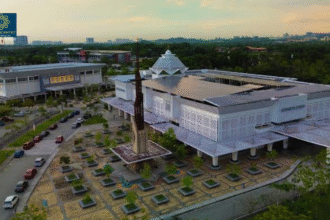
| 2023 | Istiqlal Osaka Mosque inaugurated, accommodating 1,500 worshippers |
The 1973 Oil Crisis Changes Everything
While early Islamic communities grew slowly through trade and migration, the 1973 Oil Crisis dramatically accelerated Japan’s engagement with the Muslim world. Japan depended heavily on Middle Eastern oil, so when the crisis struck, government officials suddenly prioritized stronger relationships with oil-producing Muslim nations.
As a direct consequence, Japanese media began covering Islamic culture and the Arab world extensively. Public curiosity about Islam increased, and for the first time, many ordinary citizens encountered detailed information about Muslim beliefs and practices. Additionally, Saudi Arabia’s King Faisal personally supported the translation of the Quran into Japanese and funded the Islamic Center in Tokyo, which became a hub for education and outreach.
Consequently, Islamic organizations multiplied throughout the following decades. The Japan Muslim Association, founded in 1952 by early converts including Umar Yamaoka and Umar Mita, expanded its activities, publishing newsletters and sending Japanese youth to study at Al-Azhar University in Egypt. Meanwhile, other groups such as the International Islamic Center and Islamic Culture Society-Japan carried out missionary work in cities including Tokyo, Kyoto, Osaka, Nagoya, and Hiroshima.
Counting the Community Today
Determining exactly how many Muslims live in Japan is notoriously difficult, largely because the government does not conduct religious censuses. Instead, researchers rely on estimates from universities, embassies, and community organizations. According to Professor Emeritus Hirofumi Tanada of Waseda University, Japan’s Muslim population reached approximately 230,000 in recent years, including around 47,000 Japanese nationals.
This figure represents a remarkable jump from 2016, when researchers counted only about 120,000 Muslims nationwide, with just 10,000 of Japanese origin. Therefore, the community has nearly doubled within less than a decade. Immigration, international marriages, and a small but steady stream of conversions all contribute to this growth.
Interestingly, Japan’s Muslim population reflects considerable diversity in religious practice. Pakistani immigrants often follow the Hanafi school of thought, while Malaysian and Indonesian communities typically follow the Shafi’i tradition. Despite these differences, community leaders describe strong bonds of solidarity across ethnic and sectarian lines, since shared minority status often outweighs doctrinal distinctions.
Halal Tourism: A New Economic Opportunity
As Japan’s Muslim population expanded, so did interest from international Muslim travelers. Japan’s tourism authorities recognized this trend early, especially ahead of major global events like the 2019 Rugby World Cup and the 2020 Tokyo Olympics. As a result, halal-friendly infrastructure expanded rapidly across the country.
Highway service areas along popular routes, including the Tomei and Chuo Expressways, now feature dedicated prayer rooms complete with mats and directional signs pointing toward Mecca. Similarly, halal restaurants have multiplied in tourist-heavy cities such as Kyoto and Osaka, offering everything from Turkish and Indian cuisine to halal-certified Japanese dishes.
Beyond food and prayer spaces, Japanese businesses have embraced the halal market creatively. UNIQLO, for instance, partnered with designer Hana Tajima in 2017 to launch modest clothing lines for Muslim women. Elsewhere, traditional tatami mat makers have adapted their craft, producing prayer-sized mats after noticing declining domestic demand and rising interest from Muslim visitors. Even cosmetics brands have pursued halal certification through the Japan Islamic Trust, responding directly to growing consumer demand.
Muslim Population Growth and Halal Tourism Snapshot
| Indicator | 2016 | Recent Estimate |
|---|---|---|
| Total Muslim population in Japan | ~120,000 | ~230,000 |
| Japanese national Muslims (converts/born Muslim) | ~10,000 | ~47,000 |
| Share of Muslims in overall minority-religion group | Data limited | ~4% |
| Muslim tourists visiting Japan annually | Data limited | Up to 110 million visits (approx. 12% of total visitors, per 2022 report) |
| Notable halal infrastructure | Few dedicated facilities | Expressway prayer rooms, halal restaurant networks, halal-certified cosmetics and food products |
Figures are drawn from researcher estimates, including Waseda University data and U.S. Department of State religious freedom reports, since Japan does not conduct an official religious census.
Persistent Challenges: Burial and Education
Despite this progress, significant obstacles remain. Japanese cultural and legal norms strongly favor cremation, whereas Islamic tradition requires ground burial. Consequently, dedicated Muslim cemeteries remain extremely scarce, and many local governments resist approving new burial sites due to concerns about land use and groundwater contamination.
The Yamanashi cemetery, established decades ago with financial support from Saudi Arabia and Kuwait, remains one of the only dedicated burial grounds available to Muslims nationwide. Because space is so limited, some families choose to transport deceased relatives back to their countries of origin instead, a costly and emotionally difficult process. Fortunately, new burial sites are beginning to emerge in places like Hiroshima, though progress remains slow.
Religious education presents another ongoing challenge. Japan’s government deliberately avoids involvement in religious instruction, treating it as separate from public school curricula. Therefore, Islamic education largely depends on private organizations like the Islamic Center Japan, which offers courses for converts and community members. While this arrangement preserves religious freedom, it also places significant responsibility on community organizations with limited resources.
Looking Toward a Muslim-Friendly Future
Taken together, Japan’s relationship with Islam reflects broader themes of adaptation and mutual benefit. Trade brought the first Muslims to Japanese shores, war and revolution brought refugees, and economic necessity brought deeper engagement after the 1973 Oil Crisis. Today, halal tourism and a growing local Muslim population continue to shape this evolving relationship.
Challenges around burial grounds and religious education certainly remain unresolved. Nevertheless, Japan’s constitutional commitment to religious freedom, combined with genuine curiosity and hospitality from many citizens, suggests a promising trajectory. As global Muslim populations continue growing, particularly across Asia, Japan appears increasingly motivated to strengthen this relationship further.
Ultimately, the story of Islam in Japan is far from finished. It continues to be written by immigrants, converts, business owners, and government officials alike, each contributing to a country that is slowly, but steadily, becoming more Muslim-friendly.