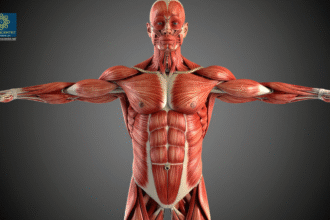
New research from Nanjing Medical University reveals that Ramadan fasting may actually improve body composition and nutritional status in young men, while leaving sleep patterns largely unaffected.
Executive Summary
A study published in Life and Science journal has revealed surprising findings about Ramadan fasting’s effects on health. Researchers from Nanjing Medical University in China studied 400 healthy male international students aged 18 to 38 during Ramadan in May-June 2019. Using polysomnography to measure sleep patterns and bioelectrical impedance for body composition, they discovered that fasting did not significantly disrupt sleep latency, sleep arousal, or total sleep time. Moreover, participants showed significant improvements in body mass index, hip circumference, body fat percentage, and basal metabolic rate after fasting. Physical activity patterns changed notably, with routine activities increasing significantly (p=0.000) while walking also rose (p=0.005). Nutritional status improved based on BMI and waist circumference classifications. However, macronutrient, vitamin, and mineral intake decreased significantly during Ramadan compared to pre-fasting levels. The study identified important correlations between specific nutrients and health markers, including positive associations between dietary fat and body fat percentage, vitamin A with sleep quality, and dietary fiber with total sleep time. Researchers concluded that Ramadan fasting maintains optimal nutritional status while regulating metabolism without adverse health effects. These findings support the concept that caloric restriction through religious fasting may improve health efficiency and body composition in healthy young adults.
Why This Study Matters for Millions Worldwide
Over 1.6 billion Muslims observe Ramadan fasting annually, abstaining from food and drink from dawn to sunset for an entire lunar month. Consequently, understanding how this practice affects sleep, nutrition, and overall health has become increasingly important for physicians, nutritionists, and dieticians worldwide. Particularly for young adults navigating academic pressures, the potential effects on cognitive function and physical performance warrant careful investigation.
Previous research has produced contradictory results regarding fasting’s effects on sleep patterns and body composition. Therefore, this comprehensive study aimed to fill critical knowledge gaps by examining international students in China—a population experiencing rapid growth due to the “Belt and Road” policy. These students face unique challenges balancing religious observance with academic demands, making them an ideal population for understanding fasting’s real-world impacts.
How Researchers Conducted This Investigation
The research team recruited 400 healthy male students from three Nanjing universities: Nanjing Medical University, Nanjing University of Science and Technology, and Nanjing Agricultural University. Participants practiced 16-hour daily fasts for 30 days, consuming two main meals—breakfast around 3:00 AM and dinner at 7:00 PM.
Data collection occurred at two time points: one week before Ramadan and during the final week of fasting. Trained nutritionists conducted face-to-face interviews using standardized questionnaires. Sleep patterns were objectively measured using polysomnography, a sophisticated technique recording brain waves, oxygen levels, airflow, and body movements during sleep. Body composition was assessed through bioelectrical impedance analysis, while dietary intake was evaluated using 24-hour recall questionnaires over three consecutive days.
Sleep Patterns Remain Surprisingly Stable
Contrary to popular assumptions, Ramadan fasting did not significantly disrupt sleep architecture. The study found no statistically significant differences in typical bedtime, sleep latency, sleep arousal, typical awakening time, or total sleep time between pre-fasting and post-fasting periods.
How Sleep Changed During Ramadan (400 Young Men)
| What Was Measured | Before Ramadan | During Ramadan | Did It Change? |
|---|---|---|---|
| Bedtime | 12:67 AM | 13:15 AM | No big change |
| Time to Fall Asleep | About 24 minutes | About 19 minutes | No big change |
| Night Wakings | Less than 1 time | Less than 1 time | No big change |
| Sleep Quality | 88% | 86% | Still good |
| Wake-Up Time | 8:10 AM | 7:82 AM | No big change |
| Total Sleep | 7 hours 20 min | 7 hours 36 min | Slightly longer |
In simple terms, the students slept just as well during Ramadan as before it. They went to bed a little earlier and woke up a little earlier, but their total sleep remained healthy at around 7.5 hours per night. Sleep quality stayed at 86%, which doctors consider normal and healthy for university students.
Physical Activity Shows Notable Shifts
While sleep remained stable, physical activity patterns changed significantly during Ramadan. Routine activities increased dramatically from approximately 5.6 hours daily to 9.6 hours daily. Walking also showed significant increases, rising from about 12 minutes to a full hour per day.
How Daily Activities Changed During Ramadan (400 Young Men)
| Activity Type | Before Ramadan | During Ramadan | Big Change? |
|---|---|---|---|
| Daily Routines (studying, prayers, chores) | 5.6 hours | 9.6 hours | Yes, much more |
| Sitting Activities | 5.2 hours | 5.8 hours | No big change |
| Walking | 12 minutes | 1 hour | Yes, much more |
| Jogging | 6 minutes | 6 minutes | No change |
| Sports | 24 minutes | 18 minutes | No big change |
| Running | 6 minutes | 6 minutes | No change |
These findings suggest that fasting students stayed active despite eating less. The extra routine activities likely included additional prayers and spiritual practices that Muslims perform during Ramadan. Contrary to worries that fasting makes people lazy, these students actually moved more.
Body Composition Improves Significantly
Perhaps the most striking findings emerged from body composition analysis. Mean values of hip circumference, body fat percentage, body mass index, and basal metabolic rate all changed significantly after Ramadan fasting.
The nutritional status of students improved based on both BMI and waist circumference classifications. These improvements indicate that fasting promoted a negative energy balance state, leading to reductions in body weight, waist-to-hip ratio, BMI, body fat percentage, and waist circumference. The mean basal metabolic rate decreased significantly, suggesting that fasting helps maintain body metabolism within optimal ranges.
These results align with previous studies reporting decreased weight and BMI during Ramadan fasting. However, inconsistent findings exist in literature, with some studies reporting weight gain or weight neutrality. Researchers attribute these variations to differences in lifestyle factors, dietary habits, and study protocols across populations.
Nutrient Intake Declines But Correlations Emerge
Dietary analysis revealed significantly lower intake of macronutrients, selected vitamins, and minerals during Ramadan compared to pre-fasting levels. Total energy intake, protein, fat, and carbohydrate consumption all decreased significantly.
The study identified important correlations between specific nutrients and health markers. Dietary fat showed significant positive correlation with body fat percentage, BMI, and basal metabolic rate. Total energy intake correlated positively with sleep arousal, while dietary fiber showed positive association with total sleep time.
Vitamin A demonstrated significant positive correlations with sleep latency, sleep arousal, BMI, and basal metabolic rate. Vitamin D and E showed positive associations with sleep latency and sleep arousal respectively. These findings suggest that specific nutrients play important roles in regulating sleep quality and body composition during fasting.
What Experts Say About These Findings
The research team emphasized that this represents the first study examining international students’ nutrient intake associations with physical activity, sleeping patterns, and body composition during Ramadan fasting. Previously, studies failed to report correlations between body composition, BMI, and individual nutrients.
Lead researcher Dr. Falak Zeb noted that the findings support the concept of caloric restriction for improving health efficiency. Additionally, the study highlights the importance of recommended dietary fiber, folic acid, iron, iodine, and polyunsaturated fatty acid intake during Ramadan for maintaining proper physical activity, adequate sleep, and reducing obesity.
The researchers acknowledged study limitations, including the exclusively male participant population and the specific cultural context of international students living in university hostels. Future longitudinal research should include both male and female adolescent university students to investigate these impacts more comprehensively.
Practical Implications for Fasting Individuals
For millions observing Ramadan worldwide, these findings offer reassuring evidence that fasting can be practiced safely while potentially improving health outcomes. The study suggests that maintaining balanced nutrition during non-fasting hours remains crucial, particularly ensuring adequate intake of dietary fiber, folic acid, iron, iodine, and polyunsaturated fatty acids.
Furthermore, the stability of sleep patterns indicates that concerns about fasting disrupting rest may be unfounded for healthy young adults. The increased physical activity observed suggests that fasting does not necessarily lead to sedentary behavior, contrary to common assumptions.
Healthcare providers counseling fasting patients should emphasize the importance of proper nutrition during suhoor and iftar meals. Including foods rich in vitamin A, dietary fiber, and healthy fats may support both sleep quality and body composition goals.
Conclusion
This comprehensive study demonstrates that Ramadan fasting maintains optimal nutritional status by regulating normal weight, BMI, waist-to-hip ratio, and basal metabolic rate in healthy young men. The absence of adverse effects on sleep patterns and physical activity supports the health safety of fasting for this population.
These findings contribute valuable evidence supporting caloric restriction concepts for improving health efficiency. As Ramadan fasting continues to be practiced by millions globally, understanding its physiological effects becomes increasingly important for personalized healthcare recommendations. The study underscores that religious fasting, when practiced properly, can coexist with—and potentially enhance—optimal health and nutritional status.