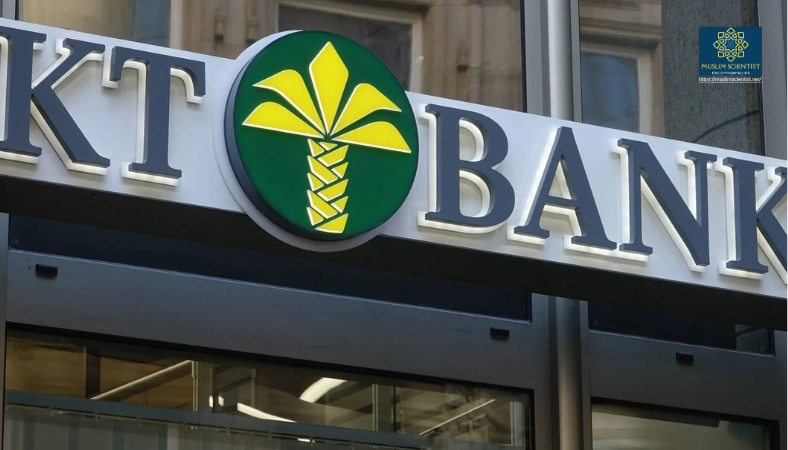
A remarkable story of financial innovation is unfolding in the heart of Europe. In 2015, Germany granted a banking licence to KT Bank, marking the first time an Islamic bank operated within the country’s regulatory framework . This pioneering venture, rooted in the principles of Shariah law, faced a monumental challenge: building a financial institution that strictly adhered to Islamic values while complying with Germany’s stringent banking regulations . A new academic study published in the Journal of Management Studies has dissected this journey, offering profound insights into how committed actors successfully navigate institutional complexity . Their research reveals that the path to compromise involves a cascading strategy with four distinct mechanisms: explaining, convincing, conceding, and suspending .
A New Logic, A New World: The Genesis of KT Bank
The founding of KT Bank represented more than just a new financial institution. It was the entry of the Islamic religious logic into a field dominated by the Christian religious logic, the capitalist market, and the bureaucratic state . This was not a simple case of an organization operating across two familiar logics; it was a novel constellation, where the specific instantiation of a logic originated from a different interinstitutional system . As one manager noted, “To establish a bank is one thing, an Islamic bank a completely different one…this is virgin soil for them, too” .
The bank’s strong commitment to Islamic values—such as the prohibition of interest (riba), uncertainty (gharar), and unethical investments—was non-negotiable. As one manager stated, if adherence to Islamic rules was not possible, “then the project is dead” . However, securing a banking license from the Federal Financial Supervisory Authority (BaFin) was also a prerequisite. This situation forced KT Bank to develop innovative templates to reconcile these two sets of demands . The academic paper identifies the core challenge as a jurisdictional overlap between two logics with high specificity and limited discretion for creative interpretation .
The Pathway to Compromise: Four Mechanisms
The study reveals that the bank and its regulators engaged in a process of negotiation that can be broken down into four distinct, cascading compromise mechanisms . These mechanisms are ordered based on the actor’s preference, moving from the least to the most taxing on their core commitment .
1. Explaining: Clarifying the Structure
The first mechanism, “explaining,” involves dissolving misconceptions by showing that no actual incompatibility exists. A primary example was the governance structure. German law requires that the executive board holds ultimate decision-making authority, and regulators were concerned that a Shariah Board could undermine this. KT Bank resolved this by renaming the Shariah Board as the External Ethics Council and codifying that it served solely in an advisory capacity, without issuing directives. As their Internal Regulations state: “The External Ethics Council is solely an advisory committee…not authorized to issue directives to banking bodies” . This simple clarification satisfied the regulator without stretching any logic, demonstrating that sometimes, complexity is a matter of perception rather than reality.
KT Bank’s Four Compromise Mechanisms for Islamic Banking
| Mechanism | Description | Key Example from KT Bank | Nature of Resolution |
|---|---|---|---|
| Explaining | Clarifying that perceived incompatibilities are actually compatible. | Renaming the Shariah Board to “External Ethics Council” with an advisory role. | Minimal change; no logic stretched. |
| Convincing | Developing innovative solutions to address the other’s concerns. | Creating a Special Purpose Vehicle (SPV) to avoid double property tax on real estate purchases. | Stretches the state logic. |
| Conceding | Developing innovative solutions by creatively interpreting one’s own logic. | Creating a “Flex Credit” overdraft product with a mark-up structure and self-declaration. | Stretches the religious logic. |
| Suspending | Allowing underlying tensions to persist with a “consensual vagueness.” | Using a profit stabilization reserve to imply a de facto, but not de jure, guarantee of deposits. | Tensions remain unresolved. |
2. Convincing: Convincing the Regulator
When simple explanation is insufficient, the actor may move to “convincing.” This mechanism involves developing an innovative template to stretch the other logic. The real estate purchase process is a perfect example. In Islamic finance, a loan with interest is forbidden, so a murabahah (mark-up) contract is used where the bank buys and sells the property to the customer. Under German law, this was seen as two transactions, requiring property acquisition tax to be paid twice. Unlike the UK, which amended its laws to support Islamic finance, German authorities were not willing to change the law .
KT Bank was forced to develop a novel solution: a Special Purpose Vehicle (SPV). The SPV, co-owned by the bank and the customer, would purchase the property, after which the bank would sell its share for a profit. This construct, drawn from outside the banking sector, bypassed the double-taxation issue without infringing on Islamic guidelines, ultimately convincing the regulator to accept it . This demonstrates a significant investment in innovative financial engineering to meet regulatory requirements.
3. Conceding: Innovating from Within
The next mechanism, “conceding,” is more difficult for a committed actor, as it requires stretching one’s own logic. This was particularly evident with the “Flex Credit” overdraft product. Conventional credit cards involve lending and interest, which is prohibited. KT Bank faced two challenges: the interest issue and ensuring the card wasn’t used for forbidden products like alcohol or gambling .
Their innovative solution re-framed the transaction. Instead of lending money, the customer buys products on behalf of the bank, and the bank then sells them back immediately at a mark-up. While the customer’s money was at risk, making it appear like a conventional credit card, the underlying mechanics from an Islamic perspective involved two transfers. This was supplemented by a self-declaration from the customer not to buy forbidden items, and a blacklist system. This required creative interpretation of Islamic rules, pushing the boundaries of what was considered Shariah-compliant . It was a clear case of the bank conceding and creatively stretching its own religious logic to offer a modern financial product.
A Comparison of Regulatory Environments for Islamic Finance in Europe
4. Suspending: The Art of Constructive Vagueness
Finally, when no solution can be reached, actors may resort to “suspending.” This mechanism allows underlying tensions to persist without deepening the conflict, often through consensual vagueness. The most critical test for KT Bank was the deposit guarantee scheme. German law requires banks to guarantee deposits, but Islamic finance prohibits a guaranteed return, as profits and losses must be shared .
The bank could not find a workable innovative solution. Their eventual proposal involved a profit stabilization reserve, which could cover up to 15% of gross earnings to cushion losses. More importantly, the bank explicitly stated its intention to cover losses from its own resources if the reserve proved insufficient. Regulators ultimately accepted this as a de facto but not de jure guarantee . One manager expressed relief, “We are exuberantly happy that this vague juristic formulation…was accepted, because this was the biggest hurdle” . This allowed the bank to be licensed while the core theological tension remained unresolved, a state of suspended compromise.
The Future of Faith-Based Finance in Europe
The story of KT Bank is not just a historical case study. It provides a crucial blueprint for how committed actors can navigate novel institutional complexity. As Germany has Europe’s second-largest Muslim population of about 5.5 million, the potential for Islamic banking is enormous . Yet, the sector remains underdeveloped compared to the UK, which has nearly one million fewer Muslims but over 80 times more Shariah-compliant assets .
Germany’s reluctance to adapt its regulatory framework, unlike the UK, has proven a significant hurdle . However, the innovative templates developed by KT Bank for real estate, credit cards, and other products have now been established, potentially paving the way for future entrants and followers.
Top Performing Shariah-Compliant Funds in Germany (2024)
These funds demonstrate that Shariah-compliant investing can be competitive, with the top fund seeing returns of nearly 16% in 2024 . Yet, even after securing its licence, KT Bank has faced operational challenges, including a 600,000 euro fine for anti-money laundering compliance breaches in 2024 . This highlights that the struggle for full integration is ongoing.
Conclusion: A New Chapter in Institutional Innovation
The emergence of Islamic banking in Germany showcases a fascinating process of institutional innovation. KT Bank’s journey demonstrates that when a new logic enters an established system, the result is a novel institutional complexity that demands creative compromise. The mechanisms of explaining, convincing, conceding, and suspending illustrate how a committed actor prioritizes one set of values while finding ways to meet the demands of another. This research is vital for policymakers and regulators, as it highlights their role in shaping the future of the financial sector. By understanding these mechanisms, authorities can facilitate innovation and inclusivity, turning challenges into opportunities for a more diverse and resilient economy.
Reference: here
other Articles: