Introduction: A Different Story of Muslims and Empire
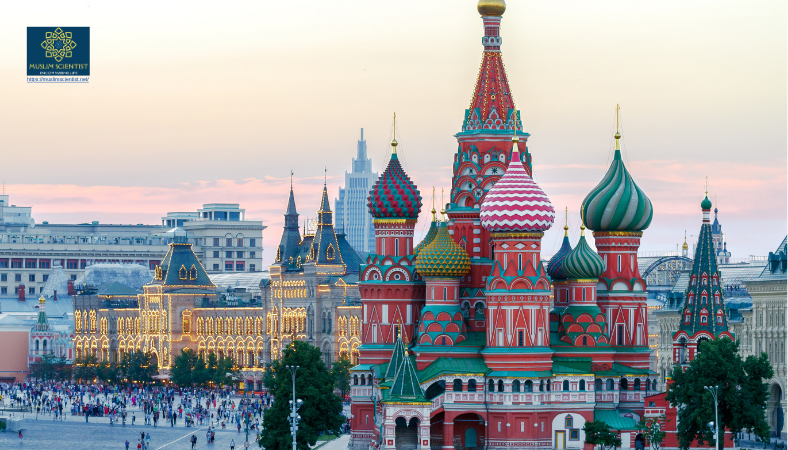
When we think about the history of Muslims under colonial rule, our minds often turn to the British in India or the French in North Africa. However, a vast and significant chapter of this story unfolded under the Russian Empire. For over three centuries, the Russian Tsars ruled over a territory stretching from the Volga River to the steppes of Central Asia, a region home to more than 20 million Muslims by the early 20th century . How did these communities maintain their faith, their laws, and their identity in the face of a powerful, non-Muslim empire?
A new historiographical survey by historian Rozaliya Garipova, published in the journal Religions, provides a compelling synthesis of scholarly work that attempts to answer this question . The article cuts through old academic debates to paint a picture of a legal landscape that was far more complex, vibrant, and resilient than a simple story of conquest and submission would suggest.
The Heart of the Matter: What the Historians Are Debating
Garipova’s survey identifies that academic discussions about Islamic law under Russian rule have long been dominated by a few key, opposing ideas . Some scholars have framed the story as one of rupture, arguing that Russian imperialism fundamentally broke the continuity of Islamic legal tradition. Others have emphasized the cooperation of Muslim leaders, or conversely, the insulation of Muslim communities from Russian influence .
According to Garipova, these “binaries” disguise a more intricate truth . The historical reality was that the relationship between Islamic law and the Russian state was never static and varied greatly across time and place. Recent scholarship suggests that a “pluralistic legal landscape” emerged, shaped by a combination of imperial intervention, local customs, practical necessities, and the actions and choices of ordinary Muslims .
Old Views vs. New Understanding of Islamic Law Under Russia
How the Russian Empire Shaped Islamic Law
The Russian Empire’s relationship with Islamic law was one of the key ways it governed its vast and diverse Muslim population. The article highlights how imperial policies actively shaped the practice of Sharia in several ways.
1. Institutionalizing and Defining Sharia
Instead of abolishing Islamic courts, the Russian state often chose to integrate them into its own administrative framework. By defining the authority of Islamic judges (qadis) and limiting their jurisdiction—often to personal status issues like marriage and inheritance—the empire inadvertently helped to codify and rigidify what had been a more fluid legal tradition . This process also transformed Sharia from a general moral and legal framework into a formal legal code associated with a specific religious community .
2. The Impact of Legal Pluralism
The Russian Empire fostered a system of legal pluralism, where Muslims could sometimes choose between Islamic courts and Russian imperial courts. This meant that laws were not simply imposed from above. Instead, different actors—including Muslim peasants, merchants, and women—could strategically navigate the legal system, appealing to the authority that best served their needs . For example, Jewish communities in Samarkand pushed to have their cases heard in Russian courts, while Islamic judges complained to the same Russian authorities about this loss of jurisdiction . This created a dynamic where both imperial and Islamic institutions were shaped by the demands of their subjects.
3. Codification and “Hardening” of Sharia
One of the most significant impacts of Russian rule, as highlighted by scholars, was the process of codification. Through translation and the state’s preference for certain interpretations of Islamic texts, the previously diverse and scholarly legal tradition was narrowed . This creation of a “hard” or more rigid Sharia had a lasting effect on how the law was understood and applied, both by the state and by Muslim reformers in later generations .
Key Ways Russian Rule Transformed Islamic Legal Practice
Why This History Still Matters Today
Understanding how Islamic law functioned under the Russian Empire is not just an academic exercise. It offers crucial insights into questions that remain relevant for Muslims and legal historians today.
First, it provides a powerful case study of legal resilience. It shows that a religious legal system can survive and adapt even under the pressure of a powerful, non-Muslim state. The transformation of Sharia was not simply a story of its destruction, but also of its reinvention by both the state and Muslim communities themselves .
Second, this history complicates simplistic narratives of a clash between religion and modernity. The Russian Empire was eager to modernize, yet it often relied on traditional Islamic structures to maintain order, effectively strengthening them . This shows that the relationship between “traditional” religious law and “modern” state power is far more intertwined than often assumed.
Finally, Garipova’s article calls for a new direction in research . She suggests that future historians should take an “anthropological turn,” focusing less on institutional history and more on the lived experiences of ordinary people. This means studying the daily interactions between religious scholars and their communities and exploring the gendered dimensions of legal practice to build a richer, more human picture of this fascinating period .
Conclusion: A Legacy of Complexity
The story of Islamic law under the Russian Empire, as surveyed by Garipova, defies easy categorization. It was a period of profound change, shaped by a powerful imperial state. Yet it was also a period of remarkable continuity and resilience for Muslim communities and their traditions. By moving beyond old academic debates and embracing a more nuanced, pluralistic view, modern historians are beginning to understand how Sharia was not just administered from above, but actively lived, negotiated, and reshaped by millions of Muslims . This history serves as a powerful reminder of the enduring vitality and adaptability of Islamic legal traditions in the face of immense historical forces.
Reference: here
Other Articles: