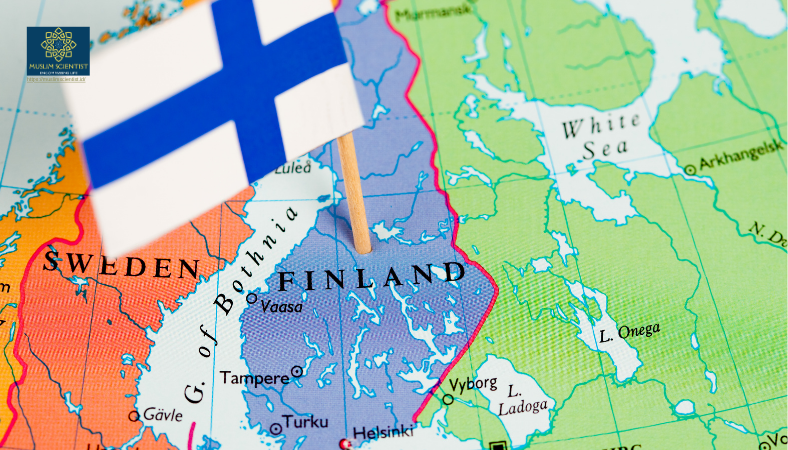
Finland has never been known for religious diversity. Yet a 150-year Muslim journey — from Tatar peddlers to public partner — is quietly reshaping Finnish society. A new analysis reveals the inside story of how Islam took root in a cold northern nation, and why the country remains deeply divided over its newest citizens.
Summary
Finland’s Muslim story is one of two very different chapters. It begins in 1809, when Finland became part of the Russian Empire, and later with Tatar merchants who settled as peddlers and traders from the 1870s. These Tatars built the country’s first Muslim organisations — the Islamic Congregation of Finland (1925) and the Islamic Congregation of Tampere (1943). They stayed small (under 1,000 people) but became respected, well-integrated Finns who proudly served in the country’s wars.
The second chapter opened in the 1990s. With the Cold War over, Finland accepted UNHCR refugees from the Middle East, plus asylum seekers from Somalia and the former Yugoslavia. Since then the Muslim population has grown rapidly to an estimated 70,000–140,000, with the Pew Research Center projecting growth from about 1.3% of the population to 3.4% by 2050. Today there are around 129 registered Islamic associations and 80 mosque communities. In 2015 alone, some 32,500 asylum seekers arrived, and at least 10,000 were expected to receive residence rights.
Research by Tuomas Martikainen of the Migration Institute of Finland shows how Muslim organisations moved from the margins to become partners of the state. The Islamic Council of Finland (SINE), founded in 2006 with government help, receives state funding. Interreligious bodies such as CORE now bring Christians, Muslims and Jews together. Local committees in Helsinki and Turku give Muslim groups a direct voice in decision-making.
Yet this administrative openness sits uneasily alongside public hostility. About half of Finns hold negative views of Islam, and only 6% view it positively — attitudes described as exceptionally critical by international standards. Media coverage remains focused on violence and terrorism. The anti-immigration Finns Party has brought “Eurabia” rhetoric into mainstream politics. Tatars remain middlemen between newer Muslims and the state, though their community is ageing. While Muslim pupils may now study their own religion in school — Islam became the third most popular religious subject, ahead of Orthodox Christianity — a planned grand mosque in Helsinki was withdrawn amid political pressure.
The Finnish case matters beyond its borders. It shows that governance can be more open than public opinion, and that a small, well-integrated historic minority can shape how a state treats its newest religious citizens. It also warns that Islam’s future in Finland will be driven less by events on Finnish soil than by developments elsewhere in Europe and the Middle East. The gap between a welcoming state and a wary public remains the country’s central unresolved question.
Finland’s Two Muslim Chapters — Old Tatars vs New Arrivals
How Finland’s historic Tatar Muslims compare with the Muslims who arrived after the Cold War.
| What We Compared | Tatar Muslims (from 1870s) | New Muslims (from 1990s) |
|---|---|---|
| Where they came from | Volga-Ural region of Russia, mainly Mishar Tatars | Middle East (Iraq, Iran), Somalia, Balkans, Turkey, North Africa, South Asia |
| Why they came | Trade — peddling textiles, carpets and furs | Refugees, asylum seekers, students, spouses and family reunification |
| How many today | Fewer than 1,000 | Estimated 70,000–140,000 |
| First organisation | Islamic Congregation of Finland, 1925 | Islamic Society of Finland, 1987 |
| Membership trend | Ageing and shrinking | Fast-growing |
| Main language | Tatar for religion and culture, Finnish for official life | Many languages; Finnish often still being learned |
| Economic position | Wealthy, well-established traders | Overrepresented in lower income groups |
| Public role | Low-profile; now trusted partners of the state | Building their place; diverse and often fragmented |
Sources: Martikainen (Migration Institute of Finland); CNE.news; FIIA seminar (2008).
Muslims in Finland by the Numbers
Key figures everyone should know.
| Indicator | Figure | Why It Matters |
|---|---|---|
| Total population of Finland | About 5.5 million | A small country with a small Muslim community |
| Muslims in Finland (estimates) | 70,000 (2015) to 140,000 (2025) | Estimates vary because few immigrants register their religion officially |
| Registered members of Islamic organisations | 13,300 (2015), up from 1,200 in 2000 | Shows growing organisation, but many Muslims stay unregistered |
| Registered Islamic associations | About 129 | A nationwide religious infrastructure |
| Mosque communities | About 80, with some 30 in the Helsinki region | Most activity is concentrated in the capital area |
| Asylum seekers who arrived in 2015 | 32,500, mainly from Iraq and Syria | At least 10,000 were expected to receive the right to stay |
| Projected Muslim share by 2050 | 3.4% (from 1.3%) | Slow but steady demographic change |
| Finns who view Islam positively | 6% | A striking contrast with official openness |
| Finns who view Islam negatively | 50% | Attitudes have stayed negative for decades |
| Pupils studying Islam in school (2024) | 4.2% of primary pupils | Now exceeds Orthodox Christianity at 2.2% |
Sources: Statistics Finland; Martikainen (2013, 2015); Pew Research Center (2015); CNE.news (2025).
Two Histories, One Country
Most Finns grew up believing their country is homogenous. With 5.5 million people, a small Sami population, and a well-treated Swedish-speaking minority, that image has always been partly true and partly fiction. Islam’s presence in Finland stretches back more than two centuries, yet few Finns know this history.
The first Muslims arrived as Russian soldiers after 1809, when Finland became a grand duchy of the Tsarist Empire. A Muslim cemetery from the early nineteenth century still sits near the Bomarsund Fortress on the Åland Islands. A military imam served at the Sveaborg Fortress near Helsinki as early as 1836.
Civilian settlement began in the 1870s, when Tatar merchants from the Nizhny Novgorod province arrived as peddlers. They sold textiles, carpets and furs, built wealth, and gradually brought their families. A migration network took shape along Finland’s new railways. This movement lasted until the 1920s, when stricter Soviet rules closed the door.
The Tatars: Small, Loyal and Quietly Influential
By the 1930s, about 120 Tatar families lived in Finland, averaging 5.5 members each. They gained Finnish citizenship from 1920, and by the Second World War roughly half were citizens. Nearly 180 Tatars took part in Finland’s war efforts, and ten died. The community later published a register of Tatar war veterans — a source of pride that echoes how many Finns view the war.
The Tatars built the country’s only purpose-built mosque, a wooden structure with a minaret in Järvenpää, completed during the war. They founded two religious congregations, in 1925 and 1943, which still exist today with about 600 members combined. Their numbers are ageing and shrinking.
Linguistically, the community is unusual. Most Tatars still speak their own language at ethnic gatherings, publish a newspaper called Mahalla Habarlare, and ran their own primary school between 1948 and 1969. Yet they use Finnish for official purposes and have kept a deliberately low public profile.
This quiet strategy paid off. Finnish authorities now seek out Tatars as respected middlemen between the state and newer Muslim communities. In that sense, the Tatars moved from society’s margins to its centre — without ever seeking attention.
The New Muslims: Diverse, Young and Urban
The second chapter began slowly. A few non-Tatar Muslims lived in post-war Finland as students, spouses and professionals. Then came the 1990s: the Cold War ended, Finland opened to migration, and the country began accepting UNHCR refugees from the Middle East.
Somalis, Iraqis, Iranians, Afghans, Bosnians, Turks, Pakistanis and others arrived. The 2015 refugee crisis brought 32,500 more, mostly from Iraq and Syria. Unlike Germany or France, Finland never imported guest workers in the 1960s and 1970s — it was exporting workers to Sweden instead. Most Finnish Muslims therefore share a refugee background, which shapes their economic position.
This new population is highly diverse, mostly urban, and young. Many live in lower income brackets. A second generation is now growing up, more visible and increasingly vocal about its identity.
Religious infrastructure has expanded fast. By 2015 there were around 129 registered Islamic associations and 80 mosque communities. The Islamic Society of Finland, registered in 1987, remains one of the largest and most active.
From the Margins to the Negotiating Table
Perhaps the most striking development is institutional. Finland’s state has moved from ignoring Muslims to actively partnering with them.
The Freedom of Religion Act of 1923 first allowed Muslims to register as recognised religious organisations. The Tatar congregations used this law. Non-Tatar Muslims organised only in the 1980s and 1990s, as numbers grew.
The turning point came with the Islamic Council of Finland (SINE), founded in 2006 with help from the Ombudsman for Minorities and funded by the state from the start. SINE gave Muslim organisations a national voice. Around the same time, interreligious work became official policy. The National Forum for Cooperation of Religions in Finland (CORE) unites Christians, Muslims and Jews under one umbrella.
Local initiatives followed. Turku set up a committee to foster relations with Muslim associations. Helsinki developed its own networks. The 9/11 attacks, the 2006 cartoon controversy, and later terrorist attacks in Europe pushed the Finnish state to treat interreligious dialogue as a tool for social peace.
Consequently, Muslim organisations now sit at the table when officials discuss integration, security and community relations. That would have been unthinkable in the 1980s, when the state dealt almost exclusively with the Evangelical Lutheran Church.
A Public That Remains Deeply Wary
If the state opened its doors, the public did not. Finnish attitudes to Islam are among the most negative in Europe, and they have barely shifted in decades.
Surveys since 1989 show about half of Finns hold strong reservations about Islam, while only a small share view it positively. A 2011 poll found 6% positive, 33% neutral, and 50% negative. Researchers Kimmo Ketola and Teemu Pauha link these views to right-wing politics, patriotism, and a worldview that stresses group differences. Strongly religious Finns are also critical, while mainstream religious believers are not.
Media coverage has reinforced the pattern. Studies of Helsingin Sanomat from 1946 to 1994 traced four phases, from seeing Islam as backward, to viewing it through great-power rivalry, to fearing political Islam after Iran’s revolution, to slowly recognising Muslims as European neighbours. Later research confirmed that Islam appears mostly in political contexts, often tied to violence. Journalistic quality is good, but the overall picture is one-sided.
The political climate has shifted too. The anti-immigration “immigration critics” movement emerged online in the early 2000s and found a home in the Finns Party, which has won significant electoral victories since 2008. Its rhetoric borrows from Eurabia conspiracy theories, framing Islam as a threat to Europe.
Education, Faith and Everyday Life
Schools have become the front line of everyday diversity. Finnish law lets pupils study their own religion, and Islam is now taught in many schools. In 2024, 4.2% of primary pupils studied Islam, compared with 2.2% for Orthodox Christianity — the first time Islamic studies surpassed Orthodox teaching.
Some observers, including Christian commentators, question whether Islamic religious education is truly non-confessional, as Finnish law requires. Concerns have also surfaced about unregistered mosques, including one found operating in a Helsinki basement zoned for a kindergarten.
Practical integration challenges persist. Imam training is underdeveloped. Qualified teachers and study materials for Islamic education are scarce. Finnish language skills remain the biggest employment barrier. Disputes arise over swimming classes, sex education, inheritance law and cemetery space.
At the same time, everyday accommodation has been smoother than in France or Germany. Muslim pupils and teachers may wear headscarves in Finnish schools, with discussion limited to safety in gyms and laboratories. No national hijab controversy has erupted.
What the Tatar Story Teaches Europe
Finland’s experience offers lessons that reach far beyond its borders. The first is that governance can run ahead of public opinion. Finnish officials have built partnerships with Muslim organisations even while half the population views Islam negatively.
The second is that a small, well-integrated historic minority can shape how a state treats newcomers. Because organising Islamic societies in Finland was already easy and legally accepted, formal recognition of new Muslim communities proved relatively uncontroversial.
The third lesson is less comfortable. Administrative openness has not softened public hostility, and negative attitudes have stayed stable even as the Muslim population grew. Whatever drives Finnish scepticism, it appears rooted in broader cultural values rather than simple fear of a growing community.
Finally, Finland’s Muslims remain fragmented by ethnicity, language and theology. Sunni and Shia groups cooperate on practical issues, but mosque communities often split along national lines. Uniting around shared concerns — above all, the negative public image of Islam — remains difficult.
A Future Shaped Abroad
Martikainen’s conclusion is sobering and hopeful at once. Much of what happens to Islam in Finland will be driven by events elsewhere — wars, migration flows, European politics and global media narratives. Finnish policymakers cannot control those forces.
What they can control is the domestic framework: legal recognition, state funding, interreligious dialogue and equal access to education and employment. On those fronts, Finland has quietly built one of Europe’s more constructive models.
The unresolved question is whether public attitudes will eventually catch up with administrative practice. For now, Finland holds two truths at once: a state that treats Muslims as partners, and a public that largely views Islam with suspicion. How that tension resolves will define the next chapter of Finland’s Muslim story.
References
CNE.news. (2025, November 25). Islam is gaining ground in Finland – should we worry? Christian Network Europe. https://cne.news/article/4920-islam-is-gaining-ground-in-finland-should-we-worry
Finnish Institute of International Affairs (FIIA). (2008, May 21). Muslim immigrants in Finland [Seminar summary]. https://fiia.fi/tapahtumat/muslim-immigrants-in-finland
Martikainen, T. (2013). Religion, migration, settlement: Reflections on post-1990 immigration to Finland. Brill.
Martikainen, T. (2015). Reconfiguring the societal place of religion in Finland: Islamic communities move from the margins to partner in civil society. In J. Garnett & S. L. Hauser (Eds.), Religion in diaspora: Cultures of citizenship (pp. 121–137). Palgrave Macmillan.
Martikainen, T. (2016). Managing religious diversity in Finland: From church law to governance networks. In A. Dawson (Ed.), The politics and practice of religious diversity: National contexts, global issues (pp. 118–132). Routledge.
Martikainen, T. (2019). The founding of the Islamic Council of Finland. In T. Martikainen, J. Mapril, & A. Khan (Eds.), Muslims in the margins of Europe. Brill.
Martikainen, T. (n.d.). Finnish Muslims’ journey from an invisible minority to public partnerships. Migration Institute of Finland. [Manuscript].
Pauha, T., & Ketola, K. (2015). Mikä selittää suomalaisten islam-vastaisuuden? [What explains Finns’ anti-Islamic attitudes?]. In R. Hämäläinen & H. Pesonen (Eds.), Kohtaamisia: Kirjoituksia uskonnosta, arjesta ja monikulttuurisuudesta (pp. 94–105). University of Helsinki.
Pew Research Center. (2015). The future of world religions: Population growth projections, 2010–2050. Pew Research Center.
Statistics Finland. (n.d.). Population structure: Population by religious community, age, and sex, 2000–2015