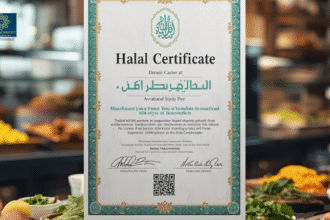
Walk into any halal-certified hotel these days. You will see prayer mats in the rooms. You will notice separate swimming pools for men and women. The restaurant menu proudly displays a halal logo. Everything looks Islamic. Everything feels safe.
But a growing number of scholars are asking an uncomfortable question. Is this really Islam? Or is it just a clever marketing strategy wrapped in religious clothing?
A new conceptual paper published in Tourism Management Perspectives (Moufakkir, 2025) delivers a sharp critique. The author, a professor at Gulf University for Science and Technology in Kuwait, argues that halal tourism has lost its spiritual core. It now focuses on symbols, surveillance, and superficial compliance. Deep ethics and sincerity have taken a back seat.
What Is This Study About?
This is not a survey or a statistical report. Moufakkir wrote a conceptual analysis. He combined three different theories to understand what is happening inside the halal tourism industry.
First, he used John Urry’s famous concept of the “tourist gaze.” Urry argued that tourists do not just see places. They consume them visually. They look for what is “Instagrammable.” They frame their experiences through cameras and social media.
Second, he brought in Michel Foucault’s idea of the “disciplinary gaze.” Foucault explained how modern power works through surveillance. People learn to watch themselves. They behave correctly not because they want to, but because they fear being judged.
Third, Moufakkir introduced a completely different perspective: the Qur’anic ethical gaze. This comes from Surah An-Nur (24:30-31), where Allah commands believing men and women to “lower their gaze.” This is not just about avoiding eye contact with the opposite gender. It is a whole way of seeing the world with humility, sincerity, and God-consciousness.
When these three gazes collide inside halal tourism, the result is messy. Tourists feel pulled in different directions. They want to enjoy their vacation. They also feel watched. And deep down, they wonder whether any of it brings them closer to Allah.
Three Types of Gaze in Halal Tourism (Made Simple for Readers)
| Type of Gaze | Who Is Looking? | Main Purpose | Real-Life Example in Halal Tourism |
|---|---|---|---|
| Tourist Gaze | The traveler | To consume scenery and culture | Taking selfies at a grand mosque, posting sunset photos on Instagram |
| Disciplinary Gaze | Hotel staff, other guests, even yourself | To enforce rules and ensure compliance | “Women only” pool signs, staff scolding guests for “immodest” clothing |
| Qur’anic Ethical Gaze | Yourself before God | To practice humility and sincerity | Choosing not to over-photograph, reflecting more than posing |
Source: Adapted from Moufakkir (2025), Tourism Management Perspectives
The Problem with Looking “Halal” Instead of Being Ethical
Moufakkir coins a powerful new term: the halalized gaze. This happens when a travel environment is designed to look Islamic, but the spiritual substance is missing.
Imagine a hotel lobby decorated with Arabic calligraphy. The staff wear modest uniforms. The buffet has a halal certification on every station. Yet the hotel pays its workers unfair wages. It wastes massive amounts of food and water. It does nothing to benefit the local community.
Is that truly halal? Or is it just a performance?
The author argues that halal tourism today often confuses visibility with virtue. Prayer rugs become props. Gender segregation becomes a checklist item. Guests begin to monitor themselves. Did I dress correctly? Am I sitting in the right section? Does everyone approve of my behavior?
This self-surveillance, according to Moufakkir, has nothing to do with taqwa (God-consciousness). It is social pressure disguised as piety.
Symbolic Halal Tourism vs. Ethical Halal Tourism (Side by Side)
| Aspect | Symbolic Halal Tourism (Current Trend) | Ethical Halal Tourism (Proposed Ideal) |
|---|---|---|
| Main focus | Labels, certificates, separate facilities | Sincerity, justice, moral responsibility |
| How travelers see | Consuming views, taking photos for social media | Reflecting, giving thanks, learning from creation |
| Rules emphasized | Don’ts (no alcohol, no immodest dress) | Do’s (be fair, care for the earth, be humble) |
| Relationship with locals | Often imposes one rigid standard | Mutual learning and respect |
| Environmental concern | Rarely a priority | Central to the experience (Green Halal) |
| End goal | Customer comfort and satisfaction | Closeness to Allah and community well-being |
Source: Adapted from Moufakir (2025)
Real-World Examples: Lombok, West Sumatra, and Zakopane
Moufakkir does not just stay in theory. He brings three real cases to illustrate his argument.
Lombok, Indonesia. Local authorities tried to market the island as a “halal destination.” They built mosques, installed prayer facilities, and put up Islamic signage. However many local residents resisted. They felt that this “halalization” came from the top down. It ignored their own diverse religious and cultural identities.
West Sumatra, Indonesia. Efforts to attract foreign Muslim tourists focused heavily on architecture and visible Islamic elements. The approach simplified complex local religious practices into tourist-friendly symbols. Many visitors arrived with narrow expectations. They left disappointed because reality did not match the brochure.
Zakopane, Poland. This mountain resort town recently saw a surge of wealthy visitors from the Gulf. Local businesses quickly adapted. They introduced halal food, women-only spa hours, and prayer-friendly accommodations. Yet some residents worry. They see spatial segregation and cultural essentialism. The town is projecting a single, conservative Muslim archetype onto a very diverse global population.
What do these three cases have in common? In each situation, halal tourism prioritized visible markers over genuine cultural exchange. Instead of building bridges, it sometimes built walls.
The Qur’anic Alternative: Lowering the Gaze
So what does the Qur’an actually say about travel and seeing? Moufakkir dedicates a significant portion of his paper to this question.
The command to “lower the gaze” appears in Surah An-Nur. Most people interpret it as a rule about modesty. Do not stare at members of the opposite gender. But the author argues that the verse carries a much deeper meaning.
Lowering the gaze, in Islamic ethics, means rejecting the consumer mindset. A believer does not look at creation as something to be used or captured. Instead, they look with awe, gratitude, and humility. They see mountains, oceans, forests, and even other human beings as signs of Allah’s majesty.
The Qur’an also commands believers to “travel through the land and observe how He began creation” (Surah Al-Ankabut, 29:20). Notice the word observe. It does not say consume or possess. Travel is meant to be an act of reflection, not an act of acquisition.
From this perspective, halal tourism should not be about checking boxes. It should not be about finding the most Instagrammable mosque. It should be about spiritual growth, ethical behavior, and sincere encounter with the Other.
The Collision of Gazes: Why Muslim Travelers Feel Trapped
Picture a Muslim woman checking into a halal-friendly resort. She has paid extra for this experience. She wants to relax without worrying about alcohol or immodest environments.
At the same time, she feels the weight of the disciplinary gaze. Staff members watch her clothing. Other guests judge her behavior. She begins to police herself. Does my hijab cover enough? Should I avoid laughing too loudly? Am I sitting too close to that man?
Then the tourist gaze kicks in. She wants to take beautiful photos for her followers. She wants to show everyone that she is having a wonderful time. But taking those photos feels performative. It clashes with the quiet humility that Islam encourages.
Finally, the Qur’anic gaze whispers something else. None of this external validation matters. Allah sees your heart. He knows whether you are sincere or just showing off.
These three gazes do not peacefully coexist. They collide. They create anxiety, confusion, and sometimes even hypocrisy. Moufakkir calls this the central crisis of modern halal tourism.
Introducing Green Halal: A Way Forward
The author does not just criticize. He offers a constructive solution. He calls it Green Halal.
This term plays on the concept of “greenwashing.” Greenwashing happens when companies claim to be environmentally friendly without changing their actual practices. Halal washing, by analogy, happens when companies claim to be Islamic without embedding real ethics.
Green Halal is the opposite. It asks tourism providers and travelers to align their practices with Qur’anic values such as:
- Justice (adl): Pay workers fairly. Do not exploit local communities.
- Trusteeship (amana): Take care of the earth. Reduce waste and carbon emissions.
- Balance (mizan): Avoid excessive luxury. Choose modest, sustainable options.
- Compassion (rahma): Treat all people with kindness, regardless of their faith.
Green Halal also invites Muslim travelers to reconsider their own behavior. Do we really need to fly across the world for a short vacation? Can we choose destinations closer to home? Can we spend more time reflecting and less time photographing?
These are not easy questions. But they are necessary if halal tourism wants to move beyond performance and toward genuine piety.
The Role of Certification Bodies and State Power
Moufakkir also points to a hidden problem. Who actually decides what counts as “halal tourism”? The answer is complicated.
Private certification bodies have sprung up all over the world. They charge fees to inspect hotels and restaurants. They issue certificates that businesses can display. However these bodies often compete with each other. Their standards vary widely. Some scholars question their theological legitimacy.
Governments also play a role. Saudi Arabia, Malaysia, Indonesia, and Turkey all want to lead the halal tourism market. They use state resources to promote their own standards. Geopolitical rivalries influence what becomes labeled as “halal.”
The average traveler does not see any of this. They just look for the logo. They trust that the certificate means something. But behind that logo, there is often a messy mix of commercial interests, political agendas, and inconsistent interpretations of Islamic law.
What This Means for Indonesian Muslims
Indonesia has the largest Muslim population in the world. The country also has massive tourism potential. Bali, Lombok, Aceh, and many other regions attract millions of visitors every year.
The critique in this paper is highly relevant for Indonesian readers. Are we building a halal tourism industry that truly reflects Islamic values? Or are we simply copying international trends without asking hard questions?
Consider the example of Lombok, which Moufakkir mentions. Local residents felt that halal branding was imposed from above. Their own diverse traditions were flattened into a single, market-friendly image. This is not just a theoretical problem. It has real consequences for communities.
Indonesian policymakers, business owners, and travelers should take this critique seriously. Halal tourism can be a force for good. It can promote ethical consumption, cultural exchange, and spiritual growth. But only if we move beyond symbols and towards substance.
Limitations of the Study: Honest About What It Does Not Do
Moufakkir is transparent about his paper’s limitations. This is a conceptual study, not an empirical one. He did not interview travelers. He did not survey hotel managers. He did not collect statistical data.
Therefore his arguments are theoretical. They invite further research, but they do not claim to be the final word. Future studies could test his ideas through interviews, focus groups, or large-scale surveys.
The paper also focuses more on critique than on practical implementation. How exactly would a hotel become “Green Halal”? What would a Qur’anically inspired travel itinerary look like? These questions remain open.
Nevertheless, conceptual critiques serve an important purpose. They shake us out of complacency. They force us to ask whether our assumptions are correct. Moufakkir has done exactly that.
Conclusion: From Spectacle to Sincerity
Halal tourism has grown rapidly over the past decade. Millions of Muslim travelers now seek out halal-certified hotels, restaurants, and destinations. On the surface, this seems like a positive development.
But Moufakkir urges us to look deeper. Behind the prayer mats and separate swimming pools, something troubling is happening. Faith is being commodified. Piety is being performed. Travelers are watching themselves more than they are watching for Allah.
The Qur’an offers a different path. Lower the gaze. Travel to reflect. See the world as a sign of divine creation. Treat every journey as an opportunity for spiritual growth, not just personal pleasure.
This does not mean Muslims should stop traveling. It means they should travel differently. With humility. With sincerity. With a critical eye toward the industry that profits from their faith.
As Allah says in Surah Al-Hujurat (49:13): “O mankind, We created you from a single male and female, and made you into nations and tribes, that you may know one another.” Travel is meant to build knowledge and connection, not walls and segregation.
The future of halal tourism depends on one simple question. Are we performing piety, or are we living it? The answer will determine whether this industry becomes a blessing or just another market.
Reference: here
Other Articles: