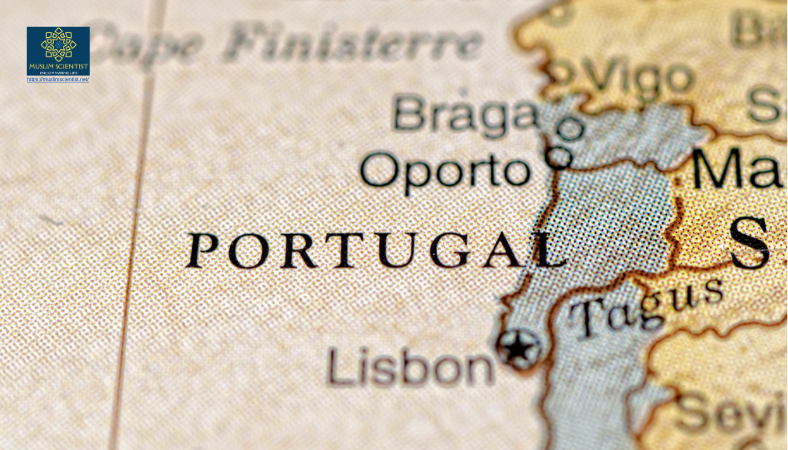
A research from the University of Lisbon exposes how income, housing, and transportation create uneven access to culturally appropriate food for Muslims in Portugal’s capital.
Summary
A comprehensive new study published in Population, Space and Place has mapped the halal food economy in Lisbon, revealing significant inequalities in how Muslim residents access culturally and religiously appropriate meat. Researchers Alina Esteves and Jennifer McGarrigle from the University of Lisbon conducted spatial analysis, market surveys, and 19 in-depth interviews with religious leaders, butchers, certifying bodies, and consumers between 2017 and 2021. Their findings show that while Lisbon’s halal economy has expanded significantly, access remains deeply unequal based on income, residential location, and social networks. The study identified 15 halal butchers concentrated in two main areas: Odivelas (a suburb) and Mouraria (the historic city center). However, the Muslim population has increasingly moved to peripheral areas, creating a spatial mismatch between where Muslims live and where they can buy halal meat. Affluent consumers can buy in bulk, freeze meat, and access delivery services, while poorer families must make multiple trips or rely on mosque subsidies. Mosques play a critical welfare role by selling subsidized frozen poultry from domestic freezers. Some working-class Muslims travel to peri-urban farms to buy lambs and perform ritual slaughter themselves to save money. Meanwhile, wealthier Muslims maintain transnational networks, purchasing halal products during trips to the UK, where halal food is more widely available. The researchers conclude that cultural adequacy must be recognized as a key component of food security and urban planning, arguing that cities must account for diverse religious dietary needs in their food environments.
Why This Study Matters for Cities Worldwide
Access to culturally appropriate food is not just about nutrition—it is about dignity, identity, and belonging. For the 1.6 billion Muslims worldwide, halal dietary requirements represent a fundamental religious obligation. Yet in cities where Muslims form a minority, finding halal food can be surprisingly difficult and expensive.
Lisbon offers a fascinating case study. Portugal’s Muslim population remains small at approximately 36,500 people, with nearly 70% concentrated in the Lisbon Metropolitan Area. This community has grown increasingly diverse, with major groups originating from Bangladesh, Guinea-Bissau, Portugal, Mozambique, and Pakistan. Consequently, the city’s halal food system must serve a religiously diverse population with different interpretations of Islamic dietary law and varying levels of religious adherence.
The study’s findings resonate far beyond Portugal. As migration continues to reshape cities across Europe and North America, urban planners increasingly must consider how food environments serve diverse populations. Therefore, this research provides critical insights for policymakers, urban planners, and community organizations working to build more equitable cities.
How Researchers Conducted the Investigation
The research team employed a two-phase methodological approach combining quantitative spatial analysis with qualitative interviews. First, they analyzed 2021 census data to map Muslim residential patterns across the Lisbon Metropolitan Area. Simultaneously, they conducted fieldwork to identify and map all halal butchers operating in the city, updating their inventory regularly since 2018.
Additionally, researchers surveyed halal meat prices in major supermarket chains and neighborhood butchers across Lisbon and Odivelas municipalities. This price comparison revealed significant cost differences that affect consumer choices.
The second phase involved 19 semi-structured interviews conducted in 2017 and 2018. Interviewees included three religious leaders, two halal certifying body representatives, four community organization leaders, three butcher shop owners, five Muslim consumers, and two poultry production unit representatives. This diverse sample provided comprehensive insights into the halal economy, from slaughterhouse technicalities to everyday consumption practices. Interviews averaged 37 minutes and were recorded, transcribed, and analyzed for key themes.
The Geography of Halal Butchers in Lisbon
The study’s spatial analysis revealed a striking pattern. All 15 halal butchers cluster in just two areas: Odivelas, a suburb north of Lisbon, and Mouraria, a historic arrival neighborhood in the city center. This distribution reflects decades of Muslim settlement patterns rooted in Portugal’s colonial and postcolonial history.
Table 1: Where Halal Butchers Are Located in Lisbon
| Area | Number of Butchers | Type of Area | Who Shops There |
|---|---|---|---|
| Odivelas | 8 | Suburban | Local residents, nearby neighborhoods |
| Mouraria | 5 | Historic city center | Arrival neighborhood, citywide customers |
| Almada | 2 | South bank | Local residents |
However, this distribution creates a problem. The Muslim population has gradually moved to more peripheral areas like Amadora and Sintra, yet halal butchers remain concentrated in traditional settlement areas. Consequently, many Muslims must travel significant distances to buy halal meat.
The researchers also discovered that only four of the 15 butchers hold official certification from the Halal Institute of Portugal. Nevertheless, many consumers trust uncertified butchers based on personal relationships and community reputation. As one consumer explained, knowing the butcher personally matters more than formal certification.
The Role of Migrant Infrastructure in Food Access
The study introduces the concept of “migrant infrastructure” to explain how Muslim communities have built systems to meet their dietary needs. These infrastructures include physical sites like mosques and butchers, as well as networks of trust, knowledge sharing, and mutual support.
Mosques serve a particularly important function. Beyond worship, many mosques sell frozen halal poultry from domestic freezers at subsidized prices. This practice addresses both religious needs and economic welfare, helping lower-income families access halal food affordably.
Table 2: How Different Income Groups Access Halal Meat
| Access Method | Who Uses It | How It Works | Cost Level |
|---|---|---|---|
| Neighborhood butchers | Most Muslims | Walk, metro, or short drive | Medium |
| Mosque frozen poultry | Lower-income families | Sold from mosque freezers | Low |
| Bulk buying with freezer storage | Middle and upper income | Buy 10-30 days supply at once | Medium-High upfront |
| Peri-urban farms (self-slaughter) | Working-class men | Travel to farms, slaughter animals | Low |
| Transnational shopping (UK trips) | Affluent with diaspora ties | Buy during trips abroad | High |
| Butcher delivery services | Wealthy customers | Weekly delivery for orders over €50 | High |
The table reveals stark differences in how Muslims navigate the halal food system. Affluent consumers enjoy convenience—they buy in bulk, freeze meat, and receive home deliveries. Poorer families must be more creative, sometimes traveling to farms to purchase live animals and perform ritual slaughter themselves.
The Hidden Costs of Being Muslim in a Minority Context
The study reveals that being Muslim in a predominantly non-Muslim city carries hidden costs. Halal meat often costs more than non-halal alternatives. Additionally, finding halal products requires more time, travel, and effort.
One interview participant, Mamadu from Guinea-Conakry, explained his strategy: “I usually buy enough meat for 10 days so I don’t have to go to the butcher every day. Sometimes I even buy it for a month. We have a freezer and we put it in there.”
Another participant, Mohamed from an Indo-Mozambican family, described his monthly routine: “I personally always have the concern of having halal meat at home. We always look for halal meat, usually in Odivelas, which is where there are most butchers and is closest to us.”
For those without cars or freezers, options narrow considerably. Some men coordinate with friends to share transportation costs to peri-urban farms. There, they purchase lambs or goats, perform ritual slaughter themselves, and divide the meat. This practice saves money but requires significant time and effort.
Transnational Networks Fill Gaps
For some Muslims, maintaining halal dietary practices involves transnational connections. The study documented how Lisbon’s Muslim community maintains strong ties with the United Kingdom, particularly Leicester and London, where halal food is more widely available.
Hassan, an Indo-Mozambican community leader, described the connection: “Half of the Odivelas community moved to Leicester. A lot of what happens in Portugal is firstly known in Leicester and then is known here. I often go to Leicester. I go on Saturday morning and Sunday night I’m back here with Ryanair.”
Fatima, a young woman from Guinea-Bissau, shared her experience: “When I arrived in the UK, I went to Manchester and then to London with a friend. She had to buy meat for her mother and we both went to a butchers, and she told me that in almost all butchers the meat is halal! And I told her that in Portugal there was none.”
These transnational practices demonstrate how migrant communities create multi-scalar infrastructures that stretch across national boundaries to meet everyday needs.
What This Means for Urban Planning and Policy
The study’s findings carry significant implications for urban planners and policymakers. Food security must encompass not just caloric sufficiency but also cultural and religious adequacy. Cities that ignore diverse dietary needs risk excluding already marginalized communities.
Furthermore, the research highlights how transportation and housing policies shape food access. Muslims living in peripheral areas with limited public transit face greater challenges accessing halal food. Therefore, policies that improve public transportation or incentivize halal businesses to locate in underserved areas could significantly improve quality of life.
The study also reveals the importance of informal infrastructures. Mosques, community networks, and word-of-mouth knowledge fill gaps left by formal food systems. Policymakers should recognize and support these community-based solutions rather than relying solely on market mechanisms.
Conclusion
This research demonstrates that halal food access in Lisbon reflects broader patterns of social inequality. While the city’s halal economy has grown, benefits remain unevenly distributed. Migrant infrastructures—from mosques selling frozen chicken to transnational shopping trips—help Muslims navigate these challenges. However, not everyone can access these resources equally.
The study calls for recognizing cultural adequacy as essential to food security and urban equity. As cities become more diverse, planners must account for the full range of residents’ dietary needs. Otherwise, religious minorities will continue to face hidden burdens in their daily lives.