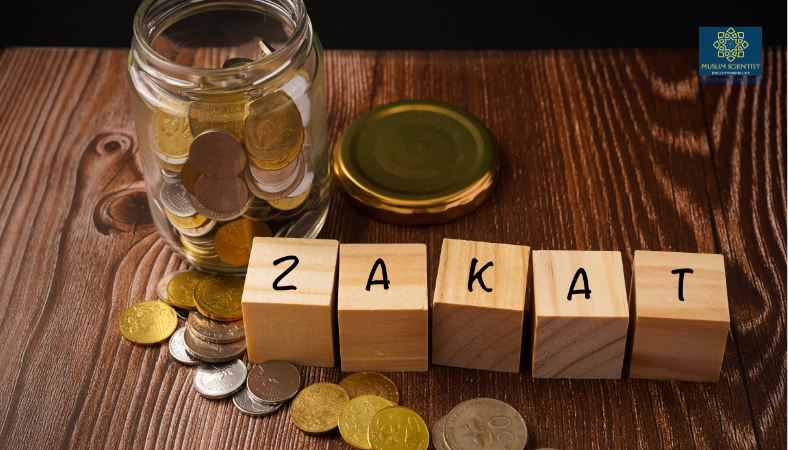
A new wave of research reveals that zakat, Islam’s obligatory charity, does more than purify wealth. Studies from Indonesia, the Gulf and beyond show it measurably reduces poverty, boosts local economies, and even improves the psychological well-being of those who give.
Summary
Zakat is the third of the Five Pillars of Islam, an obligatory annual payment on wealth that exceeds a minimum threshold (nisab). Unlike voluntary charity (sadaqah), zakat is a religious duty, and the Qur’an specifies exactly eight categories of people who may receive it: the poor, the needy, those employed to administer zakat, new converts, those in bondage, debtors, those striving in the cause of God, and stranded travellers .
The standard rate on monetary wealth, gold, silver and trade goods is 2.5%, applied once a year (haul) after the nisab — equivalent to 85 grams of gold — is met . Indonesia’s BAZNAS provides a simple illustration: someone with zakatable assets of Rp200 million would owe Rp5 million .
Modern research is increasingly quantifying zakat’s impact. A 2024 study using artificial neural networks found that zakat distribution in Indonesia has a more prominent impact on poverty alleviation than on GDP, confirming a negative correlation between zakat and poverty . Another strand of research examines “productive zakat” — giving capital, tools or training instead of direct cash — with scholars arguing that zakat can help the able-bodied poor become self-sufficient .
A 2024 review in Share: Jurnal Ekonomi dan Keuangan Islam found a strong correlation between Islamic social finance (including zakat) and psychological well-being, including self-acceptance, positive relationships, and a sense of purpose. The authors attribute this to zakat’s role in achieving falah (spiritual prosperity) and fostering social justice .
The system is not without challenges. Zakat collection remains fragmented in many countries. Beneficiary selection can be discretionary, and coverage is often small relative to need. Some scholars argue zakat should be inclusive of non-Muslim poor in modern welfare states, while others maintain traditional restrictions . In Jordan, monthly zakat assistance was described as only 53% of the national poverty line .
The core idea remains radical: wealth is held in trust, and the poor have a right to a share. As the Qur’an states, “Take of their riches a donation to purify them and to cleanse them thereby” (9:103) .
Zakat at a Glance — Who Pays, How Much, and to Whom
A plain-language guide to the basics.
What Recent Research Says About Zakat’s Impact
Selected findings from peer-reviewed studies.
What Zakat Actually Is
Zakat is not a tax, though it functions like one in some Muslim-majority countries. It is an act of worship, mentioned in the Qur’an alongside prayer more than twenty times. The word itself carries connotations of purification and growth — the idea that giving away a portion of wealth cleanses both the wealth and the giver.
The rules are precise. A Muslim calculates zakat on wealth held for one lunar year. Personal residence, everyday transport and tools of trade are exempt. Debts owed are deducted. The rate on most monetary assets is 2.5%. On agricultural produce, the rate is higher — 10% if irrigated by rain alone, 5% if irrigated by artificial means — because the yield is a direct gift of land and water rather than accumulated savings .
Crucially, zakat is not a favour to the poor. It is their right. The Qur’an addresses the Prophet with the command “Take of their riches a donation,” framing zakat as an obligation owed, not a generosity granted . Al-Azhar’s guidance emphasises that zakat redresses imbalance in society and instils compassion, but its first function is to purify the ego from meanness .
The Eight Categories: Who May Receive Zakat
The Qur’an specifies eight categories in Surah At-Taubah, verse 60. The first two — the poor (fakir) and the needy (miskin) — are the most familiar. The poor are defined as those with neither material possession nor means of livelihood; the needy have insufficient means to meet basic needs .
The remaining six are less discussed but equally specified. Amil are those employed to administer zakat, and their salaries may be paid from the fund. Muallaf are those whose hearts are to be reconciled — traditionally new converts. Riqab refers to those in bondage, interpreted in modern Singapore as education grants for children of zakat recipients. Gharimin are debtors unable to meet basic needs. Fisabilillah covers those striving in God’s cause, including religious education and community betterment. Ibnu sabil are stranded travellers .
This structure gives zakat unusual flexibility. It funds administration, supports conversion and education, relieves debt, and provides emergency travel assistance — all within a single religious framework. The Jordanian Iftaa’ Department notes that zakat must be transferred into the recipient’s possession, not merely spent on their behalf, and that charitable organisations may collect and distribute it but cannot use it for their own overheads .
The Evidence: Does Zakat Actually Reduce Poverty?
The short answer is yes, with caveats. A 2024 study using artificial neural networks examined zakat, GDP and poverty in Indonesia — the world’s largest Muslim-majority country and a major zakat market. The researchers found a positive correlation between zakat distribution and GDP, but an even stronger relationship between zakat and poverty alleviation. Zakat, they concluded, has a “prominent impact” on reducing poverty .
The mechanism matters. Traditional zakat distribution is consumptive — cash or food to meet immediate needs. But a growing body of scholarship advocates “productive zakat”: providing capital, equipment, training or interest-free loans so recipients can generate income. Classical scholars permitted helping the able-bodied poor with tools or small capital; modern scholars have extended this to training programmes and microenterprise funding .
The evidence on coverage is more sobering. Research on Jordan and Pakistan found that zakat programmes can target the poor reasonably well, but coverage is limited and fragmented. In Jordan, monthly cash assistance was estimated at 53% of the national poverty line — enough to help, not enough to lift a family out of poverty . Selection processes can be discretionary, and in some cases personal acquaintance with committee members influenced outcomes. The system’s potential is real, but its reach depends on collection efficiency and governance.
The Unexpected Benefit: Zakat and Mental Health
A less obvious finding comes from psychological research. A 2024 review in Share: Jurnal Ekonomi dan Keuangan Islam examined Islamic social finance — zakat, infaq, sadaqah and waqf — and found a strong correlation with multiple dimensions of psychological well-being: self-acceptance, positive relationships, autonomy, environmental mastery, life goals and self-development .
The authors attribute this to zakat’s role within the maqashid al-sharia framework, fostering social justice and shared prosperity. Giving creates a sense of purpose; receiving relieves anxiety. Both giver and receiver participate in a system that affirms human dignity.
This aligns with broader research on religious coping. The Journal of Al-Tamaddun review on prayer found that religious practices reduce stress and improve emotional regulation. Zakat extends that logic to financial behaviour: the obligation to give regularises generosity, reduces hoarding, and connects personal wealth to communal well-being.
Challenges: Fragmentation, Coverage and Inclusion
Zakat’s ideals are clear; its implementation is uneven. In many countries, collection is split among state agencies, private charities and mosque committees. Competition and duplication reduce efficiency. Beneficiary selection can lack transparency.
A deeper debate concerns inclusion. Traditional jurisprudence generally restricts zakat to Muslims, though some scholars argue the poor and needy categories should extend to non-Muslims in modern welfare states . In Jordan and Pakistan, zakat assistance is generally intended for Muslim beneficiaries, making full integration into national social protection floors difficult. As Muslim-majority countries build universal welfare systems, this question will become more pressing.
The benefit level is another constraint. Zakat funds are limited, and demand outstrips supply. Some programmes prioritise widows, orphans and the disabled over the extremely poor who do not fit a category. The result is a system with high moral legitimacy but variable practical impact.
What It Means for the World
Zakat’s core insight is counter-cultural: wealth is not absolute property. Those who hold it are trustees, and the poor hold a claim. The rate is modest — 2.5% — but the principle is radical.
For policymakers, zakat offers a ready-made mechanism for redistribution, especially in countries with weak tax systems. For Muslim communities, it offers a discipline that connects faith to economics. For researchers, it offers a rich field for testing how religious obligation shapes behaviour, poverty and well-being.
The Qur’anic verse that commands zakat frames it as purification . Modern research suggests it may also be effective. The challenge is to build systems that are transparent, inclusive and adequately funded — so that the right of the poor is honoured, not just theorised.
References
Al-Azhar. (2019). Zakat (obligatory charity). Azhar.eg. https://azhar.eg/en/Islam/Worship/details2/ArtMID/12191/ArticleID/48773
BAZNAS. (2026). Edukasi zakat yang wajib diketahui. Badan Amil Zakat Nasional. https://www.baznas.go.id/artikel-show/Edukasi-Zakat-yang-Wajib-Diketahui/2630
Cahyanti, I. S., Ulfah, U., & Suhendi, E. (2024). How Islamic social finance boosts psychological well-being? Share: Jurnal Ekonomi dan Keuangan Islam, 13(2).
Iftaa’ Department, Jordan. (2018). Zakat recipients. aliftaa.jo. https://aliftaa.jo/QuestionPrintEn.aspx?QuestionId=3410
Iftaa’ Department, Jordan. (2024). Zakat recipients. aliftaa.jo. https://aliftaa.jo/QuestionPrintEn.aspx?QuestionId=3857
Kementerian Agama RI. (n.d.). Pelajaran 4: Ketentuan zakat. https://cendikia.kemenag.go.id
Muis, A. A. S., Al Firdausi, M., Akbar, C., Gamal, S., & Saleh, H. (2024). The zakat, economic growth, and poverty alleviation: An artificial neural networks analysis. International Journal of Zakat, 9, 56–70.
MUIS. (n.d.). 8 asnaf of zakat. Zakat.sg. https://www.zakat.sg/8-asnaf-of-zakat/
Taylor & Francis. (2024). Zakat for generating sustainable income: An emerging mechanism of productive distribution. Cogent Business & Management. https://doi.org/10.1080/23311975.2024.2312598
United Nations ESCWA. (2013). Zakat funds and Islamic charitable organizations. UN Digital Library. https://digitallibrary.un.org